Temperature Mapping Worst-Case Scenarios in Refrigerators

Profile picture for user paul.daniel
Submitted by paul.daniel on
Worst Case Mapping Validation Fridge Interior
Life Science
We recently received a question from a pharmaceutical customer on re-qualifying a refrigerator that had been repaired. This customer was checking in on his approach…

Dear Vaisala,

I’ve read some of the articles the team at Vaisala have posted on worst-case scenarios for controlled temperature units (CTUs). I’ve also looked at the ISPE guides on this but I still find it difficult to determine the “worst case” for a refrigerator. Currently our site procedures for qualifying CTUs include performing both empty/loaded mapping studies on new CTUs. But, what I need to do is execute a re-qualification on a unit that was repaired. I was trying to determine the worst-case, and I’d prefer to do just one set of studies instead of both empty/loaded.
 
For background, the repaired unit uses positive forced-air circulation to maintain temperature uniformity. To me this suggests that the loaded condition might pose more of a challenge to uniformity since the objects would be obstructing airflow. At the same time, as I mentioned before, the room, and specifically the location of the unit is warmer when compared to other locations in the room.  Several incubators are pumping out heat and the “L” shape of the room combined with poor circulation creates a warmer area around the unit.
 
The room typically reads around 28-30 degrees Celsius whereas the other areas are below 25°C. The refrigerator has a 2-8°C operating set point. One thing I’m wondering:  does the empty condition pose a bigger challenge because it’s constantly trying to maintain set-point with no thermal load to stabilize the temperature inside the chamber?
 
For our ultra-low freezers, I know that the empty condition is definitely worst-case, but in the repaired refrigerator, the worst-case has been a little harder to feel certain about, especially since the temperature inside versus outside are not as extreme as Ultra-lows. I’m trying to weigh these factors to ensure that my understanding is solid. Please let me know what you think of this situation and I appreciate any guidance because this is a topic that appears to have different approaches and rationales.

Our Reply:

First off, it’s excellent practice to take a worst-case scenario into consideration. This is an important precept of validation.  In GxP industry, we note that most people settle for a “reasonable challenge scenario,” but often they amount to the same thing. I believe you are correct that a refrigerator that cools by convection (forced air circulation) has the biggest challenge when the airflow is blocked (as in fully loaded conditions).  You are also correct that fully loaded units have more thermal mass and maintain more stable temperatures, representing a less challenging case.
One solution is to fill the refrigerator with empty low-mass containers (boxes, plastic bottles, etc.) to create the challenge of airflow blockage, without the effect of adding thermal mass.
 
But, here we find the problem:  If you are going to fully load the fridge with only a simulated load to understand airflow, you need to know how “full” is defined for this fridge.  This will be a combination of how it is used (it may only be used for a certain size bottle, or a certain sized box), as well as the design constraints (there will be a manufacturer’s recommended full load).What is a good idea here is an SOP on how the fridge is loaded. 
 
For a reference on limits to loading CTUs, we have some regulations/guidance that weigh in the topic.  For instance, there is the French standard NF x 140 that recommends load items be placed no closer to the walls than 10% of the full dimensions.  That sounds weird…  It means that if the refrigerator is 80 cm wide, then no load items should be within 8 cm of the left/right walls. 
 
Same goes for front/back and top/bottom. Whatever happens, you are way ahead of the curve.   Most people just map a chamber or room in its use condition once a year and leave it at that.  However, that doesn’t mean this is never questioned. Having thought out your mapping studies goes a long way with auditors.  Typically, if an auditor disagrees with how you’ve performed a study, or with your rationale, they will often tell you that they simply want to see your process improved.  This is way better than their typical response when they find out you didn’t map at all, or had no rationale supporting your approach.
 
What’s important is that you are documenting a deep understanding of the environment you are qualifying. And you realize that a repair may in fact give you a chamber that functions somewhat differently than it did originally. This attention to detail and attempt to ensure you have a qualified environment is your best bet to prove the products stored are done so according to specifications.

Articles on GxP standards & regulations

Visit our repository of articles, white papers, application notes and eBooks...


Comment

Osvaldo Meneses

Feb 15, 2019
Hi,
I need a system to register temperatures in order to qualify temperatures and humidity control Led áreas and equipements.
Please send me informativo about your offer about.
I offer qualification services for pharmaceutical companies.
Thanks.

Janice Bennett-Livingston

Feb 18, 2019
Dear sir,
Thank you for contacting Vaisala!
I have passed your request to our sales team... also available here: https://www.vaisala.com/en/contact-us

Add new comment

Vaisala viewLinc Monitoring System awarded by Laatukeskus Excellence Finland

Submitted by feed-importer on
Vaisala viewLinc team wins Business Innovation category in Quality Innovation Award 2018 by Laatukeskus Excellence Finland
Press Releases

Vaisala
Press Release
December 4, 2018


Vaisala's viewLinc Monitoring System Awarded by Laatukeskus Excellence Finland

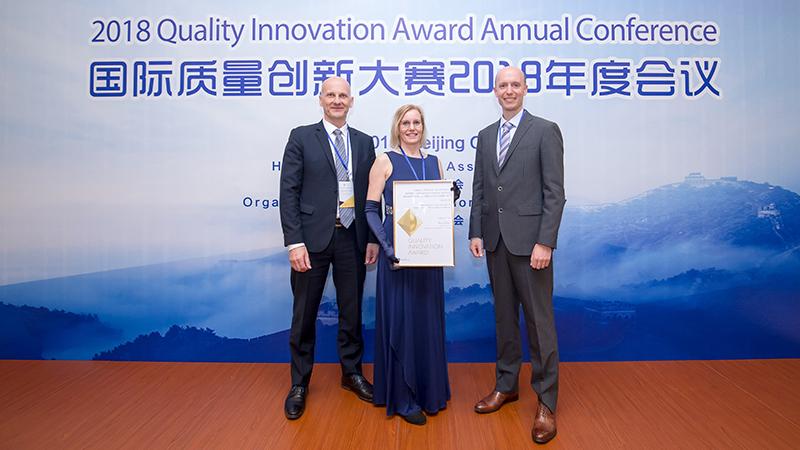
Vaisala, the global leader in environmental and industrial measurements, has received the national Quality Innovation Award for its viewLinc Monitoring System. The Quality Innovation Award is an annual, international competition for innovations and ideas, granted in eight categories. The national award is granted to Vaisala by Laatukeskus Excellence Finland in the Business Innovation category for large companies. The national winners of each category - Vaisala among them - continue to the international stage of the competition.

Truly customer-focused, Vaisala's viewLinc Monitoring System, released in April 2018, was innovated together with customers throughout the whole development project to ensure the storage conditions of critical assets, such as medicines and vaccines in pharmaceutical warehouses and labs. Based on Vaisala's decade-long technological experience, the system combines industry-best sensors with wireless technology and data loggers that monitor different parameters, such as temperature, relative humidity and dew point, sending alarms to users, if the monitored parameters deviate from permitted values. The data loggers transmit the measurements to connected access points, forming an easy-to-use, truly reliable wireless and browser-based monitoring system that provides gap-free and easily-auditable data.

"Winning the Quality Innovation Award by Laatukeskus Excellence Finland is a great honor and a testament to our customer-focused approach. At Vaisala, we are sincerely driven by curiosity for our customers' business," says Liisa Åström, Vice President, Products and Systems of Vaisala Industrial Measurements. "Customer focus was at the heart of viewLinc that was co-created together with over 40 companies, enabling us to gain truly deep understanding of our customer's needs. In the end, our system exceeds customer expectations by hiding the complexity of a large system behind interactive and informative user interfaces," she continues.

Vaisala's viewLinc's exceptional performance is based on the reliable Vaisala's VaiNet Wireless technology. It hosts superior signal strength, all thanks to the sub-GHz frequencies that are less vulnerable to interference than the more heavily-trafficked GHz bands. Used low frequencies at 900 MHz enable VaiNet to reach ranges that extend well over 100 meters in typical indoor conditions, even in obstructed environments such as pharmaceutical warehouses, where barriers such as concrete walls and metal vaults can impede the higher-frequency signals.

"After the release, we have received nothing but positive feedback from customers. Due to its flexibility and high-quality wireless technology, the viewLinc Monitoring System is easily expandable, as additional data loggers are easy to install. Even though it was designed for use in pharmaceutical and other regulated environments, the system can be used to monitor conditions in a variety of applications," Åström concludes.

"We were impressed with Vaisala's systematic and collaborative approach. The customer needs behind the innovation were clearly recognized and the customer journey was mapped together with the stakeholders. Also the use of low-frequency and long-range signal, penetrating different materials in warehouses and versatile conditions, showed true innovation," the Quality Innovation Award assessors explain.

The Quality Innovation of the Year Award has been arranged in Finland since 2007 and has grown into a large international competition, with national and international winners in eight categories. After the preliminary assessment, the finalists were sent to the competition jury in Finland, consisting of impartial quality, technology and innovation experts that represent Finnish companies and public sector. The Finnish award ceremony was organized as a satellite event of Slush on December 4, 2018. Vaisala's viewLinc goes on to the international competition, in which the jury of all participating eighteen countries vote for their favorites. The international award winner and two applications that receive honorable mentions in each category are announced later in December 2018. The international award ceremony will be organized on 27 February 2019 in Beijing, China.


More information for the media:

Vaisala Media Desk
+358 20 6198800
[email protected]


Vaisala is a global leader in environmental and industrial measurement. Building on over 80 years of experience, Vaisala contributes to a better quality of life by providing a comprehensive range of innovative observation and measurement products and services for chosen weather-related and industrial markets. Headquartered in Finland, Vaisala employs approximately 1,600 professionals worldwide and is listed on the Nasdaq Helsinki stock exchange. vaisala.com twitter.com/VaisalaGroup
Image: Laatukeskus Excellence Finland

An in-depth look at Vaisala’s hydrogen peroxide sensor technology

Profile picture for user janice.bennett
Submitted by janice.bennett on
Hydrogen peroxide sensor for biodecontamination
Industrial Manufacturing and Processes
Industrial Measurements
Life Science

Webinar: humidity measurement in H2O2 bio-decontamination – relative saturation as the key

Join us  for a 1-hour training with Vaisala's industry experts Piritta Maunu and Sanna Lehtinen. Piritta and Sanna will cover the key aspects of measuring humidity in Hydrogen Peroxide bio-decontamination. The focus of this webinar will be the crucial role of the Relative Saturation parameter when monitoring vaporized hydrogen peroxide processes.
 

PEROXCAP measurement values, chemical purge, and function

What is the lowest ppm that the HPP270 series probes can measure?
The measurement range is from 0 to 2000 ppm ±10 ppm or ±5% of the reading (whichever is greater) at 25 °C. The accuracy specifications are stated from 10 ppm onwards. The HPP270 series probes (HPP271 and HPP272) are not intended for safety level ppm measurements.
 
Does the probe withstand condensation?
The probe must always be powered on when there is H2O2 in the probe’s environment. When powered on, the PEROXCAP sensor is heated, which permits using the probe in condensing H2O2 conditions, maintains measurement performance, and lengthens the probe’s lifetime. If the probe is exposed to H2O2 while powered off, the sensor may dysfunction and not recover. As a worst case scenario, the probe is left for a day under higher temperature, with H2O2 in high concentration,  under near condensing conditions, the probe would not survive. Refer to the product specifications for HPP270 series, under “Operating Environments.”
 
Can the probe measure liquid H2O2?
No, the HPP270 series probes are for vaporized hydrogen peroxide measurement.

Does the probe withstand peracetic acid or acetic acid blends?
Vaporized peracetic acid is a very oxidizing agent so the PEROXCAP sensor will not survive in that environment.

Does the probe withstand silver ion blends?
It is not recommended to use the probe with silver ion blends since the silver particles can block the porous filter and therefore deteriorate gas exchange to HUMICAP sensors within the filter.
 
My customer has H2O2 vapor sterilization under vacuum. Can we use this probe in a vacuum?
The probe is not designed to be used in vacuum conditions.

Can I use this probe in over / under pressure?
The probe is designed for normal atmospheric pressure only.
 
Are Relative Humidity and Relative Saturation measured directly from the sensor?
Relative Humidity is directly measured and Relative Saturation is calculated. (Learn more about these values in this webinar.)
 
Which parameters does the HPP271 and HPP272 output?
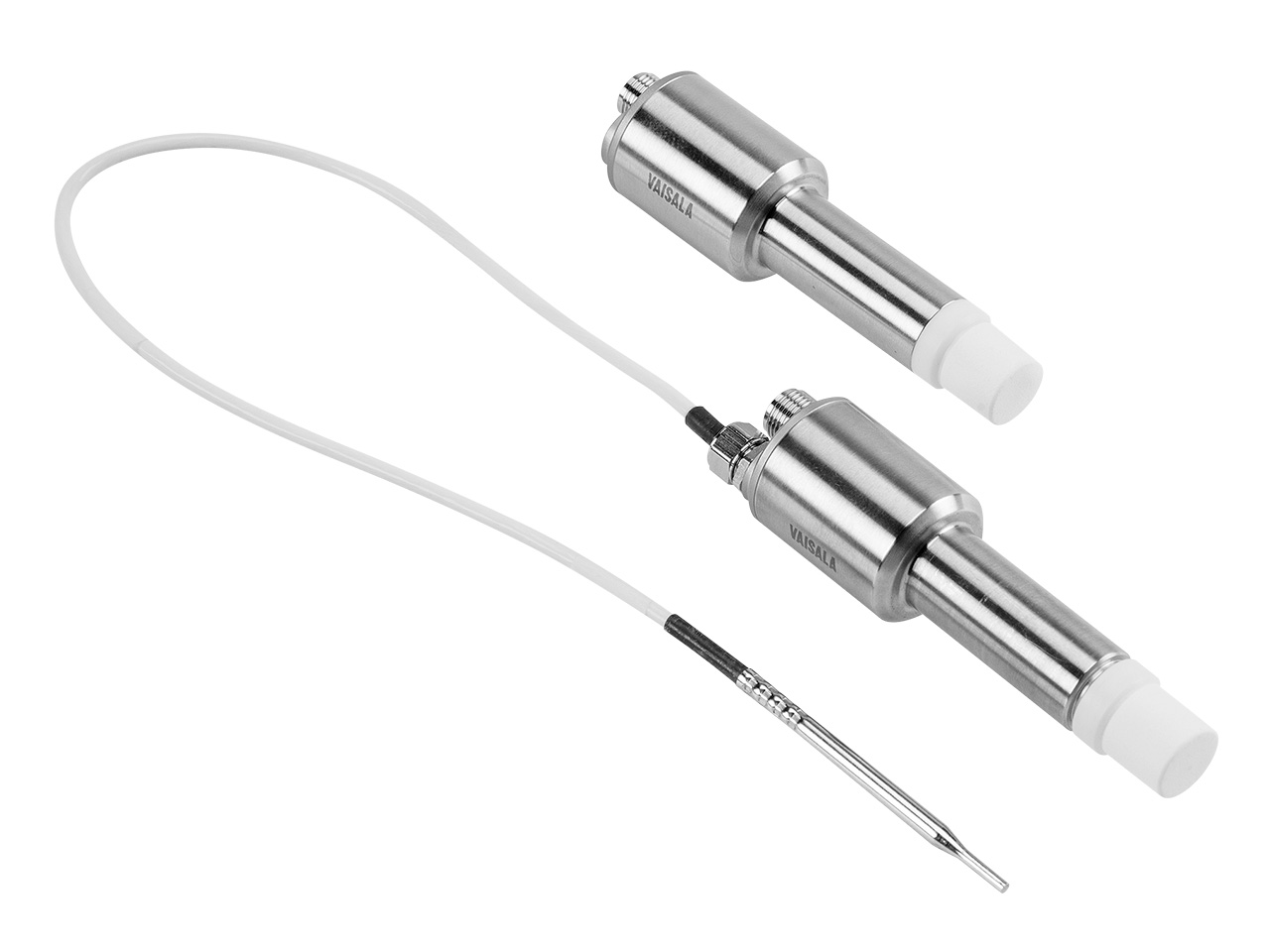
The HPP272 outputs H2O2 concentration (ppm), temperature and humidity (Relative Saturation and Relative Humidity); The HPP271 outputs H2O2 ppm by volume and H2O ppm by volume.

Why is the absolute hydrogen peroxide unit in mg/m³ and not mg/L?
We have chosen the International System of Units (SI) mg/m3 , whereas mg/L is not an SI unit.
How do I convert mg/L to mg/m³
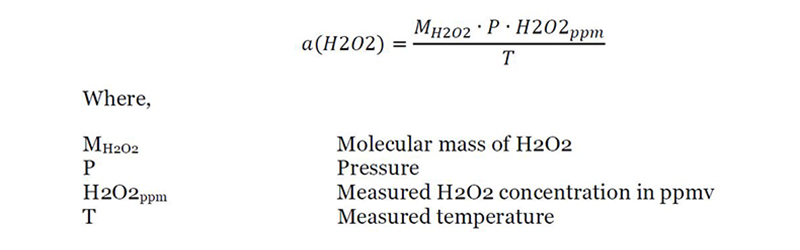
Absolute H2O2 mg/m3 (milligrams per cubic meter) can be converted into mg/L (milligrams per liter) by using this formula:
 
 
Absolute Humidity Calculation
 
Why does the HPP271 only output H2O2 ppm and not Relative Humidity and Relative Saturation?
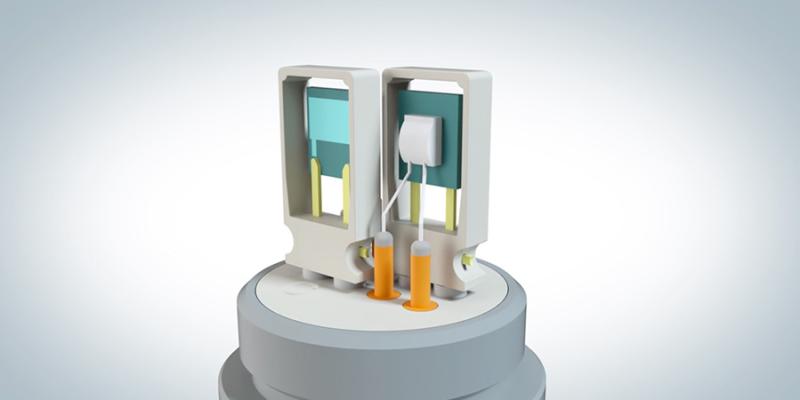
The HPP271 sensor contains a PEROXCAP sensor with two composite HUMICAP sensors. The PEROXCAP sensor is warmed in order to provide stable, accurate and repeatable measurement in highly condensing environments. Both Relative Humidity and Relative Saturation are temperature-dependent parameters. Because the sensor is warmed, you need to have an additional temperature sensor if you require an accurate temperature measurement. HPP271 does not have this additional temperature sensor.
 
How is the HPP272 ppm H2O calculated - on a “wet” or “dry” basis?
H2O ppm is calculated on a “wet” basis.
 

What kind of heating functions does the sensor have?
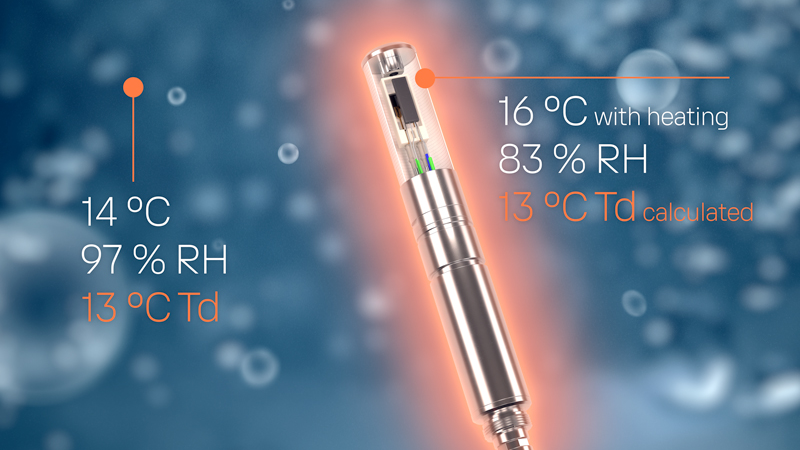
When powered on, the PEROXCAP sensor is heated (i.e. only the sensor chip under the filter cap is heated, not the probe itself). This prevents condensation from forming on the sensor and provides reliable measurement even in environments where humidity is near saturation. Heating also helps to maintain measurement performance and lengthens the probe's lifetime. The chemical purge heats the sensor at certain intervals. Heating results in rapid evaporation of the chemical contaminants that have been absorbed into the polymer. Chemical purge thus cleans the sensor internally, improving its stability and accuracy. More on this function below...
 
Which parameters are shown on the Indigo200 series displays when the HPP272 probe is connected?
The display will always default to H2O2 ppm, Relative Saturation and Temperature. The Indigo201’s analog outputs 1 and 2 follow the HPP272 analog outputs when first connected to Indigo201. After that, the user may change the analog outputs and display settings. These will remain even if you detach the probe and reconnect it. Note, only the Temperature value is displayed for the first 8.5 minutes during start-up.

What is a Chemical Purge?
The sensor is rapidly heated during chemical purge by forcing a current through the temperature element of the sensor. This rapid heating results in evaporation of chemical contaminants that may have been absorbed into the polymer. Chemical purge thus cleans the sensor, improving its stability and accuracy. A chemical purge cycle takes a few minutes to complete, including heating and equilibrating stages.  When the sensor temperature has re-stabilized to the condition prior to the purge, the sensor continues in its normal measurement mode. The value output of the transmitter is locked during chemical purge.
 
When does chemical purge occur?
The purge (interval purge) is automatically performed at probe start-up and set intervals. The default chemical purge interval is 24 hours, or configurable between 1 hour to 1 week using Vaisala Insight software, Modbus, or Indigo200 transmitters. However, the chemical purge is postponed by 30 minutes if H2O2 is present or Relative Humidity is unstable.
 
You can also trigger a purge manually with Modbus (in digital mode) or pin #5 on the M12 connector (in analog mode). The interval purge is postponed by its set value every time you trigger the purge.
 
Can I disable the chemical purge at start-up or during the bio-decontamination cycle?
No, the chemical purge is essential for the long-term performance and accuracy of the probe in demanding H2O2 environments. Chemical purge is needed at probe start-up to maintain sensor stability. During the purge, H2O2 and H2O measurements are not available.

How often is chemical purge recommended?
It is not the frequency of purge processes that is important, but how long the probe is within an environment with H2O2 present. Purge is recommended at least every 24 hours of powered-on time, even if the probe has not been continuously exposed to H2O2. If triggered purge is used, we recommend to implement the purge just before the bio-decontamination cycle.
Note, that it takes approximately 9 minutes to return to accurate readings after a purge. The maximum interval is weekly. Chemical purge is needed to maintain the stability of the measurement and if chemical purge is not performed, the measurement will drift.

Which measurement is available during a chemical purge?
During the purge, only temperature measurement is available (HPP272). During interval and manually triggered purges, the value output is frozen to show the last measured value before the purge began.
 
Can I do an on-site calibration and adjustment?
You can calibrate and adjust the probe directly in H2O2 vapor with Insight PC software (Insight 1.0.1.107 onwards). Note that calibration in H2O2 vapor is a highly advanced procedure that can be performed reliably only by using another Vaisala HPP270 series probe as a reference instrument and successfully creating matching measurement conditions for both the reference probe and the probe that is being adjusted.You can perform an on-site calibration and adjustment with any RH calibrator, for example: HMK15, or with Insight PC software (Insight 1.0.1.107 onwards).

How can we adjust H2O2 measurement with RH?
The PEROXCAP sensor comprises two HUMICAP humidity sensors that are used to calculate the H2O2 measurement. Because the H2O2 measurement is based on humidity calculations, you can use humidity references to adjust the underlying humidity measurement. Improving the accuracy of the underlying humidity measurement also improves the accuracy of the derived H2O2 measurement.
Related products
Indigo520 with probe

Indigo500 Series Transmitters

The Vaisala Indigo500 series transmitters are host devices for Vaisala Indigo-compatible, stand-alone smart probes. The Indigo500 series include multi-functional Indigo520 transmitter and Indigo510 transmitter with basic features.

Add new comment

Relative Humidity – What Is It And Why Is It Important?

Warmed probe infographic
Industrial Measurements
Life Science

What is relative humidity?

Put simply, relative humidity (RH) is a measure of the water vapor content of air. More explicitly, it is the amount of water vapor present in air expressed as a percentage (%RH) of the amount needed to achieve saturation at the same temperature.

RH is strongly proportional to temperature and highly sensitive to temperature changes. This means that if you have a stable temperature in your system, your RH will also be stable. As well as temperature, relative humidity also depends on the pressure of the system in question.

How does relative humidity work?

There are some helpful rules of thumb to help us understand how RH works at a basic level, though it’s important to remember that unless you’re in a closed system such as an environmental test chamber, other factors can affect results.

The first rule of thumb is that as temperature increases, air becomes drier (RH decreases) and as temperature decreases, air becomes wetter (RH increases). When thinking about pressure, the rule of thumb is that as pressure decreases, air becomes drier (RH decreases) and as pressure increases, air becomes wetter (RH increases).

Why is it important to monitor relative humidity?

By far the biggest reason to monitor relative humidity is to control moisture around a final product. In most cases this means making sure that the RH never rises too high. For example, let’s take a product like chocolate. If the RH in a storage facility rises above a certain level and remains above that level for a sufficiently long period of time, a phenomenon called blooming can occur. This is where moisture forms on the surface of the chocolate, dissolving the sugar. When the moisture evaporates, the sugar forms larger crystals, leading to discoloration.

Humidity can also have a harsh – and expensive – impact on products such as building materials. Say you’re building an extension to your property and you lay a concrete subfloor before putting down hardwood flooring. If the concrete isn’t sufficiently dry before you lay the floor it can cause huge problems because any moisture from the concrete will naturally try to migrate to a drier area – in this case the flooring material. This can cause the floor to swell, blister, or crack – undoing all your hard work and leaving no option except replacement.

Humidity is also a big problem for products with extreme sensitivity to moisture, such as certain pharmaceuticals. This is because it can alter the characteristics of the product until it becomes useless, which is why products like medical pills and dry powders are stored in controlled conditions at precise humidity and temperature levels.

Finally, relative humidity is also an important factor in building automation systems focused on human comfort, such as air conditioning. The ability to measure and control RH not only helps to maintain a comfortable environment inside a building, but it also helps to optimize the efficiency of HVAC systems by providing an indication of how much outside air being taken in needs to be conditioned, depending on the temperature outside.

Want to learn more? Download our Humidity eGuide for Smart Industries to get a handy package with links to a humidity calculator, drying simulation, webinars and other information.

Using Vaisala's Humidity Calculator on a mobile phone

Humidity calculator

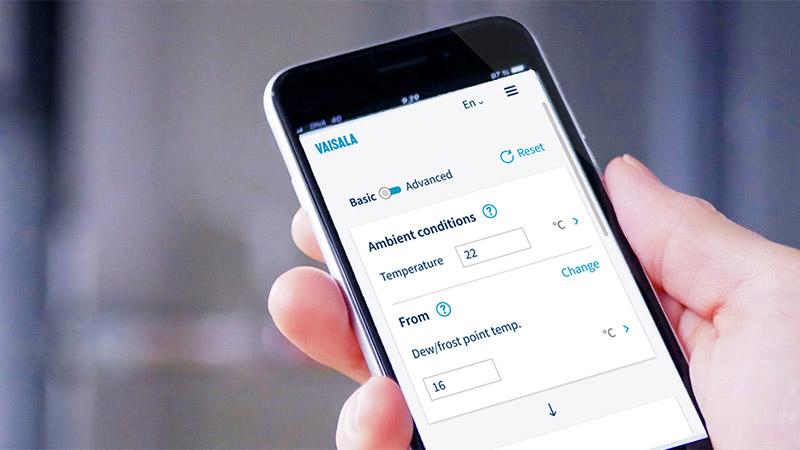
Vaisala Humidity Calculator makes your complex humidity calculations and conversions easy. It covers all popular parameters and is effortless to use. Calculate several humidity parameters based on only one known value and tolerance.

Humidity Academy  series

Humidity Academy webinar series

In this free webinar series about humidity measurement in industrial processes different Vaisala’s experts will share their knowledge and examples on humidity theory and measurements, as well as on maintaining audit-proof measurement instruments with long...

Related products
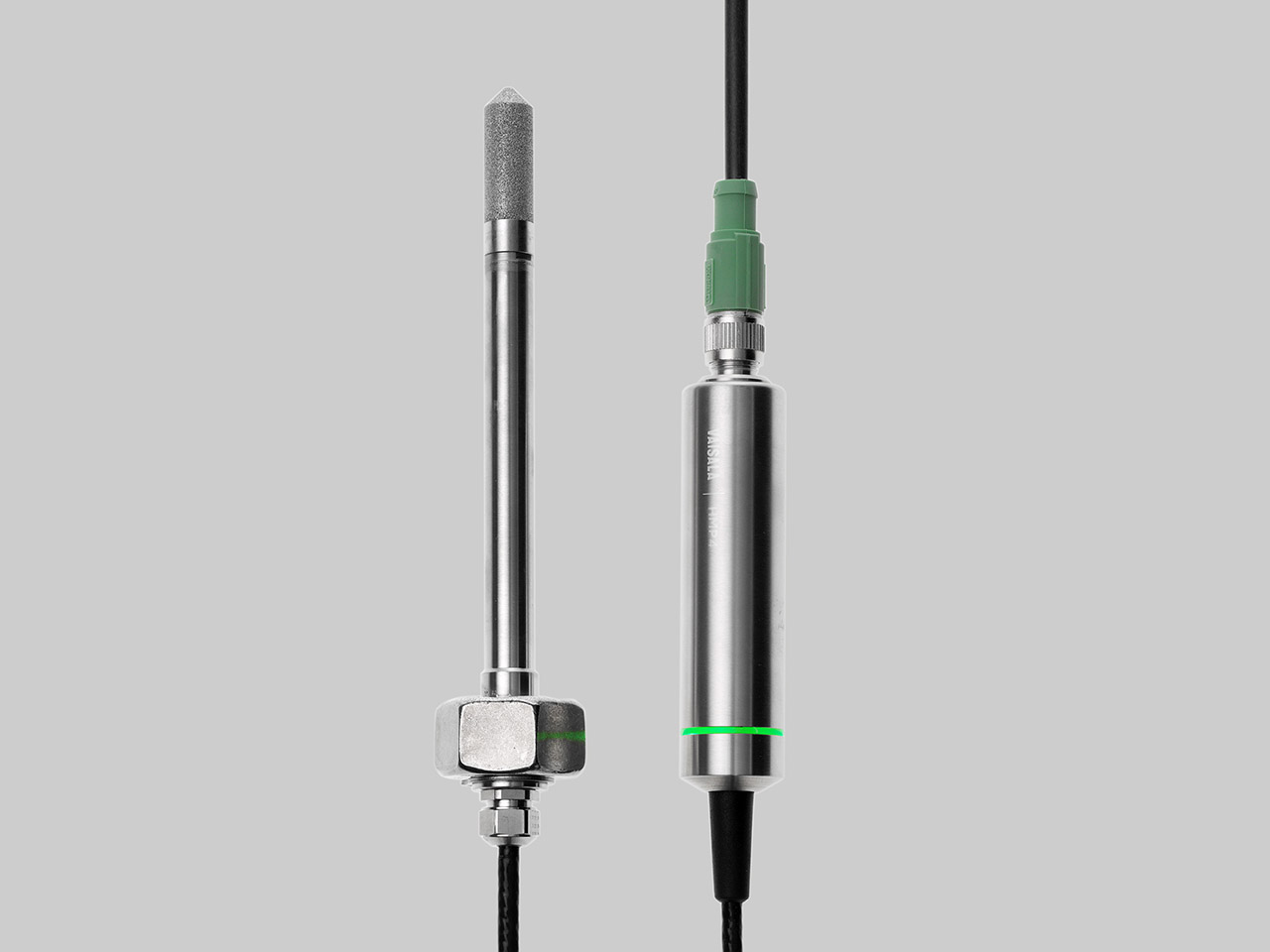
Vaisala HUMICAP® Humidity and Temperature Probe HMP4 is designed for high-pressure applications

Relative Humidity and Temperature Probe HMP4

Vaisala HUMICAP® Humidity and Temperature Probe HMP4 is designed for high-pressure applications such as compressed air systems in maritime, breathing air, and industrial applications, where measurement performance and chemical tolerance are essential.

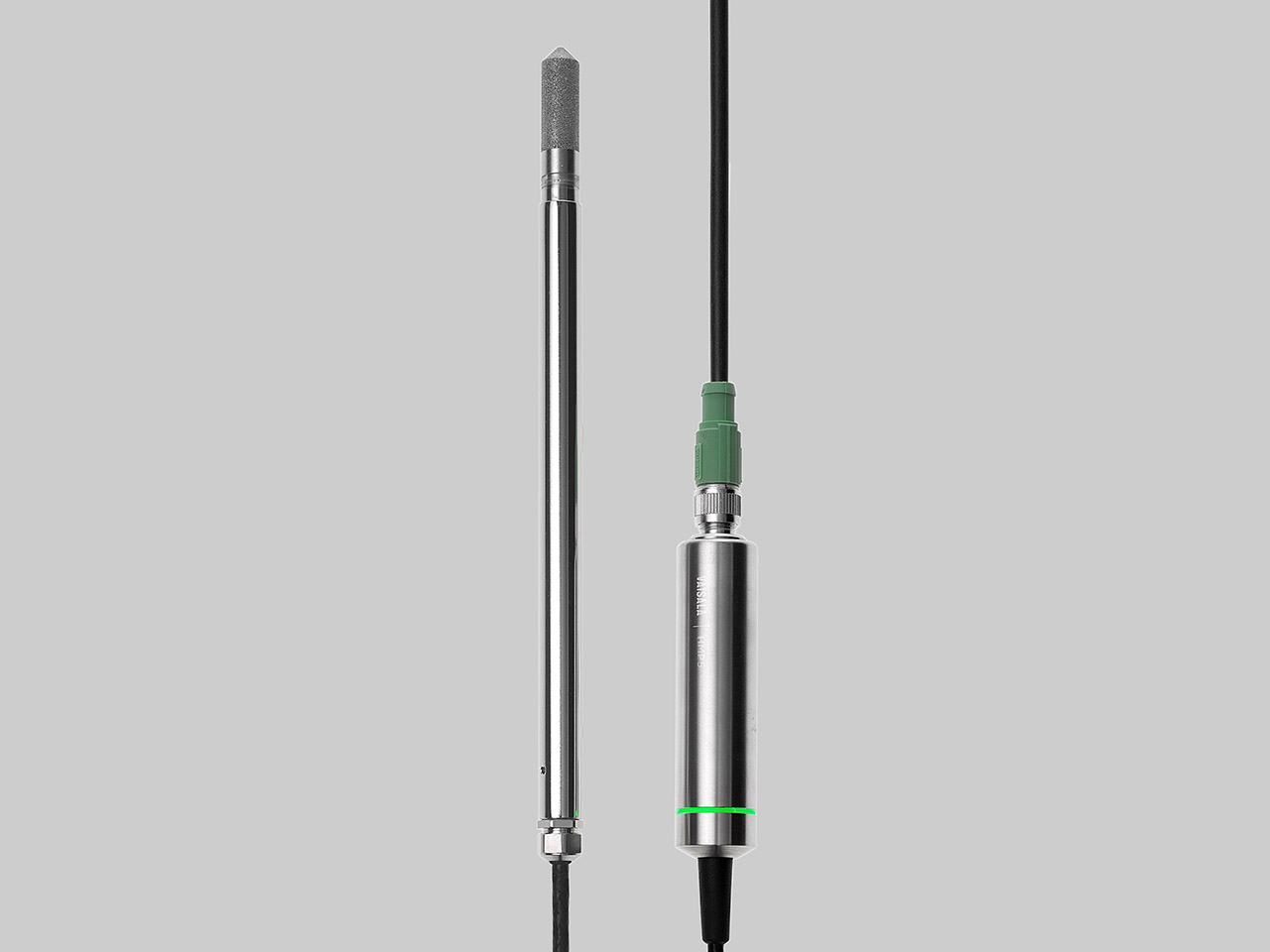
Vaisala HUMICAP® Humidity and Temperature Probe HMP5 is designed for high temperature applications

Relative Humidity and Temperature Probe HMP5

Vaisala HUMICAP® Humidity and Temperature Probe HMP5 is designed for high temperature applications such as baking ovens, pasta dryers, ceramics and industrial drying kilns where measurement performance and chemical tolerance are essential.

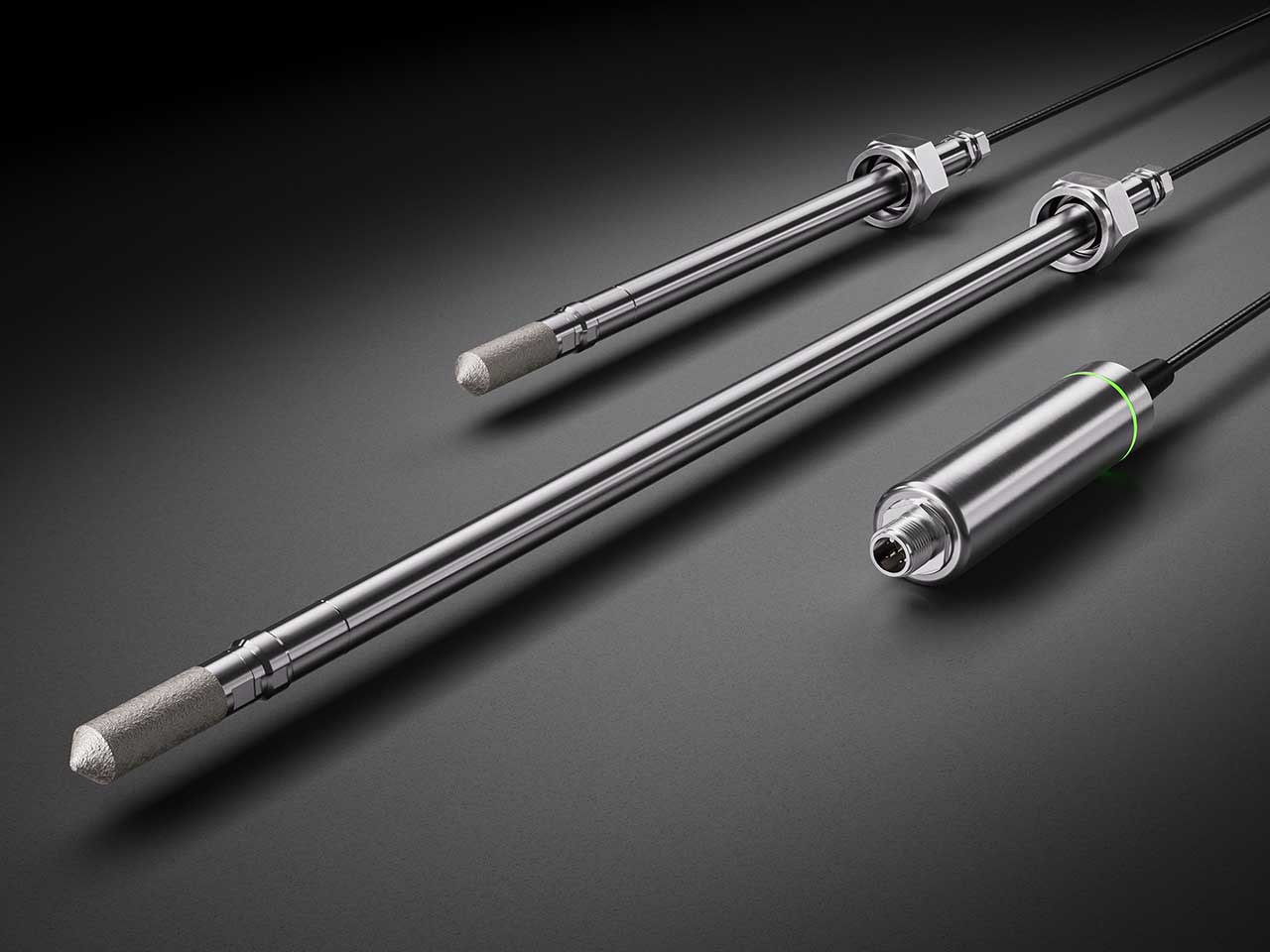
HMP8 and HMP8L

Relative Humidity and Temperature Probe HMP8

Vaisala HUMICAP® Humidity and Temperature Probe HMP8 is designed for pressurized applications in compressed air systems, refrigerant dryers, and other pressurized industrial applications where easy insertion and removal of the probe and adjustable installation depth into the pipeline are needed.

Key takeaways:

  • Relative humidity (RH) is a measure of the water vapor content of air.

  • RH changes with temperature and pressure: 

    • as temperature increases RH decreases and as temperature decreases RH increases.

    • as pressure decreases RH decreases and as pressure increases RH increases.

  • Monitoring RH is critical in many industries to protect product quality and prevent damage.

Comment

Prakash Kumar

Feb 6, 2019
Please suggest an economical humidity and temperature measuring instrument within your range
Temperature range 0 to 100 degree C
Pressure: o to 500 mmH20

Vaisala Customer Service

Feb 8, 2019
Thanks for your question. The temperature in your application goes up to 100 °C. This limits your options to models with a remote probe. Depending on the expected humidity level, you can find a suitable instrument from following product lines:
0-10 %RH: DMT340-series.
10-100 % RH HMT330-series or Indigo HMP-probes.

Varying pressure in your application has some effect to the humidity reading. To help you decide if it's needed to compensate this effect or not, please take a look at our humidity calculator: https://www.vaisala.com/en/lp/humidity-calculator .
This tool helps you to demonstrate the effect of different pressures.

carl xynon

Nov 6, 2021
who is the beneficiaries in using the temperature and humidity monitor system?

Vaisala

Nov 24, 2021
Hello Carl, thank you for your question!
It would actually be everyone’s interest that the temperature and humidity monitoring systems are in place in all relevant installation positions starting from manufacturing, covering storing, selling, and shipping all the way to the customer. This way the end product is always of quality, the reseller, and the manufacturer can rest easy knowing what the product is of good quality, the buyer and/or user can trust that the product does not cause harm or delays or require time-consuming reclaiming. Hope this answered your question.

Environmental Test Chamber

Aug 4, 2023
Thank you for shedding light on the revolutionary potential of Environmental Test Chambers in the field of biotechnologies. 'Exploring Cutting-Edge Tools' was a fitting start to the article, introducing readers to this advanced technology. It's exciting to see how precise control and manipulation of conditions are redefining the parameters of scientific research. Looking forward to learning more

Vaisala

Aug 28, 2023
Thank you for your kind and inspiring comment.

styraxinstruments

Jul 30, 2024
Thanks for sharing valuble information.

Add new comment

Sensor+Test 2019

Jun 25
Transformer Status Checking
Nürnberg Exhibition Centre
Nürnberg
Germany

Come and meet us at Sensor+Test 2019

Forum Labo

Mar 26
Forum Labo 2019
Paris expo Porte de Versailles
Paris
France

Welcome to meet our measurement and monitoring experts, instruments and continuous monitoring system for environmental condition monitoring at ForumLabo 2019 in Paris! Visit us at booth #J55.


Lounges 2019

Feb 05
Reinraum und Pharmatechnik im Fokus
Karlsruhe
Germany

Welcome to meet our experts and reliable measurement instruments and continuous monitoring system at Lounges 2019 in Karlsruhe!

Making Pharmaceuticals 2019

Apr 30
viewLinc Continuous Monitoring System with data loggers
Coventry
United Kingdom

We will present our reliable and accurate measurement Instruments for measuring humidity, temperature, carbon dioxide, dew point, hydrogen peroxide, differential pressure etc. and continuous monitoring system for controlled conditions e.g.

Relative Saturation: The key to better vH2O2 Bio-decontamination

Learn how Relative Saturation (RS%) is crucial to understanding, monitoring, and controlling vaporized hydrogen peroxide bio-decontamination applications. The RS% value indicates the humidity of the air caused by both H2O2 vapor and water vapor, whereas RH% indicates only the water vapor present in the air mixture. In vH2O2 processes, condensation occurs when relative saturation reaches 100 %RS...