Farmaforum 2022

Oct 05

Madrid
Pabellón 7 de IFEMA
Spain

Join us to Framaforum! Vaisala is at fair represented by Alava Group. Welcome to visit on Stand B13 B15.


Read more about Farmaforum

Labquality Days Congress 2022

Apr 20
Life science researchers in a cleanroom laboratory
Messukeskus Siipi conference centre
Helsinki
Finland

Labquality Days is one of the largest annual international congresses in Scandinavia focusing on quality in laboratory medicine and medical devices.

Forum Labo 2022

Sep 19
Life science researchers in a cleanroom laboratory
Centre de Congrès de Lyon
Lyon
France

Participate in FORUM LABO, the French B2B reference for the showcase of equipment for academic and private laboratories for research, analysis, control and process in the fields of pharmacy, biotechnology, chemistry, food industry, cosmetology, en

Cutting-edge plasma research at the Institute of Physics Belgrade gets a helping hand from Vaisala’s proven humidity measurement technology

Submitted by Anonymous (not verified) on
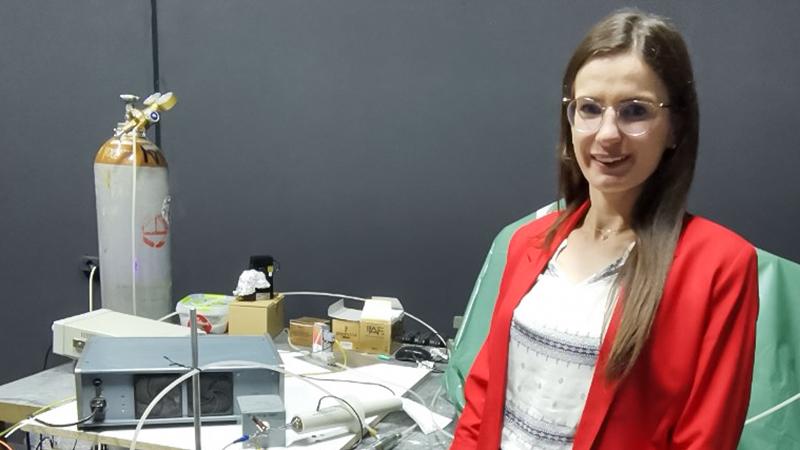
Andelija Petrovic, Junior researcher at her work.
Industrial Measurements
Innovations and Inspirations
Belgrade
Serbia

Plasma – one of the four states of matter along with solid, liquid, and gas – consists of positive ions, negative electrons, neutral molecules, UV light, and excited molecules which can possess a massive amount of internal energy. Plasma is created from gas in the same way that gas is created from liquid and liquid from solid: by applying energy.


Plasmas that operate under ambient conditions have become a valuable and increasingly popular tool in scientific research in recent years. At the Institute of Physics Belgrade, Serbia, Vaisala’s compact DMT143 dew point transmitters are helping researchers in their experiments to discover new applications for atmospheric-pressure plasmas, including treatment of cancer cells.

A versatile tool for biomedical applications

One of the European centers of excellence for plasma research is the Institute of Physics Belgrade, which is home to 25 laboratories and 200 research staff. Funded by Serbia’s Ministry of Education one of these labs focuses on applied research using low-pressure, room temperature plasmas. And it is here where we find Vaisala’s dew point transmitter technology playing a vital role in exciting new scientific discoveries.

“The past decade has seen the rise of atmospheric-pressure cold (room-temperature) plasmas in a variety of applications including medical and agricultural research,” explains Andjelija Petrovic, Junior Researcher. “Unlike hot plasmas, which can damage biological samples, cold plasmas are safe to use in these fields. They can help germinate seeds and kill cancer cells while leaving healthy cells untouched,” she continues. Other examples of applications of these types of plasmas include wound treatment, inactivation of pathogens like bacteria and viruses, sterilization of medical equipment, and decontamination of water.

The power of humidity

The effects of a plasma can be manipulated by adjusting the proportion of nitrogen and atomic oxygen in the gas mixture, amount and source of energy applied, pressure, humidity, and other factors. Today, plasma technology is common in industries as diverse as the automotive, microelectronics, packaging, and medical device industries, and plasma has to be adjusted to serve the differing needs of each one.

“Measuring and monitoring humidity in our plasma systems is very important because humidity plays an important role in the plasma chemical processes since dissociation of water (H2O) opens up a wide variety of subsequent plasma chemical reactions,” says Andeljija. “The products originating from the water reaction pathways, for example, hydroxyl radical (OH), atomic oxygen (O), and hydrogen peroxide (H2O2) generate oxidative stress in biological samples,” Andjelija explains. “In biomedical applications, changing the humidity has an influence not only on the plasma but also on the biological targets being treated, which can be cells or cell structures, liquids, or seeds.”

Process

Vaisala DMT143 – a trusted member of the team

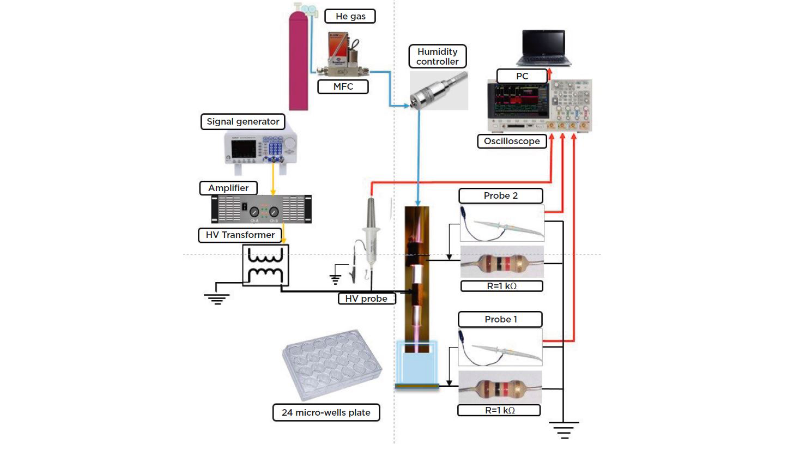
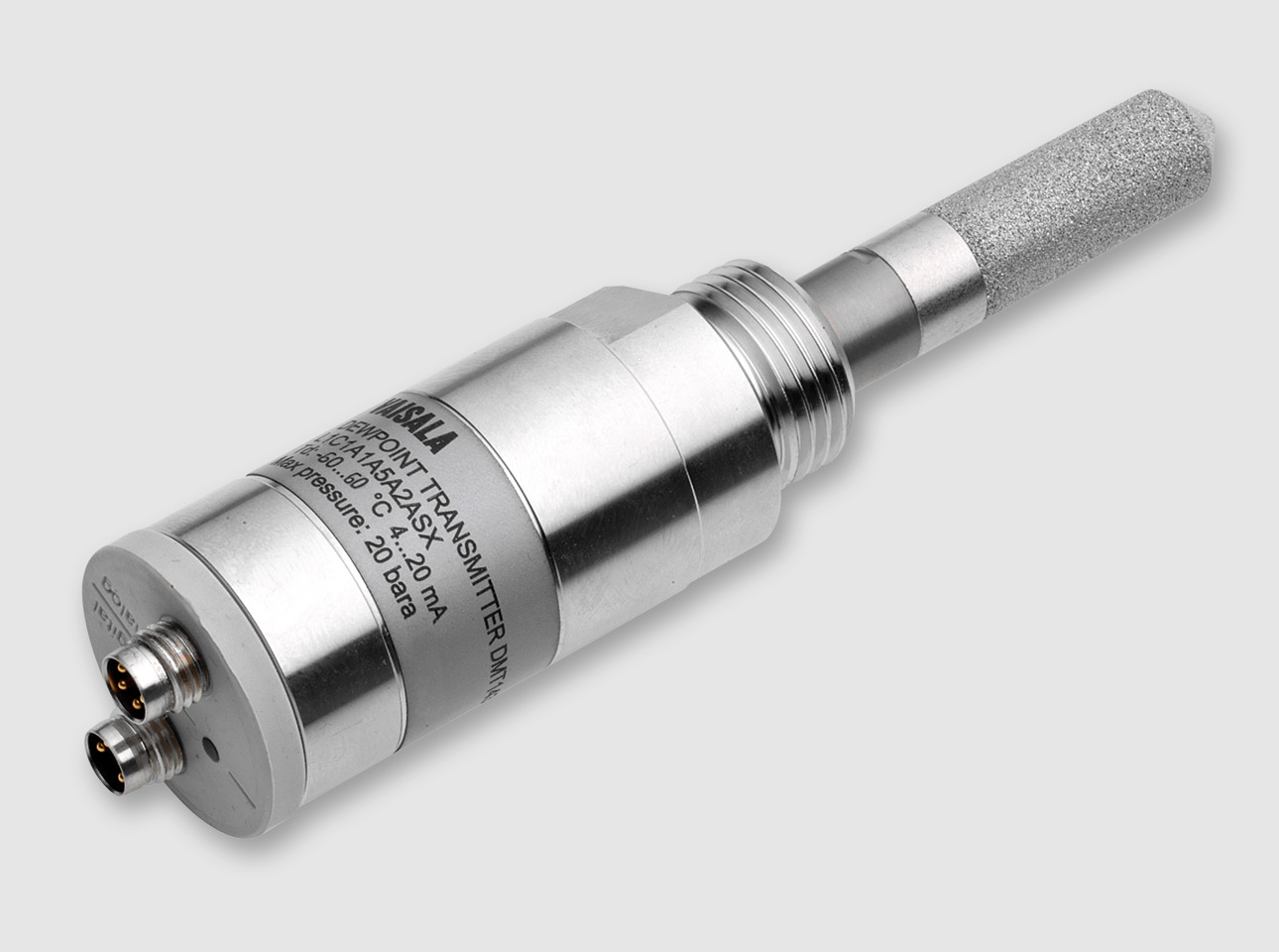
Because of the tiny scale of the plasma experiments that Andeljija helps to run, the Vaisala Miniature Dew Point Transmitter DMT143 is an ideal choice. “The gas is fed from a bottle into a glass tube that is just 6 mm in diameter and 20 cm long, with two electrodes inside to ignite the gas,” explains Andeljija. “The DMT143 is installed in the piping between the gas bottle and reaction tube. We can use it to see exactly what is happening with the humidity level before we start the gas flow and see how humidity influences the gas flow. Once we ignite the gas to create plasma, we can then accurately control the concentration of humidity using measurements from the DMT143 to influence the plasma chemistry as needed.” See the illustration above.

The lab has two Vaisala DMT143 devices and have been using them for about six years. “Accurate humidity measurements are absolutely critical in our work and we’ve relied on our Vaisala DMT143’s for several years. They’re really easy to use and because of their size we can integrate them without having to change our experimental l set up move them around as needed, Andeljija explains.”

As Andeljija and the team continue their research into new applications for plasma, their Vaisala DMT143 devices will continue to play an important role in breaking new ground in this promising field of scientific experimentation. 

Learn more about the DMT143 or contact us.

Read the article as a PDF.

All images: Courtesy of Institute of Physics Belgrade, Serbia.

Related products

Benefits of digital Modbus communication compared to analog signal transmission

Submitted by maaret.helenius on
Circuit board
Industrial Manufacturing and Processes
Industrial Measurements
Life Science

Although analog probes and data collection technology have a lot to offer, they also present several risks. Modbus is a digital communication protocol that overcomes many of these issues. In this first blog post in a series of three about Modbus, we introduce this established fieldbus protocol, discuss its benefits, and explore how it is implemented in Vaisala devices.

What is Modbus?
Modbus was developed by Modicon in 1979 and is one of the oldest fieldbus protocols available. The initial intention was to create an open protocol; thanks to the success of this strategy Modbus is now seen as an industry-standard protocol and supported by most programmable logic controller (PLC) brands because no licenses or proprietary hardware are needed and it’s free to implement a control system. Vaisala products use either Modbus RTU, which is built on the RS-232 or RS-485 protocol or Modbus TCP/IP, which uses an Ethernet network. One potential downside of Modbus especially in serial line communication (RS-485) is that if you have a multi-vendor configuration that uses instruments from different manufacturers in the same network, there may be some compatibility issues between the different brands. 

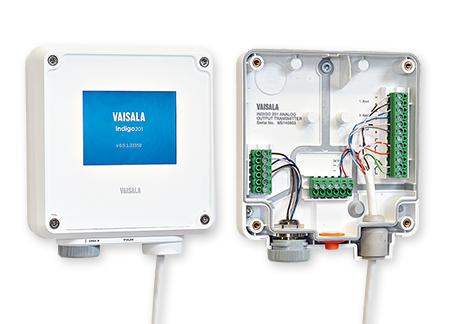
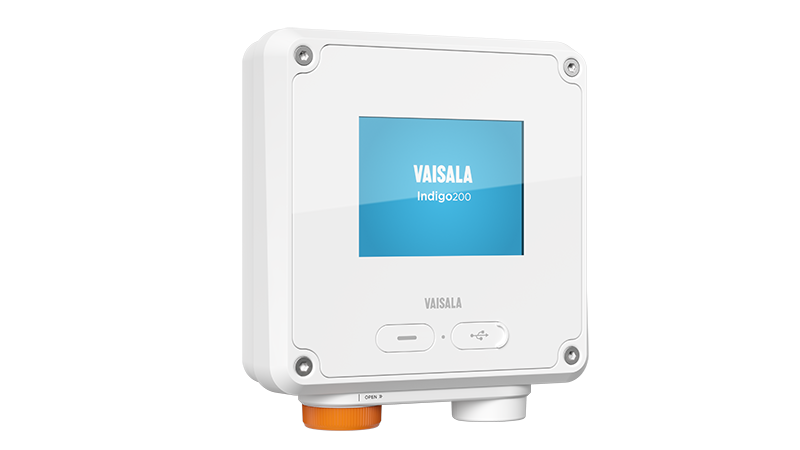
The Vaisala Indigo201 analog transmitter
The Vaisala Indigo platform is used extensively in a wide range of challenging industrial applications. The product consists of an analog data transmitter attached to an intelligent, interchangeable probe that measures variables such as relative humidity and temperature, dew point temperature, carbon dioxide or hydrogen peroxide concentration. All measurements and calculations are performed digitally by the Indigo compatible probe, which is also capable of operating as a standalone unit without a transmitter. The probe passes the data on to the transmitter, which then sends it to a PLC in analog form.

Indigo201


The issue with analog signal transmission
Typically, a digital humidity probe, in this case, a Vaisala HMP3, has two sensors – one that measures temperature, such as a PT100 sensor, and one for relative humidity, for example, a Vaisala HUMICAP® sensor; in reality, these sensors are actually measuring changes in resistance and capacitance respectively. The probe converts the analog signals into digital data, makes the necessary calculations for temperature and relative humidity, and sends the accurate digital data to the Indigo201 analog transmitter. The transmitter then converts this signal back into analog form to be transmitted via analog cabling to the PLC, where it is once again converted to digital data for processing and storage.

As might be expected, converting the digital data into an analog form in the data transmitter and then back to digital in the PLC or other control system will introduce additional error sources. Ensuring accurate measurements is important from both a quality and regulatory perspective, and one way to minimize errors is to use digital communication. This is where Modbus comes in.

The advantages of Modbus 
The same probes that can be used with the Indigo201 are also compatible with the Modbus RTU digital communication protocol. Because Modbus uses digital communication, in addition to relative humidity and temperature the probe can also be used to measure many other parameters including dew point/frost point temperature, absolute humidity, mixing ratio, wet-bulb temperature, and enthalpy, as well as additional information such as device status, serial number, and security hash. Allowing the Modbus master to check the security hash status allows you to ensure that the sensor hasn’t been tampered with and that the probe configuration has not been altered. It’s also possible to connect multiple probes to the same network; with an analog system, this would require a substantial amount of additional cabling and (I/O) modules to be installed in the PLC system. Modbus also reduces the risk of data errors by minimizing conversions between analog and digital, making it a great option for digital data transmission.

Transmitter is not just an analog to digital protocol converter 
Although the Indigo compatible probes can be used as standalone measurement instruments, the best usability is often achieved together with a transmitter that offers a local user interface, display, different power supply options, and some of them with the advantages of digital communication. The Indigo202 transmitter provides the same Modbus RTU as the probe and the Indigo500 series transmitters communicate with Modbus TCP/IP-protocol. 

To learn more, watch the Modbus 101 webinar or or Contact us.

Related products
Indigo520 with probe

Indigo500 Series Transmitters

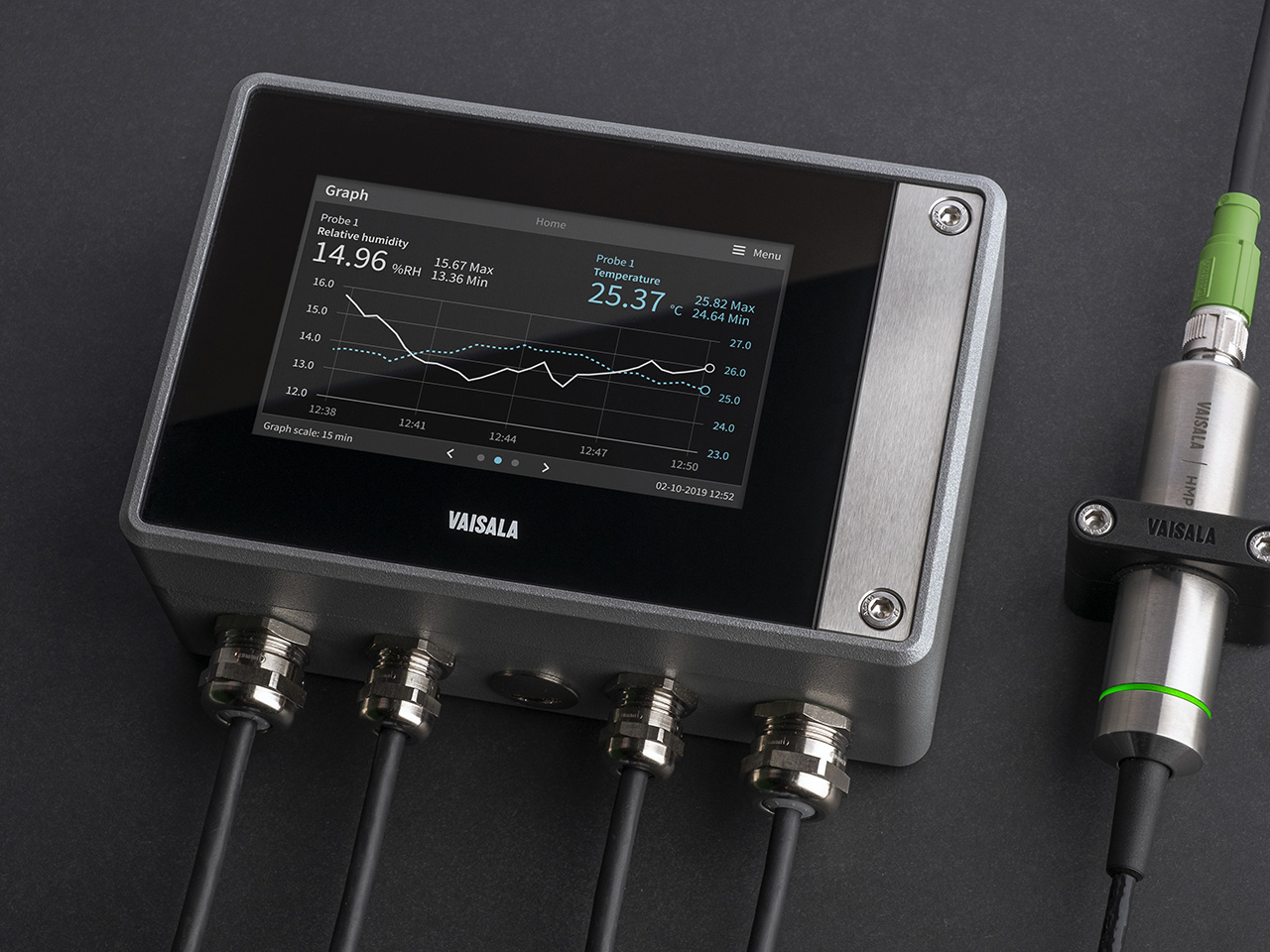
The Vaisala Indigo500 series transmitters are host devices for Vaisala Indigo-compatible, stand-alone smart probes. The Indigo500 series include multi-functional Indigo520 transmitter and Indigo510 transmitter with basic features.

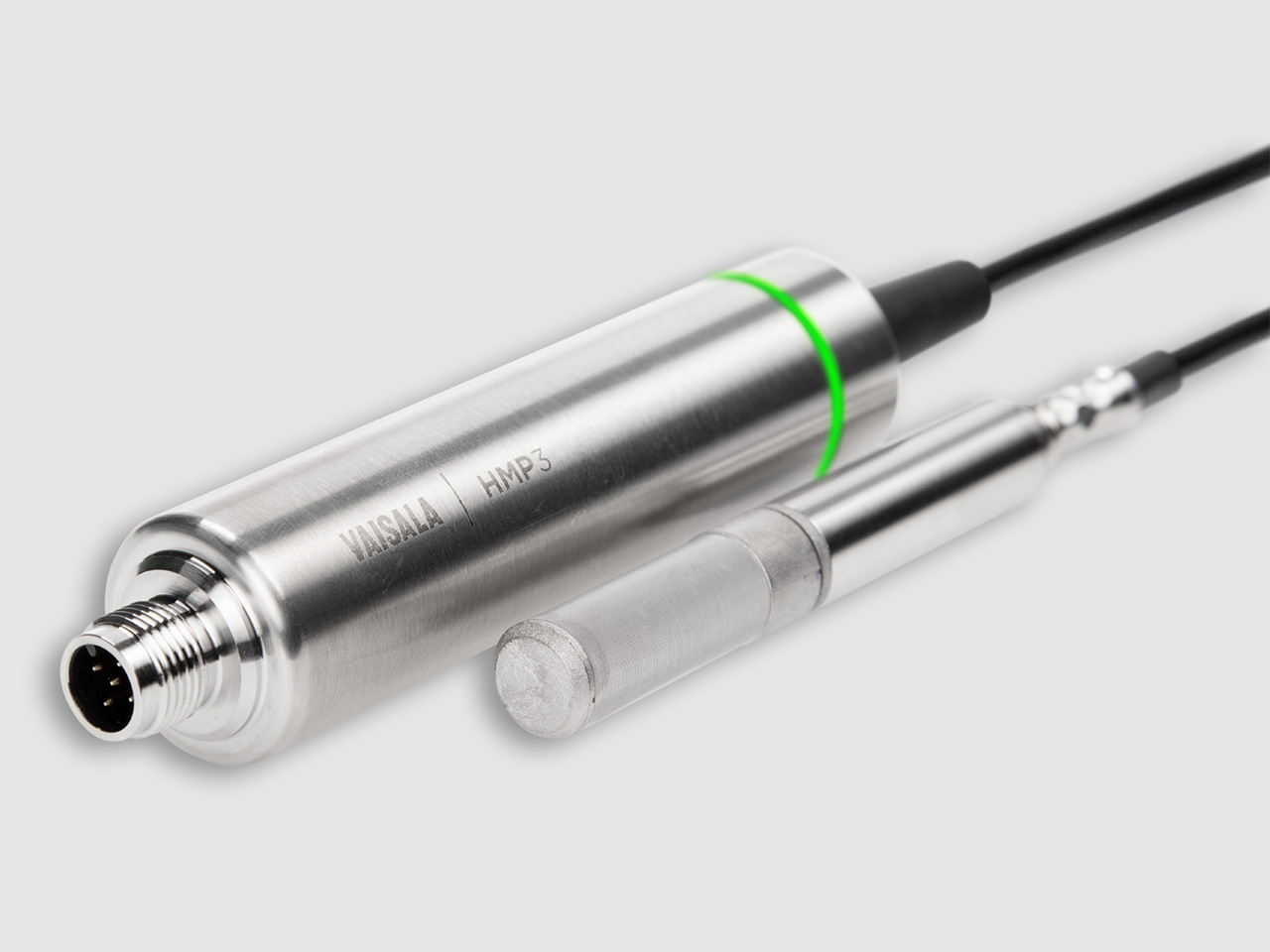
Vaisala HUMICAP® Humidity and Temperature Probe HMP3 is a general-purpose probe designed for processes with moderate humidity and temperature levels.

Humidity and Temperature Probe HMP3

Vaisala HUMICAP® Humidity and Temperature Probe HMP3 is a general-purpose probe designed for processes with moderate humidity and temperature levels.

Comment

victor m pliego aguilar

Oct 11, 2021
excelente y amigable

Add new comment

Process Expo

Nov 02
Chicago, IL
United States

Join us at Process Expo in Chicago, IL    
November 2-5
Booth #21035

Ensuring accurate humidity measurement in industrial processes

Profile picture for user tiina.vainio
Submitted by tiina.vainio on
Machine shop of metallurgical works
Buildings and Indoor Air Quality
Greenhouses and Indoor Farming
Industrial Manufacturing and Processes
Industrial Measurements
Innovations and Inspirations
Life Science
Sustainability

From the automotive industry to food production and from pharmaceuticals to steel or chemicals production, humidity measurement is a key part of many industrial processes. With potentially hundreds or even thousands of measurement points needed, ensuring stable, precise, and reliable measurement is extremely important.

This becomes more difficult in environments with high relative humidity (over 90% RH). In high relative humidity, all objects, including humidity sensors, are likely to be at a temperature close to saturation. In such an environment the vapor pressure gradient is not sufficient for effective evaporation of liquid water from the sensor surface. The sensor may stay wet for a several minutes or more, causing a prolonged measurement outage even after the environment is no longer saturated.

Wood drying in containers

Modular probes and transmitters

In order to ensure stable and reliable measurement for tough industrial environments, Vaisala created the Indigo500 series of top-of-the-line, modular transmitters that pair with our industry-leading measurement probes. Solutions are available for all industrial and even outdoor measurement applications, including humidity probes with Vaisala warmed probe technology for reliable and accurate measurement even in environments with 100% relative humidity. The Indigo500 series also supports probes for temperature, dew point, moisture in oil, carbon dioxide (CO2), and vaporized hydrogen peroxide (H2O2) measurement, offering users a great deal of measurement flexibility. 

Whatever the application, all Indigo probes are extremely accurate and reliable with excellent long-term stability, allowing you to detect even the weakest signals to make better and more timely decisions based on accurate data. 

Introducing the Indigo510 

The first product in the Indigo500 range was the Indigo520, which offers the widest range of customization options and features, including support for two probes. It was designed for use in tough industrial environments, with a highly robust metal casing that has been proven in reference cases worldwide. For customers that don’t require the full range of functionality offered by the Indigo520 and who only need one probe, we now offer an equally robust alternative. 

The new Indigo510 builds on the same platform and includes the same metal casing, software, display, and modularity as our flagship Indigo520 product. The features include modular support for a single Vaisala probe (meaning the probe type can be changed if needed), DC input, and two analog outputs. While the build quality and industry-leading measurement capability remain the same, the reduced feature set translates into a more streamlined price point. This makes the Indigo510 ideal for applications where precise and reliable measurement is needed for a single variable (like humidity) even under harsh conditions. Indigo510 customers will also benefit from regular platform updates and software improvements for their transmitter. 

Combined with Vaisala Insight software, the Indigo series of transmitters and probes provides a solid ecosystem to ensure energy efficiency, safety, and end-product quality in your operations.  

Read more about the Indigo series or contact us for more information.

Related products
Indigo520 with probe

Indigo500 Series Transmitters

The Vaisala Indigo500 series transmitters are host devices for Vaisala Indigo-compatible, stand-alone smart probes. The Indigo500 series include multi-functional Indigo520 transmitter and Indigo510 transmitter with basic features.

Vaisala HUMICAP® Humidity and Temperature Probe HMP3 is a general-purpose probe designed for processes with moderate humidity and temperature levels.

Humidity and Temperature Probe HMP3

Vaisala HUMICAP® Humidity and Temperature Probe HMP3 is a general-purpose probe designed for processes with moderate humidity and temperature levels.

Vaisala HUMICAP® Humidity and Temperature Probe HMP4 is designed for high-pressure applications

Relative Humidity and Temperature Probe HMP4

Vaisala HUMICAP® Humidity and Temperature Probe HMP4 is designed for high-pressure applications such as compressed air systems in maritime, breathing air, and industrial applications, where measurement performance and chemical tolerance are essential.

Vaisala HUMICAP® Humidity and Temperature Probe HMP5 is designed for high temperature applications

Relative Humidity and Temperature Probe HMP5

Vaisala HUMICAP® Humidity and Temperature Probe HMP5 is designed for high temperature applications such as baking ovens, pasta dryers, ceramics and industrial drying kilns where measurement performance and chemical tolerance are essential.

HMP8 and HMP8L

Relative Humidity and Temperature Probe HMP8

Vaisala HUMICAP® Humidity and Temperature Probe HMP8 is designed for pressurized applications in compressed air systems, refrigerant dryers, and other pressurized industrial applications where easy insertion and removal of the probe and adjustable installation depth into the pipeline are needed.

The Compact Vaisala HUMICAP® Humidity and Temperature Probe HMP9 is designed for easy installation in rapidly changing environments.

Compact Humidity and Temperature Probe HMP9

The Vaisala HUMICAP® Humidity and Temperature Probe HMP9 is designed for easy installation in rapidly changing environments where a fast response time, measurement performance, and chemical tolerance are essential.

Vaisala Temperature Probe TMP1 is designed for demanding temperature measurements in industrial applications.

Temperature Probe TMP1

Vaisala Temperature Probe TMP1 is designed for demanding temperature measurements in industrial applications such as pharmaceutical industry and calibration laboratories, where accuracy and robustness are essential.

Vaisala DRYCAP®  Dew Point and Temperature Probe DMP5 is designed for in-line humidity measurement in industrial drying applications.

Dew Point and Temperature Probe DMP5

Vaisala DRYCAP®  Dew Point and Temperature Probe DMP5 is designed for in-line humidity measurement in industrial drying applications with high temperatures and a wide dew point range.

Probe head and probe body of the DMP6 for very high temperatures

Dew Point Probe DMP6

Vaisala DRYCAP® Dew Point and Temperature Probe DMP6 is designed for in-line humidity measurement in industrial drying applications with very high temperatures and a wide dew point range. 

Indigo Selector screenshot

Indigo Selector

Discover your ideal Indigo compatible probe and transmitter combinations with the Indigo Selector tool.

Add new comment