Gaining In-depth Understanding of the Problem is The Key - Millennium Technology Prize Winner Tuomo Suntola interviewed

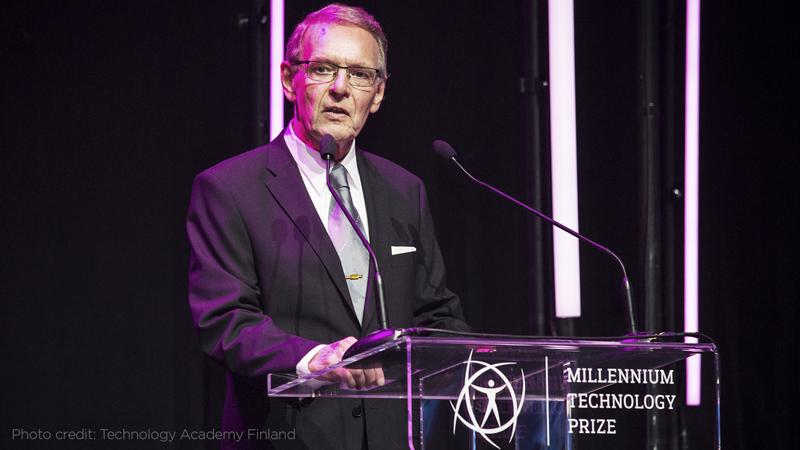
2018 Millennium Technology Prize Winner, Creator of HUMICAP Tuomo Suntola
Innovations and Inspirations

Doctor Tuomo Suntola, who this spring received the prestigious 2018 Millennium Technology Prize for his technology of atomic layer deposition (ALD), and who in 1973 invented our HUMICAP® sensor, visited Vaisala in June and gave an interview on his work and career.

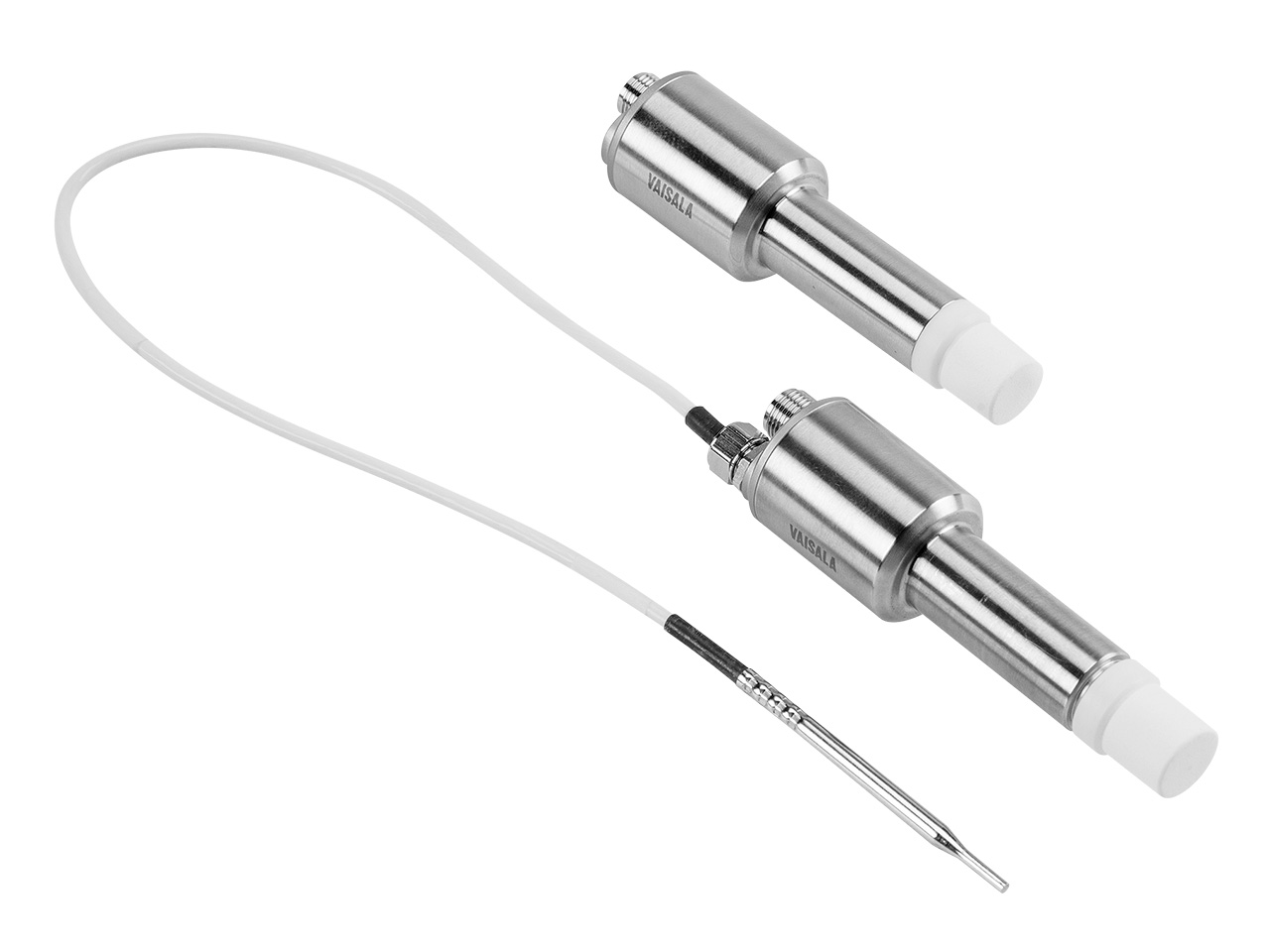
Tuomo Suntola graduated M.Sc. (1967) and obtained his Ph.D. (1971) in Electron Physics in the Electrical Engineering Department at Helsinki University of Technology. He entered into materials sciences and thin film technologies by solving the late 60’s mystery of the nanosecond switching mechanism in “Ovonic” thin film devices as his doctoral dissertation. In 1973, his first industrial work was HUMICAP®, a thin film humidity sensor for Vaisala, which almost 40 years later still holds the position of the world market leader in humidity sensing.

The work was ordered in 1971 from Yrjö Toivola, Vaisala’s Managing Director at the time. The purpose was to investigate the technologies that were used to measure relative humidity in the atmosphere with the aim of incorporating the humidity sensor to Vaisala’s ground weather stations, and with the dream of also adding the sensor to a sonde. Toivola ordered the work from the Technical Research Center of Finland (VTT), where Suntola at the time was finishing his doctoral thesis.

Suntola remembers Toivola warmly: “Yrjö Toivola was the primus motor behind the project, he had an appetite for new technology and possessed great intuition.” Suntola stayed in touch with him even after he had finished working for Vaisala.

The biggest innovation was applying a polymer a thin film structure, which was completely new and revolutionized the whole humidity measurement industry and suited the sonde very well. From the production point of view, the technology was cutting-edge: the process is mass production friendly and the sensor is so linear that it enables us to have only two a few calibration points. Hence, we can deliver the products very efficiently even in high volumes, which creates a great competitive advantage for us.

The solution was first implemented in weather stations, then in radiosondes, and after that in industrial measurement. Currently, Vaisala produces the fifth generation of the HUMICAP. From the outside, it looks very similar but it is made on an aluminum sheet instead of glass due to the integration of temperature measurement.

Gaining In-depth Understanding of the Problem Is the Key

According to Suntola, in-depth understanding of the problem is the key.

He gives an example: “When inventing the ALD, I was founding a research department but no laboratory had yet been established. Of necessity, I had time to ponder. In the office, the periodic table of elements was hanging on the wall and I had time to stop and think about the core of the problem. And in that situation I found the solution,” Suntola explains.

Suntola's innovations have been focusing strongly on the industrial side. He has enjoyed solving problems that matter and benefit the users.

Profound Interest in Science and Explaining Nature

During his long career, in addition to his technical work, Suntola has had an interest in deep understanding of the basics of physics. He has, for example, written a book on the history of science called “The Short History of Science - or the long path to the union of metaphysics and empiricism”. He has studied the modelling of the physical reality and published another book called “The Dynamic Universe, Toward a unified picture of physical reality”. In the book, he introduces a holistic theory opening a new viewing angle to the theory of relativity.

Due to his interest in physics, the basis for his research has been the in-depth understanding of the phenomenon.

The central task of science is to make nature understandable. “My passion lies here, and the research continues”, Suntola concludes.
 

Add new comment

Q&A from the Webinar Diving Deep into Advanced Humidity Measurement and Specifications

Submitted by anne.palmio on
Webinar session
Industrial Manufacturing and Processes
Industrial Measurements

Another humidity webinar is behind us! You are welcome to download the recording of Diving Deep into Advanced Humidity Measurement and Specifications at any time.

If you attended the live session with hundreds of others on May 16th, thank you! If not, thank you anyway for your interest since you have found your way to this blog. This time we focused on a bit more advanced things, although that of course depends on who is listening. For some of you it could be basic knowledge, but for most people who gave us feedback, the presentation was on a suitable level.

Anyway, let's get to the actual topic - the questions and answers! We received some great questions and I have asked our humidity expert and Product Manager Jarkko Ruonala to answer them.

What mechanisms are best suited for measuring humidity above 90% in industrial environments? We use wetbulb/drybulb and it seems like electronic sensors are unable to operate successfully at these high levels and maintain a great deal of accuracy.

Continuous high humidity and exposure to liquid is problematic with certain humidity sensor technologies. However, HUMICAP® sensors withstand immersion to water and you can operate them continuously in high humidity.

It is good to keep in mind that continuous high humidity may shorten the calibration interval for the sensor. Another possible issue associated with continuous high relative humidity is that very small changes in temperature are enough to bring the sensor to condensation, i.e. the dry-bulb temperature is very close to the dew point temperature by the laws of nature. For instance, if the ambient temperature is 22 °C and RH was 97 %RH, a fluctuation of 0.5 °C is enough to cause condensation and wetting the sensor. Maintaining this uniform temperature may be challenging even in a condition chamber. Thirdly, the accuracy specification is typically better in relative humidity levels below 90 %RH.

To overcome these issues, you can use the Vaisala warmed probe technology. This technology is available in certain products, such as HMP7 humidity and sensor probe, HMT337 humidity and temperature transmitter and HMP155 humidity and temperature probe. In this technology, not only the sensing element but the whole probe and probe filter are warmed slightly above the ambient temperature in order to

  • decrease the relative humidity seen by the sensor and
  • increase the difference between the temperature of the probe and the dew point temperature, thus avoiding condensation associated with fluctuation in temperatures.

In this solution, the humidity probe is warmed and another temperature probe is used for measuring the actual ambient temperature. This information is then used for calculating the relative humidity at the actual ambient temperature.

What is the accuracy of chilled mirror hygrometer at 90-100% RH?

The chilled mirror hygrometer accuracy is specified in terms of dew point temperature. These instruments are able to measure dew point temperature with very high accuracy, in the order of +/- 0.1 °C. However, measuring dew point temperature alone is not enough if relative humidity is the desired reading, as it requires information on the dry-bulb temperature as well.

So, the accuracy that can be obtained for relative humidity with the help of chilled mirror hygrometer depends not only on the accuracy of the chilled mirror, but also the accuracy of the temperature reference, and the whole measurement arrangement, primarily the temperature uniformity and stability.

As a reference, typical accuracy for professionally designed calibration stations using chilled mirrors and accurate thermometers with carefully designed calibration cells having very good thermal uniformity will provide uncertainty in the order of +/- 0.8 %RH over the full RH range.

What methods or instruments are known today to measure ambient wet bulb temperature? Is there a more advanced way other than the psychrometer?

Most Vaisala humidity and temperature instruments are able to calculate the wet bulb temperature from measured relative humidity and temperature and output directly the humidity in terms of wet-bulb temperature.

For example, in room temperature the Indigo series HMPx humidity- and temperature probes or HMT330 series transmitters may output calculated wet-bulb temperature with accuracy better than +/- 0.5 °C over the full RH range. 

Psychrometers measure wet-bulb temperature directly, but they have limitations with RH accuracy (combined uncertainty from two temperature measurements) stability and repeatability. This is especially  the case with manual psychrometers, as there may be operator related variance, the wicks may get residues or deposits, and there is uncertainty on whether the evaporation at the wet wick is perfect.

Furthermore, calibration for psychrometers is troublesome, which may contribute to the common misconception that the psychrometers would not require calibration or that they can be calibrated by only performing temperature calibration on the thermometers, which does not account for sources of measurement uncertainty in the actual wet-bulb measurement.

What is the best sensor to use to when testing RH 90-100%?
I would recommend using Vaisala HMT337 or Indigo family HMP7 and TMP1 probes in the heated probe configuration for the best performance under this humidity range.

How does conductivity impact the changes in RH in Oil monitoring?
The conductivity of the oil is not significant for the HUMICAP sensor, there is no cross-sensitivity to the conductivity in the normal moisture-in-oil applications. The measurement is based on detecting the changes in capacitance, which is a function of the equilibrium relative saturation of the oil and the sensor.

Is Vaisala an official ISO 17025 accreditation laboratory?
Vaisala has in-house ISO 17025 accredited calibration laboratories in Helsinki, Tokyo, Beijing and Boston. See accredited calibration services

Most capacitive humidity sensors have dew point limit at +85 °C, do you have any recommendation for a sensor that can measure under pressure for dew point up to +140 °C to +150 °C dew point?
HUMICAP sensors are not recommended for use in dew point temperatures exceeding 100 °C (water vapor pressures exceeding 1 bar).


You are welcome to find more webinars on our webinar central and please do not hesitate to contact your local sales engineer to discuss specific needs!


Add new comment

Smart Measurement Solutions for Drying Process Problems

Powders
Industrial Manufacturing and Processes
Industrial Measurements

Poor energy efficiency, end-product quality issues, equipment corrosion – Have you ever dealt with these issues?

The amount of moisture in air plays a critical role when drying everything from wood to ceramics and food, and even compressed air. A lack of accurate temperature and humidity measurement in industrial processes can lead to a variety of problems, and therefore additional costs, that a business could do without. Whether it’s wasted energy from over drying, poor end-product quality, or even dryer corrosion that shortens the lifespan of your equipment, with the right measurement equipment in place you can avoid all these disruptive and potentially costly problems.  

Regardless of the application, there are three key areas that need to be monitored in your drying process: input temperature, input air, and exhaust air. Accurate and reliable measurement of parameters such as humidity, temperature, and dew point is critical across a range of different industrial drying processes.

•    Wood drying is a complex process where the results are affected by the type of wood being dried as well as seasonal variations. Here, humidity really matters because it directly affects the quality of the drying process. Accurate relative humidity or dry-bulb/wet-bulb measurement ensures that the wood does not crack due to overly dry conditions or take longer than needed to dry due to overly moist conditions. In both cases, when you have a clear picture of humidity levels, you can maximize the energy efficiency of the drying process and the quality of the end product.

•    Compressed air is used in many different industrial processes to operate equipment like robotic assembly systems. This kind of complex equipment contains components that could easily malfunction or corrode if exposed to excessive condensation. Ensuring that the compressed air fed to the equipment is clean and dry is therefore extremely important, and this is where stable and accurate dew point monitoring comes in. Accurate dew point measurement is also required for compliance with most medical gas and breathing air regulations.

•    For food-drying, nutraceuticals or powder drying applications, the humidity level in dryers and ovens has to be carefully controlled in order to keep quality and yield high and to ensure that the end product has the desired characteristics. Proper drying also helps to ensure safety by preventing microbial growth. Here, accurate humidity measurement helps to achieve exactly the right balance – drying the product sufficiently to keep it safe while optimizing input volume and drying time in order to minimize energy usage and maintain quality.

•    When drying ceramics or bricks, proper temperature and humidity control in the drying process helps to minimize cracking and avoid over drying, which leads to wasted energy and may even present a fire risk. As clays naturally contain a high level of water, uneven drying due to poor humidity control leads to internal stresses that can ultimately lead to a crack or breakage. In these applications saving energy really pays off because the drying process alone can account for a quarter of all energy consumed in the production process.

But a measuring device is only as good as its sensor. Poor quality sensors not only fail more often, they can also suffer from drift that leads to inaccurate measurements – even in mildly corrosive environments.

Vaisala’s range of humidity, temperature, and dewpoint measurement sensors are built to withstand the tough conditions typical of industrial drying processes – meaning they are highly accurate, robust, and easy to calibrate.

Learn how Vaisala can help improve the efficiency and results of your drying processes.

Add new comment

GAMP & GxP validation

Getting ready to fight climate change with MIREGAS

scientist, clean room, incubator, glove box
Sustainability
Finland

Vaisala, together with Technical Research Centre of Finland VTT Ltd and their European partners, is developing revolutionary LED-based technology for gas sensing: MIREGAS – Mid-IR Source for Gas Sensing. The new Mid-IR multi-gas product aims to be the world’s fastest and most accurate to detect and analyze greenhouse gases with a single sensor.

MIREGAS project aims to develop a novel Mid-IR light source that can be used for spectroscopic gas analysis. The multinational MIREGAS project group is creating an adjustable device that uses only one light source, as opposed to several lasers. The light source utilizes technology that was originally developed for optical communications applications. Compared to conventional gas sensor technologies, the concept provides better accuracy at a lower price.  

Multisensing fast and affordable

The MIREGAS device can make multiple measurements with one tunable and switchable multichannel optical filter and pick out individual gases from a mixture of emissions, including methane, ethane, butane, propane, CO2, carbon monoxide, hydrogen sulfide and benzene. It has the potential to detect numerous gases simultaneously, making it very applicable in both industrial process and environmental monitoring.

The project will fill a gap in the market, as affordable sources with comparable performance are not available. Conventional gas sensors can cost several tens of thousands of euros. Products based on MIREGAS technology will be less expensive with the light source having the potential to reach manufacturing cost in the range of only some hundreds of euros per unit.


Fighting the megatrends

Some possibilities for future applications are for example safety-related gas measurements; when extremely low concentrations of greenhouse gases are monitored in processes quickly and accurately, the process can be optimized and adjusted swiftly. This leads to reduced emissions. Similarly, possible gas leaks can be detected immediately in the initial phase. Yet another possible application could be high voltage asset condition monitoring. 

With the new MIREGAS technology, Vaisala could offer even more means to fight for energy and resource efficiency, against urbanization’s effects, and possibly even against climate change. As the technology leader in environmental and industrial measurement, Vaisala aims to commence product research and development project with MIREGAS in 2019–2020.

“We expect the technologies developed within the consortium will enable us to reach a new level of selectivity and accuracy in multi-gas measurements at competitive price levels. This would open new business opportunities and still strengthen our technological position in providing gas measurements for demanding applications,” says Senior Research Scientist Sami Virtanen from Vaisala.

Working together for Horizon 2020


The MIREGAS-project is a three-year project and will be completed during 2018.  In 2017, the project advanced promisingly. The team overcame one of the biggest technological challenges already, which was the LED light source development work done in Tampere.

The project is part of the biggest EU research and innovation program ever: Horizon 2020 (H2020).  With the objective to drive economic growth, Horizon 2020 is the financial instrument implementing the Innovation Union, a Europe 2020 flagship initiative aimed at securing Europe's global competitiveness.
 
MIREGAS has brought together world-leading European institutes and multinational companies. The scientist consortium is composed of seven partners: Vaisala, AirOptic, Vigo, GasSecure, Tampere University of Technology, ITME and VTT Technical Research Centre of Finland. The partners represent the complete value chain from devices and components to gas sensor manufacturers. The Optoelectronics Research Centre at the Tampere University of Technology in Finland will be responsible for developing innovative superluminescent LED technology, and ITME (PL) will develop moldable Mid-IR lenses. As the industrial partner, Vaisala (FI) together with AirOptic (PL), GasSecure (NO) and VIGO (PL), brings its competences in the areas of gas sensing and Mid-IR sensor fabrication, at the same time validating the technologies developed by the consortium.


The MIREGAS project

Objectives
Use of infrared absorption measurement principle in gas sensing at 2.7 … 3.5 µm wavelength band with up to 100 nm range; Obtain at least 10 times better signal to noise ratio compared to thermal emitters when using a Super luminescent Light Emitting Diode (SLED) emitter.
Achieving specificity and “re-programmability” of response for different types of target gases by utilizing a novel filtering technique based on the use of a Si Photonic Integrated Circuit (PIC).
Spectral resolution 10 times better compared to conventional filters used currently in gas sensors. Capability for fine tuning the filtering response up to 1 nm resolution, allowing for probing single absorption lines.
Manufacturing costs less than 300€/unit (with 5,000 units/year for an example product) when utilizing advanced integration and automated assembling technologies and molded Mid-IR optics. Possibility to upscale production and reduce unit cost.
Concept

The MIREGAS source is a programmable, multi-wavelength, Mid-IR source for Mid-IR gas sensor applications in 2.7 µm to 3.5 µm wavelength range.

In the MIREGAS concept, the optical measurement bands are selected with a Si PIC filter from the emission spectra of a wide-band (100nm) SLED light source.

The PIC filter includes filtering function to select spectral bands, switching or modulating function to switch required band(s) to the output or to modulate the selected output, and tuning function to wavelength-tune the selected outputs.


Keeping pathogens at bay

Foreman in front of containers
Sustainability
All over the world

Global mobility for people means mobility for pathogens, too. Vaisala provides a solution to ensuring vaporized hydrogen peroxide concentration is high enough in bio-decontamination processes.

Pathogens are a major concern for the pharmaceutical and food industries, but to the transportation business, too. Global mobility for people also means mobility for pathogens. Vaisala provides a sustainable solution to ensuring vaporized hydrogen peroxide concentration is high enough in the bio-decontamination process.

The need for more pharmaceutics and treatment facilities is growing around the world. The bio-decontamination market grows at the same pace. Vaisala’s contribution to it is the new probe for measuring vaporized hydrogen peroxide.

Containers piled on top of each other


Clean facilities and equipment

Vaporized hydrogen peroxide is used extensively in the bio-decontamination and sterilization of rooms, facilities, and equipment in the pharmaceutical and healthcare industry—to keep people safe from pathogens. For example, isolators and transfer hatches used to prevent contamination from outside area can be cleaned, when necessary. Also, treatment rooms in hospitals, ambulances, or even an aircraft can be cleaned with vaporized hydrogen peroxide. This can be particularly useful in a pandemic, when diseases can travel quickly on air routes.

Another application area is the food industry, where bio-decontamination can be used to make sure containers, such as yogurt bottles or the mouth of the bag in wine boxes, are clean enough for bottling, or to clean teat cups in a milking machine.

The use of vaporized hydrogen peroxide is growing in popularity, as it destroys even the most resistant microorganisms, like bacterial spores, mycobacteria, and viruses at room temperature and low concentrations. Moreover, it has no toxic by-products, breaking into water and hydrogen, and leaves no residue.

Solution for the long run

The users of Vaisala’s probe determine the parameters of the cycle required to ensure the elimination of contaminants from the process, i.e. how much hydrogen peroxide is used and what its concentration needs to be for how long. The probe confirms the bio-decontamination cycle meets these requirements.

As opposed to the electrochemical cells commonly used today, Vaisala’s probe is reliable and durable. It requires very little maintenance and needs calibration only once a year, whereas electrochemical cells are prone to breaking, and need to be changed at least every two years. Also widely used are biological and chemical indicators that can be used only once and then discarded. Getting results from biological indicators also takes several days, as specific incubation period is needed before results are available.

Vaisala’s probe can be used for much longer, and only the sensor needs to be changed, when its lifespan runs out. This decreases the use of raw materials considerably in the long run.

Related products

Get the Keys to Data Integrity in this Infographic

What are the Keys to Data Integrity in GxP Environmental Monitoring Systems?

Inside this Infographic:

  •     Focal points of preserving data integrity 
  •     Link to White Paper: "Managing GxP Environmental Systems to Ensure Data Integrity"
  •     Link to a recorded 1-hour training with lively Q&A with our regulatory expert
  •     Links to four crucial documents on data integrity from PIC/S, MHRA, WHO and the FDA.
See our Privacy Policy for more details.
You can modify your preference settings or unsubscribe at any time here

Vaisala cleanroom, at the origins of reliable sensors

Vaisala Cleanroom
Industrial Manufacturing and Processes
Industrial Measurements
Innovations and Inspirations

Would you like to have peek inside Vaisala cleanroom? It’s one of the most secret places in Vaisala, yet you will now have a chance to have a look inside.

Our Head of Sensor Factory, Hannu, gave us a tour around. And we filmed. This is the place where Vaisala’s accurate humidity, pressure and CO2 sensors are researched, developed and manufactured.

Add new comment