
Fab chemical process monitoring and fault detection
Increase yield and protect tools and wafer quality with inline, real-time wet chemistry measurements

Ensure stable chip quality with reliable chemical process control
Chip quality in semiconductor fabrication is tightly linked to how well process variability is controlled. In practice, this means keeping distributions safely within lower and upper specification limits and consistently meeting Critical to Quality (CTQ) and customer requirements. Excessive variability quickly shows up as product quality problems, yield loss, and rework. To secure a stable supply of good products to market, fabs need robust quality metrics, tight process control, and reliable chemical monitoring.
One important part of product quality and manufacturing is chemistry. Semiconductor wafer plants consume large volumes of chemicals throughout the fab process. Repeatability and reproducibility of each chemical step are top concerns, because even slight deviations from specification can cause expensive equipment contamination and wafer scrap.

Don’t let wafers become your chemical monitors
From chemistry’s point of view, there are two main operations directly tied to product quality:
- Process monitoring: Maintaining the desired chemical composition over time.
- Fault detection: Verifying that the correct chemical, at the correct concentration, is dispensed to the process.
With accurate, real‑time monitoring, fabs always know the composition of each chemical stream. Without monitoring, wafers effectively become chemical monitors. By the time an issue is detected at the wafer level, wafers are already lost, and large‑scale equipment contamination may have occurred, driving up costs and downtime.
Typical chemistries
Typical monitored chemistries include HF, IPA, DHF, H₂O₂, HNO₃, HCl, KOH, NaOH, and NH₄OH used in cleaning, etch, and other wet processes.

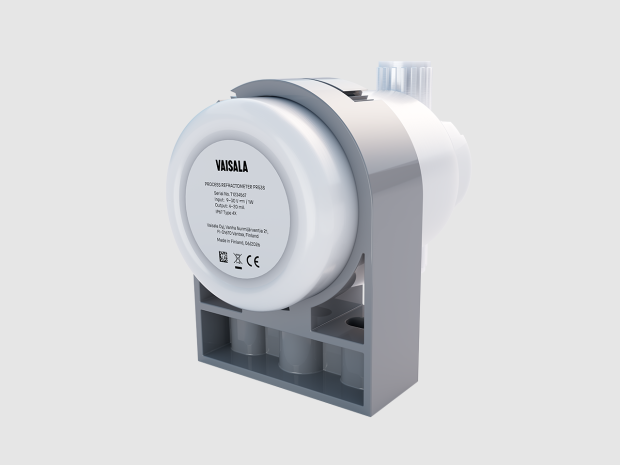
Vaisala Polaris™ PR53S Semicon Process Refractometer
For semiconductor wet processes
Compact, ultrapure inline refractometer for real-time chemical concentration measurement in semiconductor wet processes. It delivers highly accurate, reliable, and repeatable measurements directly in process lines and tools, enabling continuous monitoring across blending, cleaning, etching, CMP, and point-of-use applications.
With a modified PTFE flow cell and ¼–1 inch pillar or flare connections, the PR53S integrates seamlessly into wet benches, chemical distribution systems, and process tools. This helps maintain tight process control while simplifying operations and reducing the need for complex analyzer systems.
Key benefits for semiconductor fabs
One in‑line measurement principle for multiple wet process monitoring points across the fab
Continuous real‑time concentration information for tighter process control and higher yield
Replacement of complex and costly analyzers in bulk dispensing and point‑of‑use blending
Accurate, drift‑free concentration measurements based on refractive index technology with integrated temperature compensation
Proven performance in demanding chemistries, slurries, and fab conditions over multiple years
Excellent long‑term stability and no moving parts for low maintenance and high uptime
Applications in fab chemical process monitoring and fault detection
Vaisala offers in-line, real-time, reliable, precise and cost-effective metrology for wet chemistry concentration
measurements which can replace expensive and complex analyzers used in fab chemical process monitoring
and fault detection as well as CMP slurry composition and concentration control.
Bulk chemical delivery
Quality detection of incoming chemicals, such as: HF, IPA, DHF, H2O2, HNO3, HCI, KOH, NaOH, NH4OH.
Semiconductor wet chemicals
Real-time concentration monitoring of wet chemicals during silicon wafer fabrication in wet bench or wet process.
Peroxide blending and dispense at CMP
Critical process systems: Hydrogen peroxide H2O2 or other oxidizing agent's concentration monitoring during Chemical Mechanical Planarization (CMP) process.
KOH etch of silicon
KOH bath concentration monitoring for determining the correct etch end-point.
Post-etch residue removal with EKC® chemicals
Water content monitoring in EKC® for spray solvent tools.
Chemical interface detection in wafer cleaning
Instant switch of wafer cleaning chemicals hydrofluoric acid (HF), deionized water (DIW), SC-1 (H2O2, NH3).
Solar (photovoltaic) industry: Removal of residual sawing material from solar wafers
Lactic acid CH3CHOHCOOH or acetic acid CH3COOH bath concentration monitoring.
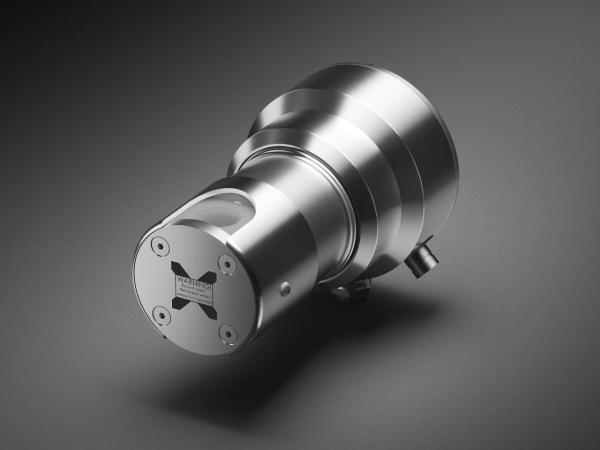
Maximum productivity and safety in hazardous areas
The industry-leading Vaisala Polaris process refractometers offer Ex-certified product versions for hazardous areas.
Depending on selected product option, the refractometers are designed to be installed in either
IECEx/ATEX Zone 0/1 (North America Class 1 Division 1) or Zone 2 (Class 1 Div 2).
The Polaris Ex-versions are Indigo520 compatible to secure maximum productivity.
The Indigo520, and the associated IS equipment in case of Zone 0/Class 1 Div 1, is placed in the safe area.
Indigo80 for Vaisala Polaris™ process refractometers
Discover the unmatched combination of Vaisala Indigo80 and Polaris™ process refractometers. With the Indigo80, a screen on the go, configure and calibrate probes without downtime, log data from individual probes for speedy diagnosis, and identify potential maintenance needs easily.
White Papers
In-line refractive index in assay characterization of incoming fresh and effluent spent CMP slurry
In-line refractive index (RI) measurements are the technique of choice for qualifying the hydrogen peroxide content in CMP slurries. However, peroxide content is not the only slurry metric of interest. Typically, slurries are delivered from the manufacturer in concentrated form, then diluted with water and peroxide at the fab. Though slurry density is a critical parameter for CMP performance, incoming density can vary from batch to batch.
In-line refractive index replaces auto-titration in qualifying H₂O₂ concentration in CMP of tungsten
Refractive index measurements have established themselves as the technique of choice for qualifying peroxide content in slurries for CMP of tungsten. Many emerging process flows use CMP as a critical tool for building circuit structures, dramatically increasing the number of CMP steps — and thus the number of opportunities for yield loss if slurry composition deviates from the specification. While auto-titration measurements can give extremely accurate results, they impose large capital equipment and ongoing maintenance costs and offer only discrete sampling at specified intervals. Refractive index, a continuous, non-slurry-consuming measurement, helps fabs identify slurry composition faults quickly, reducing the number of wafers at risk.
In-line refractive index monitoring for CMP slurry fault detection
Inline refractive index measurements have established themselves as the technique of choice for detecting faults in the CMP slurry blending and dispense systems of leading fabs. Refractive index, a continuous, non-sampling measurement, helps fabs identify slurry composition changes quickly.
Once calibrated to a specific slurry’s temperature/refractive index characteristics, refractive index measurements can determine the concentration of hydrogen peroxide in slurry with a precision to within ±0.02% by weight, for both copper and tungsten slurries. In long-term studies at this leading edge fab, measurements for low node technology CMP processes detected slurry compositions reliably for three years, with no instrument maintenance beyond routine flushing of the slurry blender tank.
In-situ chemical monitoring in semiconductor fabrication chemical supplies
In-coming chemical quality has been left to the chemical suppliers. Semiconductor fabricators have very limited or no capability to detect problems with process chemistries from their suppliers. It was found that product is exposed to any incoming chemical changes, no matter what the cause, supplier, mechanical or human. In fact it can be said that the product is used as a monitoring method for the chemicals. This paper will discuss a variety of different monitoring methodologies; suggest the best practices for a cost efficient application for a wide variety of semiconductor chemistries. The solution to the overall problem is not a single device or scheme, but rather a set of devices and a change to fundamental thinking in the chemical distribution area. Supporting data and other relevant experimental results will also be discussed to support and reinforce the findings.
Fab chemical process related products
Vaisala Polaris™ PR53S Semicon Process Refractometer
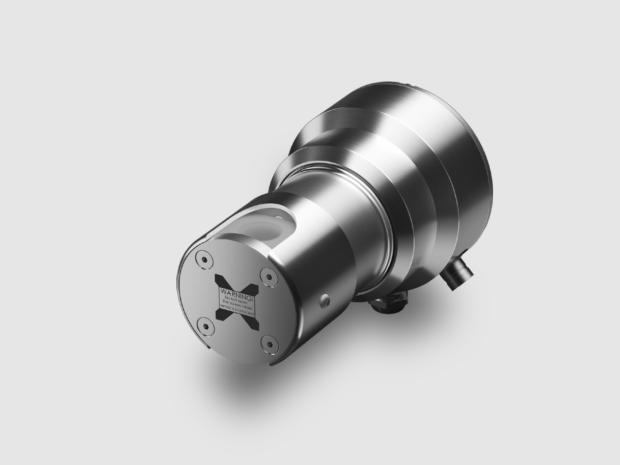
Vaisala Polaris™ PR53M and MEX PTFE-Body Process Refractometers for ordinary and explosive areas
Blogs, webinars and success cases
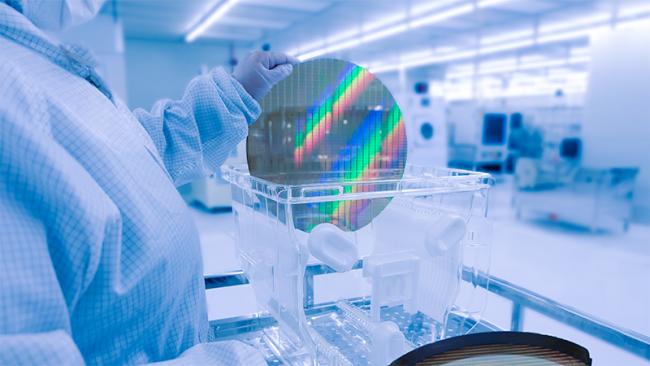



Liquid concentration measurement
Vaisala offers a wide range of products tailored to liquid measuring needs of different industries.
Learn more about the refractometer technology and its applications, and visit the library of product related assets.
Ready to build a more reliable chemical process?
Connect with our experts to discover how real-time measurement and provided data can elevate your fab's wet-chemistry management.


