Salon Analyse Industrielle

Apr 05

man walking pharmaceutical laboratory cleanroom
Paris, Champerret
France

The 35th edition of the unmissable exhibition for Analysis, Instrumentation and Industrial Processes returns to its traditional period in the 1st quarter on April 5 and 6, 2023 in Paris – Champerret in person.
Perfecting solvent swap processes with refractive index trend data

Profile picture for user janice.bennett
Submitted by janice.bennett on
Inline process refractometer installation
Industrial Manufacturing and Processes
Life Science
Liquid Measurements

This blog is first in a three-part series on how in-line process refractometers can optimize API processes.

The creation of Active Pharmaceutical Ingredients (APIs) is a critical part of pharmaceutical production. API formulation typically begins with loading chemicals into a reactor where chemical bonds are broken, and new bonds formed. After reaction, the active ingredient is separated through downstream purification steps, such as centrifugation and filtration. Typically, the API is recovered as a solid from the liquid phase and the solvent used is recovered in dedicated solvent recovery units.  Solvent recovery is important in the pharmaceutical industry because it helps to reduce costs and environmental impact. The final API solid is then dried before it can be used as an intermediate or to formulate the final drug product.

Developing and optimizing pharmaceutical manufacturing processes can be a complex and lengthy process, taking several years to complete. In order to streamline these processes and bring drugs to market faster, it is important for pharmaceutical companies to focus on creating efficient processes that are scalable and reproducible at a commercial scale. The implementation of the FDA’s Process Analytical Technology (PAT) framework, including the use of in-line measurement instrumentation, offers a valuable opportunity for pharmaceutical process development and scale-up through the collection and analysis of data for process understanding, design and optimization. PAT tools help to ensure quality is integrated into the design and that processes produce products of consistent quality that meet the required specifications. 

Using refractive index as part of PAT

Refractive index (RI) has proven to be a useful Process Analytical Technology (PAT) tool for the development, design, and continuous optimization of API manufacturing processes. Continuous, in-line measurement of RI provides data and process insight that aids in understanding and designing different manufacturing steps. The data allows for the creation of process profiles that can be used for detecting deviations and ensuring process equivalence. The Vaisala refractometer provides trend data with the high reliability and reproducibility required in pharma manufacturing. Refractive index measurements are not affected by the presence of gas bubbles, solid particles, or color of the liquid. These features of refractive index make it ideal for many applications in the API manufacturing process.  

Refractive index is a fundamental physical property of liquids and is generally not dependent on the quantity of the sample measured. This simplifies scaling up processes from lab to pilot, and then to full scale production.  

Trend data is obtained in real time and can be compared to the design process profile obtained by RI, which determines process equivalence and aids in evaluating and determining other critical process parameters, tolerances, and optimal operating conditions. Furthermore, process profiles from RI data have aid in identifying problems during scale-up and for continuous optimization of existing processes. 

Optimizing solvent swap

Solvent swap, a common step in API production, aims to replace the original solvent from reaction, with a solvent more suitable for the next processing step. Solvent swap is typically done by distillation. During distillation, RI measurements are used to monitor top (post-condenser) and bottom product liquid concentrations, e.g., to ensure the correct concentration of API or solvent is obtained, to identify the right point for more solvent addition, and to reduce overall solvent consumption. During process development, RI can also be used to obtain important data for design such as vapor–liquid equilibrium (VLE) data. 

In-line measurements are also useful to identify problems in the process. For example, in one customer case, trend data from the Vaisala refractometer was used during process scale-up to establish process equivalence from two facilities (one in US and one in Europe) and the lab process profile. Thanks to the in-line data from the refractometer, this customer discovered that the US plant was not behaving as designed and required an additional swap step to achieve the same purity achieved in the design in the lab and the EU pilot facility. In this case, the RI trend data was an invaluable troubleshooting tool that helped ensure they could achieve optimal operating conditions in all facilities. 

By using refractive index measurements, our customer identified deviations from lab to pilot. They were then able to take immediate corrective actions, which led to savings in solvent consumption and increased product yield. The customer had used refractive index measurements from early stage in the laboratory in order to study the mixture, obtain VLE data and a process profile, and to design the swap process. Scaling up from lab to pilot was simplified by in-line refractive index measurements.

Refractive index measurements are a powerful PAT tool for the design, monitoring, and optimization of solvent swap processes, as well as a valuable trending tool for process insight and troubleshooting.  
 

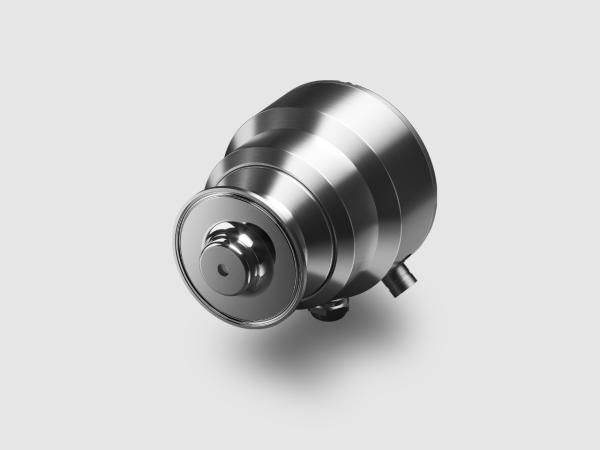
Vaisala Polaris PR53AC

BLOG: A deep-dive into the technology of liquid concentration measurements with refractive index

Vaisala Polaris family

Polaris inline process refractometers

Learn more about refractive index in solvent swap processes

Download our application note on how to use refractive index measurements to optimize and troubleshoot solvent swap processes. The note gives an overview of refractive index technology and includes recommended installation points for best performance.

Get PDF

Add new comment

How to measure crucial process parameters for efficient spray drying

Submitted by Anonymous (not verified) on
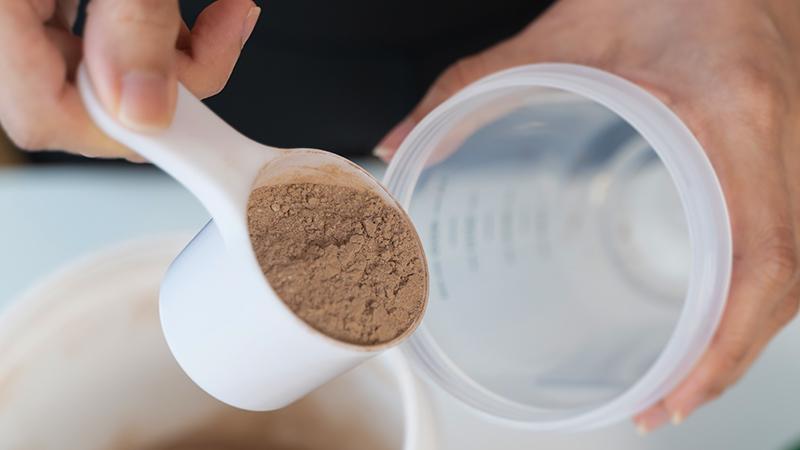
Woman pouring protein powder into a cup
Industrial Measurements
Liquid Measurements

Spray drying is a common sight in the manufacture of dairy products like whey protein concentrate (WPC) and lactose as well as in pharmaceutical manufacturing. The process creates dry powder from a liquid or slurry in a single step by quickly drying it using hot gas. Stable and accurate measurements of humidity, total solids (TS), and temperature, can help you make big savings in energy consumption and costs without compromising end-product quality.

Monitoring the right parameters is critical 

Spray drying is used in a variety of different industrial production processes to:
•    increase product shelf life
•    make products easier to handle during packaging, transportation, and storage
•    prevent microbial growth 
•    ensure product quality
•    save energy
•    increase yields

To optimize your spray drying process there are a few key process-critical parameters to keep an eye on: the soluble solid content of the feed to the dryer (typically measured in Brix or total solids (TS) and the inlet and outlet air humidity and temperature. 

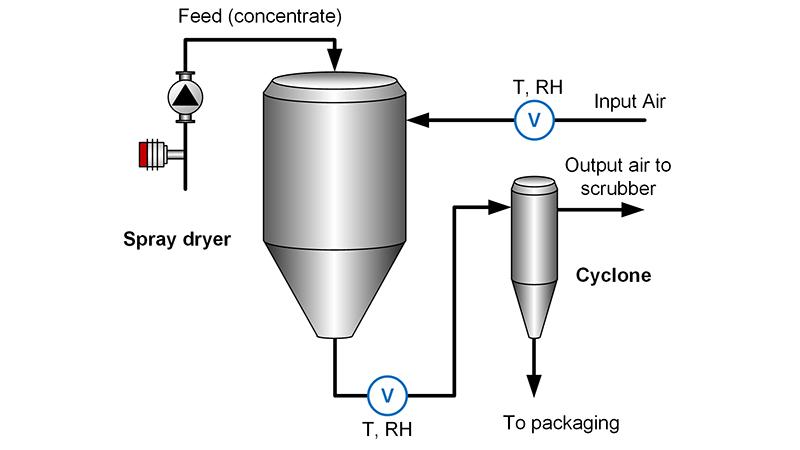
Spray dryer process

Image: Accurate Relative humidity (RH), temperature (T) and the feed line Total solids (TS) measurements are critical for ensuring efficient spray drying

Spray drying monitoring using stable, reliable, and accurate measurement instruments will ensure that your product is dried sufficiently to avoid microbial growth – which is particularly important with food products – but not overdried, which can negatively impact product quality and result in excessive energy consumption and costs. With energy costs currently skyrocketing, ensuring efficiency is at the top of everyone’s agenda.

Optimizing processes with accurate Brix and TS measurements

Manufacturers can improve productivity by automating and optimizing their processes using in-line Brix and total solids (TS) measurement provided by the Vaisala K-PATENTS Sanitary Refractometer PR-43-AC

For example, in whey protein and lactose production – important food supplements that are commonly concentrated and preserved as powder – reliable, accurate in-line concentration measurement helps to control and adjust concentration levels after ultrafiltration and at
the evaporator inlet. Precise concentration measurement from the evaporator outlet helps to optimize energy consumption and ensures the correct feed product concentration to the spray dryer or crystallizer. 

In yeast production, where spray drying is used to dry the yeast extract to a fine powder or granulated particles, in-line concentration measurement can be used to control dilution of molasses at the initial stage, control fermentation progress, and measure the concentration of yeast extract to ensure the target dry solids level is achieved. 

Technician at a food processing plant


Save energy and costs with accurate humidity and temperature measurement

As well as spray drying, humidity measurements are a key factor in optimizing a variety of other high temperature drying processes, including fluid bed drying and baking. When spray drying whey Vaisala’s humidity and temperature probes can be used to measure humidity and temperature in the dryer’s inlet and outlet air.

The inlet air humidity data is used to control the process, while the outlet air humidity data correlates with the moisture content of the powder. This means it can be used as an indicator of the final product quality. Finding the perfect balance saves time and energy by avoiding overdrying.

If you want to see for yourself how accurate humidity measurements can help you increase energy efficiency and improve quality and yields in your process, try our interactive drying simulator.
 

Protein shake powders

Optimizing drying operations

Manufacture of cereals, drying of masses and bakery – humidity is a decisive factor in these and in many other food applications.
Best practices for food ingredients processing

Best practices for food ingredients processing

Processing of functional and nutritional food ingredients plays a decisive role in the final product's safety, quality, and shelf-life. In this eBook, we have compiled the best practices for efficient, sustainable, and safe processing of food ingredients.
Robot in a tomato greenhouse

The Food Science eBook

Interested to learn how technology benefits each stage of food production, logistics, and storage? Download Vaisala's Food Science eBook and learn how food chain efficiency and sustainability can be substantially improved with the help of measurement technology.

A man in a greenhouse

Food, beverage and agriculture

A healthy helping of science in every bite. The food and beverage industry is in the transformation towards a more sustainable future. For better-informed decisions, reliable measurement data is needed.

Add new comment

Understand and utilize real-time data to optimize wafer quality and yield during the CMP process

Understand and utilize real-time data in CMP process

Optimize processes for supreme wafer quality and yield 

Accurate and fast RI and RH measurements for optimized CMP tool performance  

Did you know that the refractive index or RI measurement with an inline process refractometer is a safe, cost-effective,
real-time, low-maintenance process monitoring method to accurately determine wet chemical concentrations? 

Vaisala’s inline process refractometers meet industry standards and can be conveniently integrated into slurry
blenders and CMP tools. 

Relative humidity or RH measurements in slurry blending are critical to avoid slurry evaporation and eventual agglomeration. Recommended products are the Indigo520 with HMP7 and TMP1 for both temperature
and relative humidity measurements directly in the CMP tool. 

In this eBook, we discuss: 

  • RI in process optimization 
  • RH as a critical measurement 
  • Installation position benefits

Download the eBook by filling out the form.

Go back to all wet-chemistry applications

See our Privacy Policy for more details.
You can modify your preference settings or unsubscribe at any time here

Lounges 2023

Apr 18
health researcher in life science laboratory.jpg
Messe Karlsruhe
dm-Arena, Messegelände, 76287 Rheinstetten
Germany

Welcome to meet our experts and reliable measurement instruments and continuous monitoring system at booth H1.9  in Lounges 2023,  Karlsruhe! 

Lab Technology 2023

Apr 12
Building Automation with GxP continuous monitoring systems
Brabanthallen
's-Hertogenbosch
Netherlands

Welcome to visit our booth #L47 in Lab Technology congress and exhibition which is a large tradeshow of cutting-edge laboratory technology and products supporting R&D professionals in laboratory environments.  

Forum Labo 2023

Mar 28
man walking pharmaceutical laboratory cleanroom
Paris expo Porte de Versailles
Paris
France

Participate in FORUM LABO, the French B2B reference for the showcase of equipment for academic and private laboratories for research, analysis, control and process in the fields of pharmacy, biotechnology, chemistry, food industry, cosmetology, en