Built to fit: Medical gloves and Vaisala K-PATENTS® Process Refractometers

Hands with medical gloves
Industrial Measurements
Liquid Measurements

COVID. Rona. SARS-CoV-2. Call it what you will, COVID has been a catalyst for unprecedented demand of certain products – which may outlast the pandemic. Medical gloves are one such product showing tremendous growth – with some experts predicting a compound annual growth rate (CAGR) of over 13% between 2021-2026. To keep up, some medical glove manufacturers are turning to technology to reimagine nearly every facet of their industrial operations.

The stakes are high.

Modernize correctly with the right tech, and you may emerge in the post-COVID world more productive and profitable. Get it wrong, and you may lose market share and competitive advantage. One technology offering significant advantages to manufacturers is the in-line process refractometer. In fact, these industrial instruments are renowned for reducing production costs, improving control quality, and ensuring product consistency and purity.

Medical glove market overview

Like other products that were once principally used only by medical personnel, medical gloves have now become sought after by the general public.

The global personal protective equipment (PPE) market – from gloves, masks and gowns, to shoes and hand sanitizing gels -- is expected to balloon to $93 billion by 2027, according to Research and Markets. In terms of material, the market for protective gloves is segmented into nitrile, vinyl, neoprene, rubber, polyethylene and others. Approximately 300 billion rubber gloves are used globally each year.

Increasing rates of chronic and acute diseases and growing concerns regarding safety, sanitation, and hygiene are some of the major factors driving market growth. Use of gloves in end-user industries, such as pharma, chemical and food, are increasing as well. Additionally, government regulations, such as the  U.S. Food and Drug Administration (FDA), endorse the use of gloves in some manufacturing processes. The US Occupational Safety and Health Administration (OSHA) has also weighed in: advocating the importance of protective gloves in hurricane-affected areas with contaminated flood waters.

Medical gloves (and other PPE items) have become a part of our global sensibilities to such a degree that entrepreneurs are now selling protective gloves through vending machines in places such as airports, commuter rail stations, and shopping centers.

We have travelled this road before. The HIV and AIDS epidemic of the 1980s, for example, also created a global surge in demand for medical gloves for healthcare workers and police. Although AIDS turned out to be less transmittable than initially thought, that demand has largely persisted. Malaysia is currently the world’s largest source of medical gloves– at about 65% - due to raw material proximity.

Technology roundup: in-line process refractometers

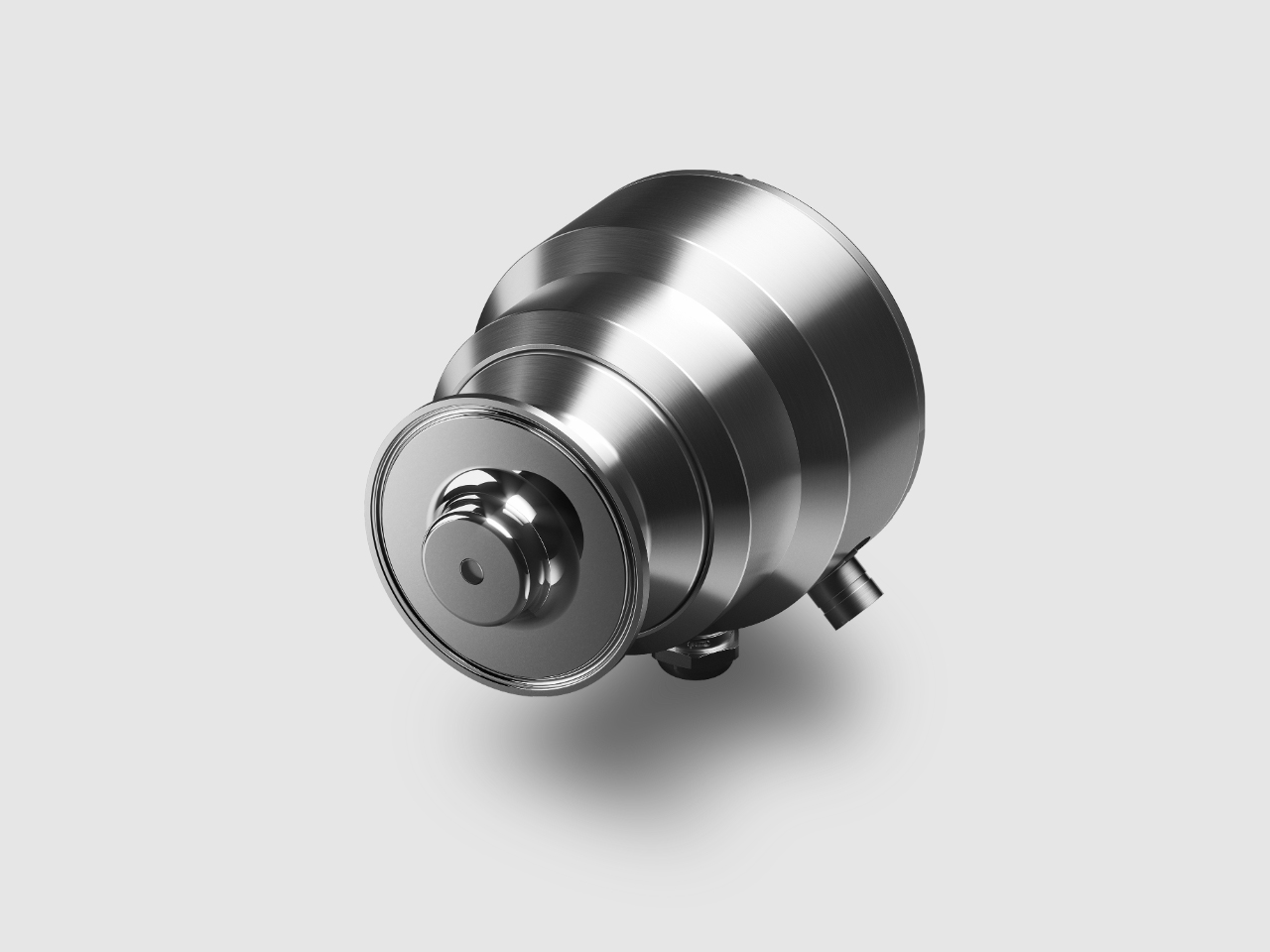
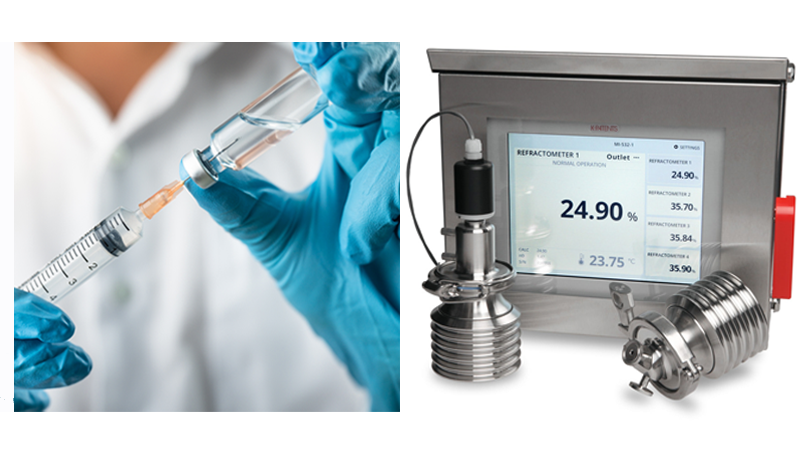
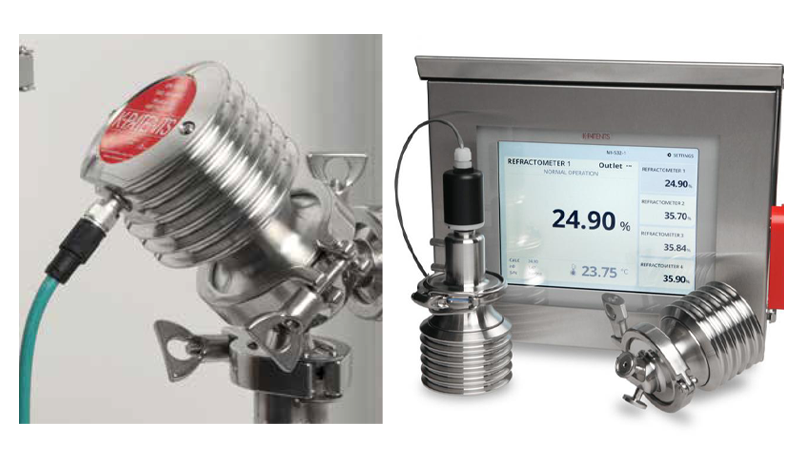
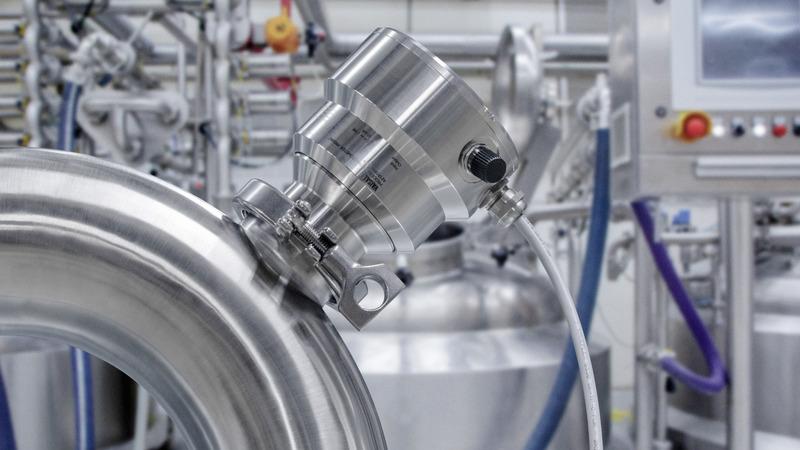
The reliability of in-line measurement by refractometers, such as Vaisala’s K‑PATENTS® Process Refractometer PR-43-GPoffer many benefits to medical glove manufacturers.

Because the key need of medical gloves is as a defense against foreign agents, such as the coronavirus, it is critical the products are free from impurities and imperfections. Because our refractometers provide continuous Total Dissolved Solids (TDS) concentration measurement in real-time, manufacturers can measure and monitor coagulation bath, latex dipping bath and polymer bath to prevent weak spots and inconsistent product, while improving donning. 

Refractometers also save labor costs and streamline the manufacturing process by updating old processes. This cannot be overstated. Many factories producing medical gloves still use manual sampling to determine product consistency. It takes about one hour to get the sample back from the lab. If that occurs, for example, three times per day, the manufacturer has wasted three hours of perfectly good time that could be used for production. What’s worse, if a defect occurs during the sampling period, the product run during that time may be lost. The in-line measurement by the Vaisala K-PATENTS® Process Refractometer PR-43-GP eliminates the need for sampling and long laboratory tests, providing immediate data for process control.

Future proof

With thousands installed around the world, Vaisala K-Patents® refractometers are well known for their reliability, consistency at scale and innovation. These benefits pose significant value to manufacturers to meet surges in demand - now and into the future.

Dipping baths in rubber and medical gloves manufacturing

Read our detailed application note to learn how Vaisala K‑PATENTS® Refractometers are ideal for the manufacturing of medical gloves. The note also includes recommended Vaisala K-PATENTS refractometer installation points for best performance. Get the application note.


Vaisala: make your measurements count

Vaisala is so much more than just a leader in Liquid Measurements for applications in pulp and paper, food and beverage, pharmaceutical, and semiconductor industries. We're a global team of technology experts dedicated to your success. Watch our video to learn more about us.

Add new comment

Liquid Measurement Distributors: Canada

List of distributors for Liquid concentration measurement (Process refractometers).

Distributors for Industrial manufacturing industries in Canada

Eastern Canada
Central Canada
Western Canada

Liquid Measurement Distributors: USA

List of distributors for Liquid concentration measurement (process refractometers).

For the Semiconductor industry in the U.S., please contact Vaisala Inc

Q&A from our webinar: Fast and efficient viral vaccines purification by sucrose density gradient

Submitted by mona.kokkonen@… on
Fast and efficient viral vaccines purification by sucrose density gradient
Industrial Measurements
Life Science
Liquid Measurements

In this blog, we answer questions we received during our webinar "Fast and efficient viral vaccines purification by sucrose density gradient". 

You mention the process connection for refractometer can be done to the outlet hose of the centrifuge through a small flow cell. What is the smallest volume or flow that can be measured with that flow cell, and does it meet requirements for pharmaceutical manufacturing?

Connection is done directly to the discharge line of the centrifuge with the Pharma Mini Flow Cell (PMFC), for example through a medical hose of 4.8 mm/0.189 inches (inner diameter), 8 mm/0.314 (outer diameter). The PMFC was designed to meet the recommended flow velocity of 1.5 m/s or 4.92 feet/s over the refractometer’s prism at all times. It has a sample volume as small as of 1.2 ml.

The PMFC meets requirements for pharmaceutical manufacturing just like our pharma refractometer model. The wetted parts materials for the Pharma Mini Flow Cell are AISI 316 stainless steel. Its wetted parts are electropolished to an inner roughness of 0.4μm (equivalent to 15 μ inch). EPDM material (ethylene propylene diene monomer) for the O-ring sealing, and of course all connection fittings are 3-A Sanitary Standards.


What is the refractometer’s response time and does the length of the unloading hose from the centrifuge make any difference?

The speed of response for the Vaisala K-PATENTS Pharma Refractometer is 1 second undamped. However, damping time selectable up to 5 minutes. The length of the hose is a common question from customers, since in this application the measurement and control are critical for identifying, as quickly as possible, the virus-rich fraction and to maximize productivity. For our Pharma Refractometer, the length of the hose does not make any difference because the measurement can be delayed to the required digit with our software.

Could you describe more how to do the verification for the instrument? Can it be done on site?

The refractometer is shipped factory calibrated for refractive index; it does not require any re-calibration as the measurement does not drift over time. However, GMP guidelines require a periodical verification further defined by a company’s procedures and quality system.

Verification of the refractometer can easily be done on site by using a sample holder supplied by Vaisala and a set of five Cargille standard refractive index liquids that cover the full range. These are the same liquids as those used during calibration; therefore, the calibration can be verified and is traceable to N.I.S.T.

The verification procedure for the refractometer is build-in in the system and the user can follow a guide on the refractometer’s display for the verification procedure. A report of the verification results can be printed and signed.


We perform virus purification by cesium chloride (CsCl) density gradient. Is the Vaisala K-PATENTS refractometer suitable for this type of purification?

The Vaisala K-PATENTS Pharma Refractometer is suitable for measuring density gradients regardless of the type of solution used for the purification, provided that the differences in density is large enough to be detected (typically +/- 0.1% bw). The main objective is to measure changes in concentration in order to detect different gradients and isolate the one containing the particle of interest, in this case the virus. 

One consideration is the concentration range of the solution used and thus refractive index range required during purification. As a standard, the refractive Index (nD) range of the refractometer is 1.3200 – 1.5300, which corresponds to 0-100 Brix. Aqueous solutions of cesium chloride do tend to have slightly lower refractive index values compared to sucrose solution. However, that is not a limitation for the measurement. In addition, special prism materials are available for extending the measurement range.


Generally speaking, when it's useful to measure Brix as opposed to percentage by weight? How many measurement units are selectable?

Typically, Brix is used when sugar solutions are used as the medium for the gradient in virus purifications. Brix is a well-known method for measuring sugar content in aqueous solutions and traditionally is measured by a refractometer. However, the it is the customer’s choice. Refractive index measurements by the Vaisala refractometer can be easily configured to show Brix, % by weight, volume, density, or any other unit preferred by the customer.

What's the influence of viscosity in Brix and concentration measurements?

Viscosity, just like density, varies depending on the concentration of the solution. When a density gradient is prepared by using solutions of different strengths (e.g. sucrose solutions), typically a gradient is obtained in which not only the density is different but also the viscosity. Some solutions, however, can have nearly the same densities among different concentrations, but have very different viscosities. In this case, consider using a viscosity gradient instead to achieve an efficient separation of viral particles.

It is important to keep in mind is that the gradient is formed by solutions of different concentrations, and thus the choice of using a viscosity gradient is not a limitation for the Vaisala K-PATENTS pharma refractometer. Viscosity measurements can be considered for the fractionation and isolation of virus particles whereas refractive index measurements in virus purification application. Refractive index measurements indicate changes in total dissolved solids in the mixture, which helps to reliably monitor the gradient during centrifuge unloading and to safely isolate the rich-virus fraction. Vaisala K-PATENTS Pharma Refractometer can be used also with very high viscose solutions.

What is the maximum registration time for data?

Data logging with the Vaisala Multi-channel User Interface and Compact User Interface is possible up to a full week. Measurement for refractive index, temperature, concentration as well as some parameters for diagnosis are recorded once per second. If the Vaisala K-PATENTS stand-alone refractometer is connected directly to customer´s process control system, then the maximum data registration time depends on the system capability. The refractometer makes a measurement every second, so the data logging interval can be adjusted from one second upwards in the system.

You mentioned that the centrifuge typically has three phases of Brix concentration. What are the typical ranges in Brix for each phase? And what is the accuracy of the Vaisala Pharma PR-43-PC Refractometer?

Typical Brix concentrations in the production of influenza vaccines (sucrose gradient) are between 0 and 60 Brix. However, this may be specific for each virus and purification protocol. The Vaisala refractometer measures the full Brix range of 0-100 with the same accuracy of +/- 0.1 Brix. Also, an accuracy of 0.05-0-02 Brix is possible with the high-accuracy (HAC) version for some applications.

Is there any difference in sensor used for lab and process?

The same refractometer unit can be used at all scales in pharmaceuticals development and manufacturing. The only thing that varies is the process connection. The compact design of the refractometer allows for easy use in the laboratory with a laboratory cuvette (LTC), and in pilot with pharma mini flow cell (PMFC) for low volumes or any other sanitary process connection suitable for 2.5 in pipes or less.

Is the refractometer a suitable measurement tool for other viruses beyond influenza?

Yes. Refractometer usage does not depend on the virus to be purified, but on the gradient solution used in the purification. In addition to the influenza vaccine manufacturing, the refractometer can be used for example when making rabies vaccine or hepatitis vaccine. Concentration range in which the virus rich product fraction is to be found and collected tends to be specified according to the virus.

Explore all refractometer applications in pharmaceutical manufacturing.  


Add new comment

The six most important things to consider when selecting an in-line liquid measurement device for pharmaceutical drug manufacturing

What to take into account when selecting an in-line liquid measurement device
Industrial Measurements
Life Science
Liquid Measurements

Pharmaceutical and medicine manufacturing are among the most regulated industries with pharmacovigilance or in short drug safety, quality and efficacy tightly in mind. The whole process from creating new drugs to manufacturing all the way to delivering them to customers is tightly regulated with over 11 500 restriction, and this also creates requirements to the measurement devices for drug manufacturing.

One of the regulating agencies is the Food and Drug Administration (FDA) in the US. It initiated the Process Analytical Technology (PAT) framework, which aims at pharmaceutical innovation and modernization. Timely measurements using in-line and analytical tools that provide process understanding information are the building blocks for supporting the transition from batch operations to continuous manufacturing (CM). For science-based, highly regulated and batch-oriented pharma industry modernization can bring down development, manufacturing, and scale-up costs. At the same time, modernization can help to secure product quality and reduce batch variations. It also can help to stabilize the in-process material quality by moving away from testing the end-product quality alone.

      1. In-line measurements

There are 3 types of process measurement equipment: in-line, on-line and at-line.

In-line measurement devices measure the concentration continuously without delays and will indicate changes in process conditions immediately without consuming the measurable. They also measure from the genuine process conditions as they happen without dilution or alteration, which can unfortunately happen during sampling. Real-time measurements enable continuous processing which, in turn, increases productivity and profitability, thus stabilizing end-product quality while reducing waste and production downtime.

On-line installed devices extract a sample from the main line for measurement, after which the sample is either returned to the main line or drained. At-line process analyzers extract samples from the process which are then taken to a separate analyzer for testing.

      2. Documentation

Documentation within the pharmaceutical industry is an essential part of its quality assurance and quality control system. The complete qualification process must also be fully documented.

Measurement equipment’s Installation Qualification (IQ), Operational Qualification (OQ) and Performance Qualification (PQ) protocol documentation confirms that the correct process equipment model and parts have been ordered, delivered and installed. It also ensures that the equipment meets its performance specification and can reliably measure typical samples using the selected measurement method. Without the proper documentation from supplier(s), completing equipment qualification might become an exhaustive and time-consuming process for the buyer.

      3. Electronic data capture and storage   

For pharmaceutical companies digitally documenting the production records alone is not enough. Also the security of the data is imperial. Hence there is a need to limit access to measurement systems to authorized individuals only, and a need for a system that logs the activities.

      4. Scalability

All drugs are developed and formulated in the laboratory. After that, production is done in progressively larger batch sizes until the commercial  scale is reached. These include, for example, the pilot-scale for simulating the full-scale production and to create enough product for clinical trials and the commercial production.  

Choosing the right measuring device is critical, so that the company can work with end-to-end, from R&D to pilot-scale to full-scale. Otherwise the results from early testing phases might not represent the process scale design leading to delays in manufacturing start. The goal is to monitor continuously the manufacturing process at full-scale.

      5. Pharma-grade contact materials

Any equipment that is in contact with the drug during the manufacturing process must be approved for the specific conditions they are operating in and must comply with the contact-compatibility of a substance with pharmaceutical materials. Measurement equipment with sanitary design with full tolerance for chemicals and process cleaning procedures ensures that the measurement equipment does not bring hazards or contaminants into the process. 

Measuring devices that have the following features suit pharmaceutical drug manufacturing:

  • Certified sanitary contact material, for example stainless steel 316L
  • Gasket materials that conform to the biocompatibility standards according to USP Class VI electropolished product contact surface finishes
  • Product surface roughness max Ra 0.38μm or 15μ inch
  • No animal derived ingredients (ADI) used in processing or machining
  • Compatibility with CIP and SIP cleaning standards

6.  NIST traceable calibration and accuracy, and instrument verification

Through regulation, all automated, mechanical and electronic measuring equipment must be calibrated, inspected, or checked according to a written quality program designed to assure proper manufacturing performance.

Traceable measurement instruments use current international definitions of traceability and can provide assurance that measurements meet accuracy needs of regulatory agencies – for example, those established by the National Institute of Standards and Technology (NIST) in the US. NIST traceable calibration is an assurance program that certifies that a manufacturer is fully equipped to calibrate equipment to (NIST) standards and that any products offered by that manufacturer will match those NIST-maintained measurement standards.

Verification ensures the correct operation of equipment according to its stated operating specifications. Valid results are achieved with tying the instrument’s calibration verification to international standards, such as NIST, ensuring also traceability. In addition, the calibration and accuracy traceability of the measurement device should be simple and easy to do on-site by the user.

Vaisala K-PATENTS Pharma Refractometer a perfect match 

Matching with all the points, the Vaisala K-PATENTS Pharma Refractometer PR-43-PC is an in-line instrument that uses refractive index technology, supporting pharmaceutical drug development and manufacturing as well as in biotechnology processing.

The refractometer can be used for:

  • Process evaluation, validation and troubleshooting.
  • Data collection for process understanding of different experiments and operations.
  • Finding unique process profile. This is a reference during scale up to confirm that the process behaves as designed and to assure there is process equivalence.
  • Monitoring the performance or operation on pilot and full scale, as well as in monitoring the concentration and purity of solvents, raw and final products.
  • Monitoring blending operations and achieving the correct reactants composition. It can follow reaction degree, study different solvents and their suitability for the process.
  • Determining supersaturation point in crystallization.

In addition, the refractometer can send data to the control system (DCS) to develop an automated control strategy to standardize the process and achieve consistent quality, prevent batch-to- batch variations, reduce production time and costs, increase yield, and ensure product safety.

In-line measurement of refractive index can help to immediately identify problems during scale-up and to reduce development time. Visit our pharmaceutical drug manufacturing page for all refractive index applications.  


Interested to learn more? Contact us.

Related products
Polaris refractometer

Inline liquid concentration measurements for pharmaceutical manufacturing and biotechnology processes

The Vaisala Polaris™ pharma refractometer is designed for pharmaceutical and biotechnology manufacturing to measure liquid concentrations inline (in situ)—from laboratory-scale and pilot batches used in process development to full production-scale manufacturing.

Refractive Index measurements will enhance your understanding of critical process parameters (CPPs), reduces drug development time, increases production capacity and stability, improves product quality and safety, and supports regulatory compliance.

Typical applications include processing of active pharmaceutical ingredients (APIs), biochemical and biopolymer production, and formulations involving vaccines, antibiotics, proteins, and buffer solutions—making Polaris the perfect PAT tool for modern pharma and biotech environments.


Add new comment

Vitamin B2 production

Vitamin B2 production

Download application note here.

Application note preview
See our Privacy Policy for more details.
You can modify your preference settings or unsubscribe at any time here

In-line process instrumentation for liquid food processing