How to perform custody transfer accurately and reliably?
In loading and discharge of chemicals, it is important to eliminate product transmix, ensure safe handling of multiple chemicals, and reduce the costly waiting time associated with the product transfer to receiving tanks. Chemical industry products are mainly used by other industries, such as semiconductor and pharma industries, which have strict quality and purity specifications. How chemical plants and petroleum refineries can optimize these operations and deliver the highest quality chemicals using Refractive Index technology?
In this blog, we analyze three customer cases and review how the customers were able to benefit from the technology.
The importance of chemical analysis for reliable custody transfer
Chemical analysis is essential for companies that deal with liquid chemicals production and logistics operations, such as chemical plants, petroleum refineries, and fuel terminals to name a few. They need to ensure cost-efficient production of basic, commodity, fine, and specialty chemicals while safeguarding high product quality and minimal environmental impact.
Product identification often relies on manual sampling and laboratory analysis. This method can however lead to time delays, product quality variations, and product waste. Another deployed method is density measurement. When handling such chemicals as acids (acetic, citric, hydrochloric HCl, nitric HNO3, sulphuric H2SO4, etc.), alcohols, glycols, hydrogen peroxide H2O2, sodium hydroxide NaOH (caustic soda), solvents, and urea, density measurement often fails to deliver accurate measurement, requires repeatable recalibration and so appears to be expensive and unreliable.
In-line process refractometer with the accuracy of nD +/- 0.0002 and automatic temperature compensation enables fully automated product identification. Real-time chemical identification and interface detection are required to safely handle the unloading of multiple liquid bulk chemicals from trucks, rail, or cargo supply lines to receiving tanks. Due to real-time identification, one can eliminate human error, improve process safety and reduce costly waiting time.
How the leading chemicals producers and oil refineries benefit from the Refractive Index measurement
Each chemical has a distinctive Refractive Index (nD) value. The in-line process refractometer identifies the chemicals based on their fingerprint repeatably, accurately, and continuously. Discover more from the brochure.
Chemical interface detection for quick handling of multiple chemicals
“By replacing the laboratory measurement with the in-line refractometer for product interface detection, we were able to save 600 ton of product annually”, - customer.
A German multinational chemical company receives multiple chemicals as raw materials for production in its plants. When different chemicals are loaded and discharged from trucks or rail cars to storage tanks at multiple unloading stations, fast and reliable interface detection is necessary for custody transfer, product identification, and safe unloading operation.
The customer’s target was to replace the laborious and unreliable laboratory sampling for four unloading lines with automated chemical control which bases on in-line measurement. They utilized Vaisala’s process refractometer to streamline the loading and unloading operations.
The refractometer provides temperature compensated output and can be set in customer’s preferred scale, e.g. refractive index nD at 20 °C, concentration %-bw or other. With the easy installation of the refractometer in the process line, the customer was able to improve the efficiency of its unloading operations and ensure that the correct chemical within specifications is stored in the right tank.
Ethanol detection in water
A large UK-based petroleum refiner and producer of renewable fuels use storage tanks for various products, for example, ethanol. A process requirement was to detect ethanol in rainwater to determine environmental acceptance before the water was discharged to the watercourse.
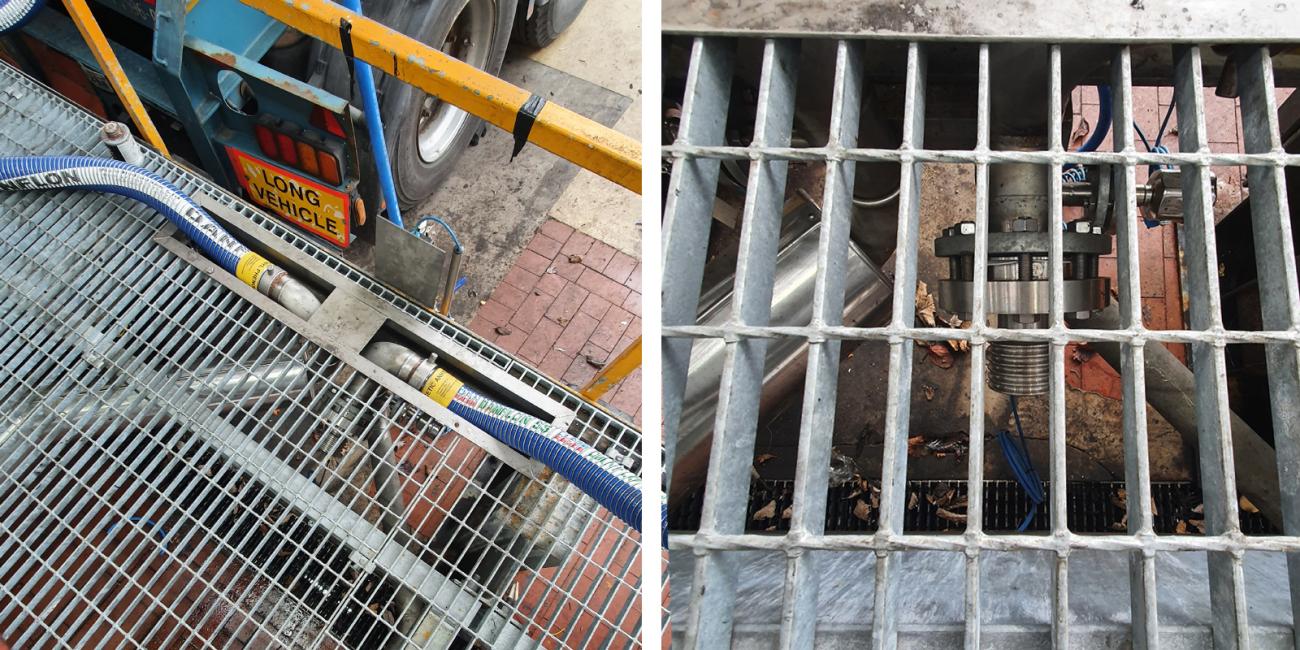
At the fuel terminal around the storage tanks, a sump collects rainwater and chemicals in case of leakage. In the existing ethanol storage installation, the currently used density meters had caused false alarms. Also, due to unreliable density meter measurement, the refiner suspected that there may have been possible suspended solids in the surface water.
For two new ethanol storage tanks the customer installed Vaisala’s in-line process refractometer. False alarms have been avoided since refractometers were installed before pumping away rainwater, also ensuring a reliable measurement for regulatory compliance.
Chemical identification at filling line by lubricants producer
“Already during the first weeks after installing the refractometer in the filling line, we achieved savings by decreasing product waste by 30%", - customer.
A Swiss oil blending and manufacturing company produce a different kind of special oils and lubricants for various industries and applications worldwide. In order to increase production and reduce product waste, the customer decided to raise the level of automation in the filling line. They were using manual sampling and laboratory refractometers to detect interfaces between different products, which is time-consuming and requires manpower, causing also human errors they wanted to minimize.
Once Vaisala’s in-line process refractometer was installed in the filling line to replace laborious manual sampling and laboratory analysis, the customer was reporting considerable savings in the wasted product already during the first weeks. In addition to an immediate return on investment, product quality variations due to laboratory sampling were eliminated and product specifications could be assured.
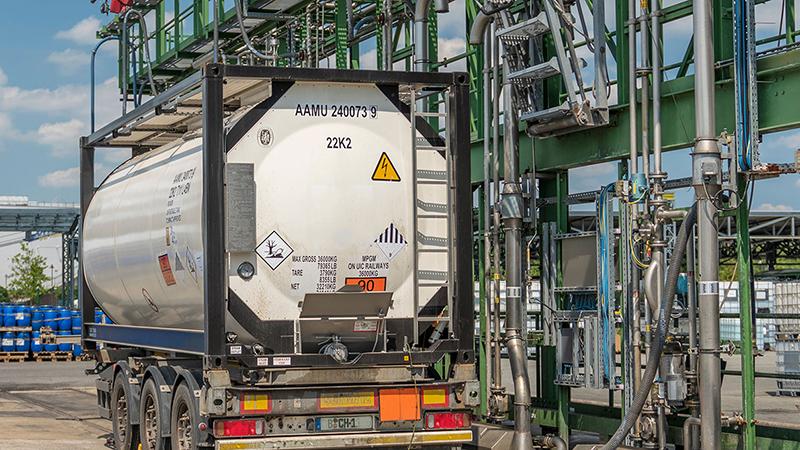
Images from a truck unloading station. Here, it is necessary to identify incoming chemicals and ensure that the right chemical comes with the right specifications and enters the right product tank. In-line product identification by Vaisala’s process refractometer ensures fast and reliable product identification and working safety. If there is water in the bottom of the tank, the refractometer immediately alarms about it. The refractometer is suitable for outdoor installation.
Vaisala’s process refractometer is a perfect match for various industrial applications, in particular, for the chemical industry’s needs because
its liquid concentration measurement is accurate on a full measurement range of nD = 1.3200...1.5300 corresponding to 0-100 % by weight
it requires no regular maintenance or recalibration
it allows for horizontal or vertical installation without by-pass arrangements.
The in-line refractometer measurement of the true dissolved solids is not influenced by undissolved solids or bubbles in the liquid. The refractometer has increased safety and intrinsically safe certification. Special wetted parts to fit demanding chemical processes are available.
Download the application note on chemical interface detection and product identification process to learn the details.
Brewers will often attribute their success to passion, determination, and innovation, but once a beer has been developed and branded, it’s all about consistency. Process monitoring, therefore, has a key role to play. In the following article, we explain how in-line refractometers, located strategically at every stage of the brewing process, enable process optimization, save energy, reduce waste, lower costs and help deliver top-quality beer.
Sampling vs Continuous monitoring Some breweries rely on manual sampling and laboratory analysis, but there are a number of significant disadvantages with this approach, so there is an inevitable trend toward in-line monitoring and increased automation.
Laboratory analysis is obviously an essential component of research and development; providing an insight into the effects of different raw materials or processes on characteristics such as flavour and aroma. Laboratory analysis also plays an important role in investigatory work; helping to understand the chemistry. However, from a production perspective, sampling and analysis can be of limited value because of the cost and the delay incurred – by the time a lab result uncovers a problem; a significant volume of the product may have already passed through the brewery. Similarly, samples represent a ‘snapshot’ of the process at one moment in time, and are therefore unable to support feedback control or provide timely alarms, and are less able to uncover trends.
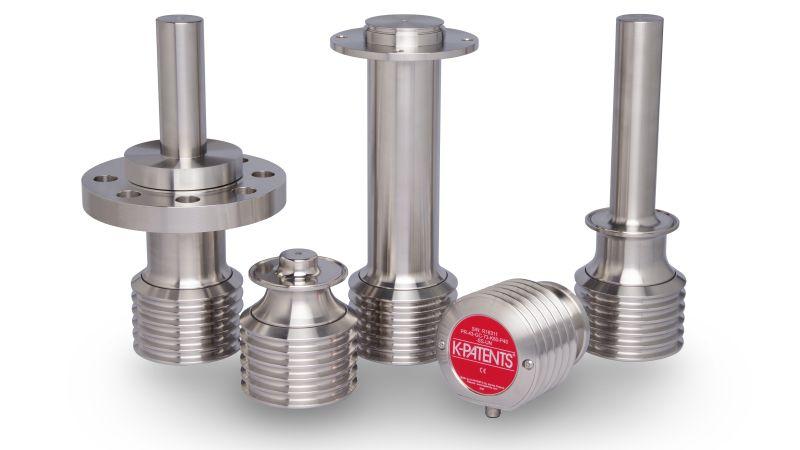
Monitoring technology Vaisala’s K-PATENTS® sanitary refractometers can be calibrated in Plato, Brix, Balling, gravity, or density, depending on the preference of the brewery. They are available with 3-A Sanitary and EHEDG certifications and are designed to withstand CIP/SIP cleaning and rinsing procedures.
A number of different technologies have been employed to monitor various aspects of the brewing process, but some methods such as turbidity and density can experience measurement errors from fouling and interference by the larger suspended particles (especially in mashing and the lauter tun) and by the bubbles and foam that are present in most stages. Refractive Index monitoring is therefore preferred, and the key advantage of the Vaisala refractometers is that they provide accurate measurements at every stage of the brewing process without suffering from these interferences.
A further advantage of refractometers is their speed of response, which is a particular advantage in the packing/filling line and CIP process – this will be discussed later.
Refractive Index (RI) measurements are based on the angle of refraction of light in the process medium, using an LED light source. A sensor continually detects the critical angle at which the total reflection of light commences, and the concentration of dissolved solids is calculated taking pre-defined process conditions into account. Vaisala’s sanitary refractometers are therefore supplied factory calibrated to meet the requirements of the specific brewery and are deployed at most stages of the brewing process, some of which are described below.
Mashing Typically, mashing takes place in a tun, which is an insulated brewing vessel with a false bottom. Malt is steeped in hot water which activates enzymes that cause starch in the malt to break down and release simple sugars, producing wort.
Mashing is a crucial step because it determines the final structure of the beer, so it is important to maintain a consistent wort output. The refractometer is used to measure the concentration of the mash in water at the outlet pipe.
The process by which the grains are separated from the wort is known as lautering, which is often conducted in a separate chamber known as a lauter tun.
Lautering Sparge water rinses the grains inside the lauter tun to complete the extraction of sugars, producing a clear wort with a concentration that gradually decreases during the rinsing. The refractometer continuously measures this concentration, allowing the detection of the appropriate shut-off point for rinsing, which prevents the excessive use of water and saves energy.
Wort boiling Once the sweet wort has been separated, it is pasteurized in a wort boiler or brew kettle, and this is the stage at which hops and other flavourings may be added. Wort boiling terminates enzymatic activity, preserves foam-positive proteins, evaporates unwanted flavour volatiles, and helps to form desirable taste and aroma compounds. It also brings the brew to the appropriate strength or gravity, so this is an extremely important stage in the brewing process.
The refractometer is installed directly in the wort boiler, providing continuous measurements of wort strength/gravity so that the brewer can determine exactly when the wort has reached the required strength. This improves beer quality and consistency while helping to optimize brewing time and energy consumption.
Whirlpooling After boiling, the wort is transferred to a whirlpool, where solid particles (hop rests and coagulated proteins) are separated from the bitter wort. The whirlpool causes residual particles to coagulate and settle out of the liquid as a sludge known as trub, which is partially removed from the bottom of the kettle. It is important that the solids are removed quickly and effectively to produce a clear, bitter wort for transfer to the next stage, so a refractometer may be installed before and/or after the whirlpool.
Cooling Once boiling is complete, the wort is cooled by a heat exchanger which recovers some of the energy used to boil the wort. Refractometers can be installed in the outlet of the cooler as a quality control measure; ensuring that the bitter wort contains the correct level of dissolved solids before fermentation. Alternatively, or additionally, a measurement can be made after the boiler and prior to the whirlpool, to avoid the possibility of processing bitter wort that does not meet the required specification.
Fermentation During the fermentation process, yeast converts sugars and amino acids in the wort to carbon dioxide and alcohol. The gravity of the fermenting liquid is measured as the specific gravity, or relative density compared to water. In the brewing industry, this is mostly measured on the Plato scale, which is very similar to the Brix scale used by the wine industry.
Spent yeast collects at the bottom of the fermentation tank and is regularly removed, which helps to clarify the beer.
The density of the wort varies according to the sugar content, so the density readings decline as fermentation progresses. The alcohol percentage can be calculated from the difference between the original wort gravity and the current specific gravity. Refractometers are therefore able to closely follow the fermentation process; providing brewers with real-time insights into the process, and allowing them to accurately determine when fermentation is complete.
Filtration and maturation Maturation includes all transformations between the end of primary fermentation and the removal of yeast from the beer. After fermentation, the beer is allowed to rest, so that any remaining spent yeast can settle out. However, a number of filtration techniques are often applied to further clarify the beer. This is the final opportunity to affect the quality profile of the beer – flavour, bitterness, odour and foam stability, clarity, color, alcohol, and gas content. All of which vary according to the requirement of the brand, so refractometers can fulfill a vital role in quality control.
Filling and CIP When the beer is ready for distribution it is packed in bottles, cans, casks, and barrels which must be clean and sanitized. In addition, the internal surfaces of pipes, vessels, tanks, and packaging equipment must be cleaned between batches and between different products. Known as Clean in Place (CIP) this protects the beer products from microbiological and chemical contamination. In large modern breweries, the cleaning processes are complex, so automation is frequently utilized to improve speed and efficiency, and lower costs.
At the filling line, the refractometer instantly detects the product-to-product and product-to-CIP cleaning interfaces, allowing efficient change-over between products or batches. The refractometer output signal can also be utilized for quality control monitoring, and to ensure correct product-to-packaging selection. The response speed of the refractometer means that the interfaces (between product/cleaning chemicals/water), can be detected very quickly, which avoids waste and ensures that no product contamination occurs.
Continuous monitoring of packing and CIP processes with the Vaisala refractometers, therefore, enables automation, reduces wastage, and lowers costs and energy use.
Why use refractometers throughout the brewery? In contrast with other methods, the main advantages of Vaisala’s refractometers are that they provide greater insight into every stage of the brewing process; they are not affected by suspended particles, bubbles, or color, and with the option of automatic prism wash with steam or high-pressure hot water, they are not affected by scaling or fouling.
Each Vaisala refractometer is factory calibrated for the full measurement range (e.g. 0-100 degree Plato), which means they can be freely interchanged between installation locations without parameter changes. Furthermore, the Vaisala refractometers do not require any routine recalibration or maintenance.
In summary, it is certainly true that brewing success is underpinned by passion, determination, and innovation, but, with the help of refractometry, brewers can optimize their processes, reduce waste, lower energy consumption and rest assured that they will continue to produce consistently good quality beer.
In-line wort Plato measurement for optimizing beer brewing process
Download the application note on Beer brewing optimization for more detail.
Participate in FORUM LABO, the French B2B reference for the showcase of equipment for academic and private laboratories for research, analysis, control and process in the fields of pharmacy, biotechnology, chemistry, food industry, cosmetology, en
The European Society for Sugar Technology (ESST) and the Verein Deutscher Zuckertechniker (VDZ) organize the 7th ESST Conference for sugar technology bringing together sugar technologists from all European sugar producing countries.
Pharmintech 2022, the international event dedicated to the life science industries, will take place as part of IPACK-IMA, the international reference point for production chains in search of the most advanced processing & packaging solut