How Inline Refractive Index Measurement Enhances Filter Cake Washing & Process Control

Profile picture for user janice.bennett
Submitted by janice.bennett on
Filter cake washing  in API manufacturing
Liquid Measurements

This article is the third in our three-part series on how Vaisala refractometers help optimize API manufacturing. The first installment explored solvent swap optimization using refractive index (RI) trend data, and the second covered crystallization control with RI.

In many API facilities, filter cake washing is a process bottleneck. After crystallization, the API must be separated from the liquid phase and cleaned—typically by washing the filter cake with a solvent. The aim is straightforward: remove residual mother liquor from the crystals to obtain a pure product, without sacrificing yield. The challenge lies in optimizing the solvent amount—enough to achieve purity, but not so much that it wastes time, materials, or product.

Refractive Index as a PAT Tool

RI measurement supports a Quality by Design approach by helping identify critical process parameters:

  • What type of wash should be used?
  • How much solvent is required?
  • Which parameters most influence quality and yield?

During development, RI can also compare solvents to find one that both washes effectively and minimizes API solubility.

Case Study: Data-Driven Solvent Optimization

One Vaisala customer used RI to evaluate their washing performance and determine if a process control tool was truly necessary. In the lab, a Vaisala refractometer measured liquid concentration after washing, while a scale recorded solvent usage. Plotting solvent volume against RI produced a clear process profile:

  • Displacement phase: RI remains constant as mother liquor is pushed out.
  • Mixing phase: RI changes as washing solvent removes residual impurities.
  • Completion phase: RI stabilizes, signaling the end of effective washing.

The team also tested different solvents, measuring each one’s RI in both clean and API-saturated states. This revealed whether washing was ending with truly clean solvent—or with solvent already near saturation, risking product loss.

Key Findings

  • Low-solubility solvent: Ineffective washing; crystals not fully cleaned.
  • High-solubility solvent: Dissolution of fine particles, creating preferential channels and inefficient wash.
  • RI data confirmed that solvent choice could either protect yield or cause product loss.

Outcome

These tests formed a solid proof of concept, enabling the customer to advance efficiently to pilot scale. They concluded that RI is a valuable, reproducible, and data-rich tool for optimizing filter cake washing—not only in laboratory process development and scale-up, but also as a real-time control tool in manufacturing. By monitoring when the RI measurement becomes stable, operators can confidently determine when washing is complete, reducing unnecessary solvent use and process time by avoiding overflushing. Vaisala refractometers thus support both data-driven process optimization and efficient, validated process control.

To learn more about refractive index measurements to optimize filter cake washing, see our application note.

Related products
Indigo520 for process refractometers

Indigo520 for process refractometers

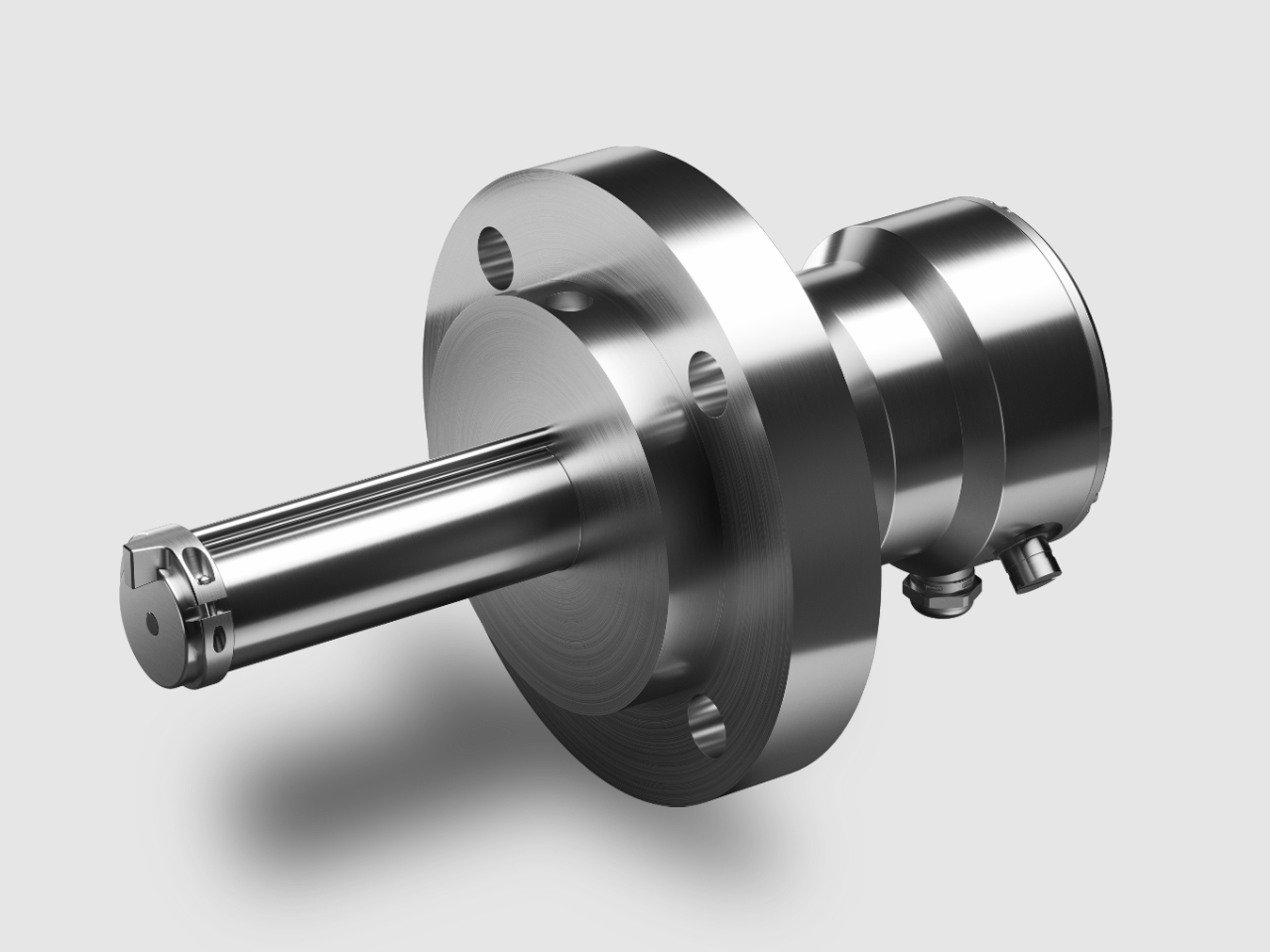
Vaisala Polaris combined with Indigo520L offers compelling features for all users and are a standard power couple for applications and installation positions with wash system.

Polaris refractometer

Inline liquid concentration measurements for pharmaceutical manufacturing and biotechnology processes

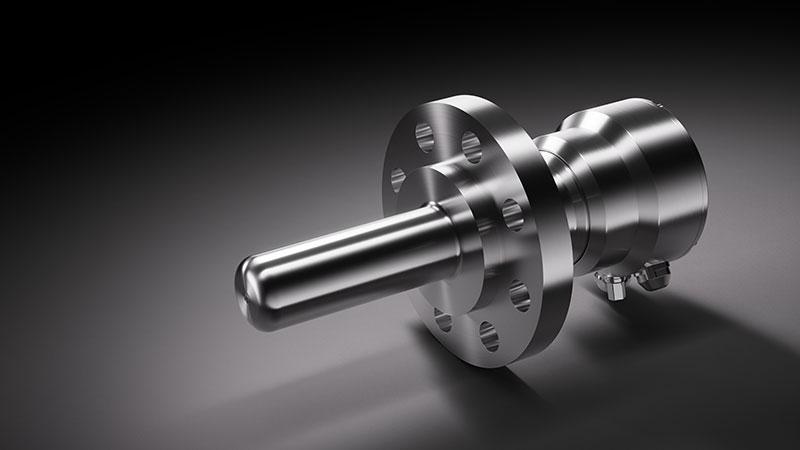
The Vaisala Polaris™ pharma refractometer is designed for pharmaceutical and biotechnology manufacturing to measure liquid concentrations inline (in situ)—from laboratory-scale and pilot batches used in process development to full production-scale manufacturing.

Refractive Index measurements will enhance your understanding of critical process parameters (CPPs), reduces drug development time, increases production capacity and stability, improves product quality and safety, and supports regulatory compliance.

Typical applications include processing of active pharmaceutical ingredients (APIs), biochemical and biopolymer production, and formulations involving vaccines, antibiotics, proteins, and buffer solutions—making Polaris the perfect PAT tool for modern pharma and biotech environments.


On-demand Webinar: Learn how to verify a Vaisala inline process refractometer

Liquid measurements services


Join Vaisala Product Engineer Maria Nyman as she demonstrates how to verify refractometer accuracy, linearity, and repeatability using standard RI liquids. Discover what equipment you need, why temperature stability matters, and how to maintain ISO-compliant process measurements. 

Watch now


Add new comment

Plasma ultrafiltration: Your refractive index questions answered

Blood Plasma Intermediate filtration
Life Science

In case you have not yet seen this webinar, “Using refractive index to ensure quality & safety in blood plasma intermediate ultrafiltration,” you can watch now on demand. During the webinar, we received many excellent questions that we didn’t have time to answer. Here are all the questions, with answers: 

Question: What is dn/dc?

Answer: This notation refers to the slope or sensitivity of how much the refractive index is impacted by a change in protein concentration. In the notation, n is the refractive index, c is the protein concentration, and d refers to a differential change. Scientific publications use the dn/dc notation to describe the relationship between refractive index and protein concentration.

Question: What is the lifespan of the Vaisala refractometer’s light source?

Answer: The LED light source in our refractometers is extremely durable; to date, we have not experienced any light source failures. We have customers with refractometer installations that are over 20 years old and still functioning well.

Question: Are there any parts in your refractometer that will need to be replaced over time?

Answer: Vaisala refractometers have no moving or consumable parts, nor are they susceptible to measurement drift. There is no need for replacement parts or recalibration. Vaisala offers special prism wash solutions that we recommend for demanding applications where pipe inner surfaces (and therefore also the prism) may become coated. However, for blood protein filtration applications, we would not expect any problems with prism coating.

Question: If the liquid is non-homogeneous, how is the refractive index able to indicate the partial concentration of just one component?

Answer: Refractive index is impacted by all constituents in the liquid; therefore, the refractometer always shows the total concentration (total dissolved solids), not a partial concentration of one component. In a blood plasma ultrafiltration application, where the liquid has many constituents and the non-protein matrix also affects the measurement, the protein concentration can be determined based on the difference in refractive index between both permeate and retentate from the ultrafiltration process.

Question: How will sucrose in the solution impact the protein concentration measurement?

Answer: Like proteins, dissolved sugars in the solution will also increase the refractive index. The amount of sugar can be determined from an earlier media preparation phase of the process, wherein only sucrose is present.

Question: We have a solution that contains 8% sucrose. The monoclonal antibodies (mAbs) concentration is ~120 g/L. Could we use a refractometer to measure?

Answer: Yes, we can measure the total concentration of the solution with refractometers, as both sucrose and mAbs affect the refractive index. In the ultrafiltration process, measurements from both retentate and permeate allow distinguishing the non-protein matrix.

Question: What communication protocols do the refractometers use?

Answer: The PR53 series refractometers have mA and Ethernet outputs. The Ethernet communicates based on the UDP/IP protocol, and details can be found in the PR53 series User Guide. Optionally, an additional FJB Fieldbus Converter can be used if Modbus/TCP, Modbus RTU, Ethernet/IP, PROFIBUS, or PROFINET are needed.

Question: Is the Vaisala refractometer’s measurement influenced by the matrix (nature and concentration)?

Answer: Refractive index is impacted by all constituents in the liquid; therefore, the refractometer always shows the total concentration value (total dissolved solids). Changes in the non-protein matrix (e.g., salt concentration) will also impact the refractive index, so both retentate and permeate measurements are important to control the ultrafiltration process.

Question: Can I directly integrate the refractometer signal into my skid or automation control system, or will I need to purchase the transmitter?

Answer: Vaisala’s refractometers can be used as stand-alone devices, meaning you can directly integrate the refractometer’s mA or Ethernet signal into your automation control system. The Web User Interface is included in the refractometer. The physical display units—Multichannel User Interface (MI) and Compact User Interface (CI)—are optional. 

Question: Not really a question, but for refrigerated applications, reference measurements must be done with the standalone accessory on the process refractometer, as benchtop instruments cannot cool down below about 15 °C...

Answer: We are glad to hear that our laboratory test cuvette for the PR53AC refractometer, which allows thermostatization of the sample, is beneficial.

Question: Is it possible to have a report after validation to be saved for audits?

Answer: Yes. Our refractometer verification procedure is easy to perform and verifies that the refractometer meets the refractive index accuracy specification. The verification procedure provides a report of this.

Question: Is refractive index turbidity (e.g., particle) dependent?

Answer: Not exactly. Suspended solids or particles do not affect refractive index because it is a selective measurement for the liquid phase and dissolved solids. Therefore, turbidity is a different parameter than refractive index. If we consider very small particles, there is a point where particles can be considered dissolved and start impacting the refractive index.

Question: Can the refractometer be used for ethanol concentration measurement in plasma suspensions?

Answer: In principle, yes. Like all other constituents, ethanol concentration also affects the refractive index. A refractometer can’t selectively measure only the ethanol concentration in the plasma suspension. Rather, changes in ethanol concentration can be detected from the refractive index. We would need to learn more about your particular application. For example: what is the required accuracy or repeatability for ethanol concentration changes? What are the temperature conditions? Are there other constituents changing besides ethanol? Please contact us to discuss further.

Question: Is it possible to measure the protein concentration in a mixture of proteins and filter aid?

Answer: Yes, the refractometer can measure the total dissolved solids of the liquid. But to answer fully, we would need to discuss details such as what kind of filter aid is being used. This would help us determine any impact on the refractive index before ultrafiltration, as well as in the permeate and retentate.

Ask a question to learn more about how refractive index can benefit your application.

Learn more about refractometers in biotechnology and pharmaceutical applications.

Related products
Indigo520 with probe

Indigo500 Series Transmitters

The Vaisala Indigo500 series transmitters are host devices for Vaisala Indigo-compatible, stand-alone smart probes. The Indigo500 series include multi-functional Indigo520 transmitter and Indigo510 transmitter with basic features.

On-demand Webinar:
How to verify an inline process refractometer

ISO quality standards require systematic calibration and control of measurement equipment in labs. This webinar features Vaisala product engineer Maria Nyman demonstrating professional refractometer verification procedures using standard refractive index liquids. You'll learn essential verification techniques including required equipment and materials, why room temperature control is critical, and how to maintain stable equipment temperature to ensure accurate and repeatable results.

Watch now

Add new comment

Semicon Europa 50 years

Nov 18
Semiconductor prober machine
Munich
Germany

SEMICON Europa 50 years  is co-located with productronica and will take place in November 18-21, 2025 in Munich, Germany.

CPHI/PMEC India 2025

Nov 25
viewLinc-VaiNet-cleanroom
India Expo Centre, Greater Noida, Delhi NCR
India

CPHI & PMEC India 2025 brings together pharma excellence across South Asia, creating a dynamic platform for industry professionals to connect, exchange ideas, and drive innovation throughout the year.