Expert Article
How to install duct-mounted sensors for optimal energy efficiency and indoor air quality



Measurement instruments need to be installed correctly to ensure your building’s HVAC system gets the accurate carbon dioxide, temperature, and humidity readings it needs to ensure a healthy and comfortable environment for building occupants. These installation tips for duct-mounted sensors will help you to optimize the energy efficiency and indoor air quality of your building, ensuring you get the most from your investment.
The importance of proper sensor placement
Incorrect sensor placement is one of the most common causes of inaccurate measurements. High-quality sensors can provide accurate measurements long-term – but only if they are installed correctly. Everything from mounting direction to temperature differences between the indoor and outdoor air can affect readings for duct-mounted sensors, leading to sub-optimal energy efficiency and poor indoor air quality. Knowing the installation mistakes to avoid will help you to provide your HVAC system with the best measurement data possible.
Where should you install duct-mounted sensors?
Duct-mounted sensors are primarily installed in return air ducts and outside air intake ducts. The most common source of measurement error for duct-mounted sensors is the temperature difference between the air inside and outside the duct. Large temperature differences can cause heat to flow through the duct sensor tube, resulting in condensation and incorrect measurements.
To minimize condensation and temperature differences it is essential to mount your sensors correctly. Mounting the transmitter head of a duct sensor within the insulation envelope will help to prevent unwanted temperature transfer and reduce the risk of condensation.
Ensure sensors are oriented correctly
Sensor orientation is important: if the sensor is mounted pointing downwards, condensate can flow onto the sensor and affect the readings – or even corrode and damage the sensor. If you are using duct sensors to control humidity, foggers or spray humidifiers can have the same effect.
To avoid this issue, make sure duct sensors are mounted horizontally at a 90-degree angle or, if necessary, a slight upward angle. This will ensure condensate falls safely away from the sensor. You should also ensure your transmitter housing is sealed to prevent water from reaching the electronics. Install sensors a sufficient distance away from any water sources like foggers or spray humidifiers – the distance will depend on duct size and flow rates, but a minimum distance of five meters is a good rule of thumb.
Make sure your sensors are measuring representative airflow
Another common mistake is mounting sensors in a non-representative location. If you install a sensor where the main airflow does not pass over it, the measurements it takes will not accurately reflect the humidity and temperature conditions in the duct. This can make conditions uncomfortable for the people in your building, creating unnecessarily hot or humid zones that can have a negative impact on comfort and even productivity.
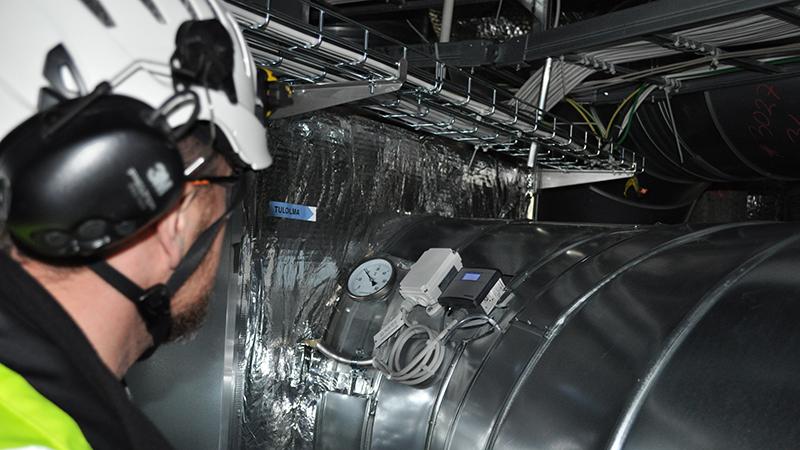
To avoid this problem, sensors should be installed directly in the main airflow – this is particularly important if you have high humidity and low flow speeds in the duct. Finally, consider adding an additional access port on your duct, downstream from the sensor. This can then be used for a reference probe so you can verify and calibrate your primary sensors.
6 tips for installing duct-mounted sensors
- Install the transmitter head within the insulation envelope to avoid temperature transfer and condensation.
- Mount sensors at a 90-degree angle if possible.
- Ensure the transmitter housing is sealed.
- Install sensors well away from water sources like foggers or spray humidifiers.
- Make sure sensors are installed in the main airflow.
- Consider adding an additional access port in your duct for calibration.
Learn more in our webinar on how sensor installation impacts energy efficiency and indoor air quality, and find tips on how to install wall-mounted sensors and outdoor sensors.
Further reading




Fit for demanding measurement needs
Vaisala delivers advanced HVAC transmitters that empower automation systems to perform flawlessly in the most demanding environments, from data centers and semiconductor fabs to cleanrooms, hospitals, and other critical spaces, ensuring precise, reliable measurements where they matter most.
Our transmitters offer superior reliability, easy installation, and seamless integration with major Building Automation and Building Management Systems. The comprehensive product range includes temperature, humidity, air pressure, dew point, and CO₂ for ambient air, pipes, ducts, and outdoor applications.