Expert article
Did you know that 40% of space launches are delayed due to the weather?
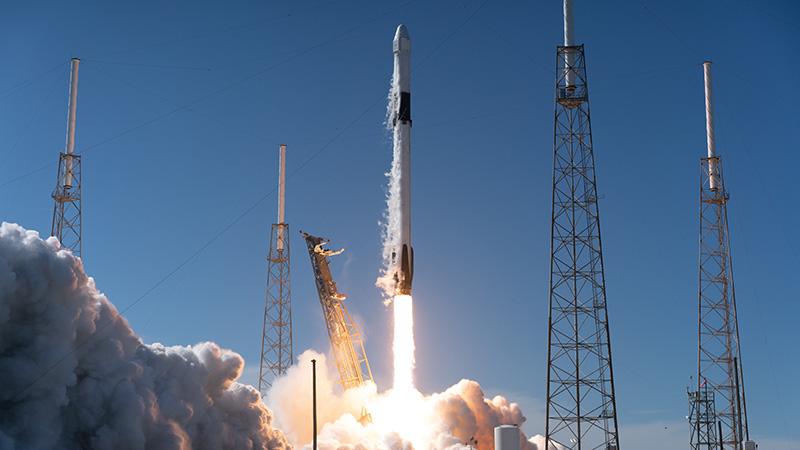



From lightning risk to upper-atmosphere winds, weather shapes every launch decision from countdown to liftoff.
Space launches are often defined by what happens beyond Earth’s atmosphere, yet success is decided much closer to home. Weather remains one of the most unpredictable and consequential factors in any mission, influencing safety, timing, and cost from the earliest planning stages to the final seconds before liftoff.
In this article, Aki Lilja, Head of Strategic Development for Meteorology and Aviation at Vaisala, draws on more than three decades of experience to explore how advanced weather intelligence is helping space operators better understand atmospheric conditions and make more confident launch decisions.
Weather is the silent partner in every space launch. From the first call to fuel the rocket to the final “go for launch,” the atmosphere shapes every decision. When launch windows are measured in minutes and costs in millions, even small uncertainties can have major consequences.
Industry data shows that weather accounts for up to 40% of launch delays, far more than most technical issues. That makes weather intelligence not just a supporting function, but a critical enabler of safe, efficient, and predictable launch operations.
As the industry builds on the momentum of Artemis II and looks ahead to Artemis III and other landmark missions, the importance of understanding the atmosphere in detail is only increasing. Human spaceflight introduces tighter safety margins and more complex constraints, where conditions from the surface to the upper atmosphere must be continuously monitored.
For more than 90 years, Vaisala has been at the forefront of atmospheric measurement. Today, space agencies, meteorological services, and commercial launch providers rely on Vaisala technologies to deliver accurate, real-time insight from ground level to the edge of space.
The weather factors that define launch readiness
Launch decisions depend on a combination of atmospheric conditions that can evolve rapidly in the hours and minutes before liftoff.
Winds from the surface to the upper atmosphere
Launch vehicles are highly sensitive to wind throughout ascent. Strong surface and upper air winds, vertical wind shear and turbulence around the “max-Q” region all impact trajectory and structural loads.
Understanding the full vertical wind profile through the troposphere and stratosphere is essential for confident go or no-go decisions.
Lightning and electrical activity
Lightning is one of the most common causes of launch delays. The risk extends beyond visible strikes to electrified clouds capable of triggering lightning as a rocket passes through them.
This requires continuous monitoring of storm development, electrical conditions, and cloud structures, even when no lightning is immediately visible.
Clouds, precipitation, and visibility
Cloud structure can indicate turbulence or icing risk, while precipitation affects vehicle performance and ground systems. Low cloud ceilings and poor visibility also complicate tracking and range safety.
Temperature and humidity
Temperature and humidity influence a range of launch-critical factors, from fuel handling and ground operations to atmospheric conditions along the ascent path. Monitoring these variables helps ensure systems perform reliably and supports accurate assessment of the surrounding environment.
The challenge is keeping an accurate, real-time view of the atmosphere as conditions change.

Soundings: building a real-time 3D view of the atmosphere
Upper-air soundings remain the foundation of launch weather support, providing vertical profiles of temperature, humidity, pressure, and wind.
Vaisala’s Cirrus Sounding System MW51 enhances this capability with multi-sounding functionality designed for demanding environments such as spaceports.
Why multi-sounding matters
Multi-sounding enables multiple radiosondes to be tracked simultaneously, providing clear operational advantages.
It increases temporal resolution, allowing teams to follow rapidly changing conditions in near real time. It also enables spatial coverage across different locations, revealing local variations that a single profile would miss. In time-critical scenarios, it adds redundancy and reduces the risk of data gaps.
Combined with Vaisala radiosondes, this delivers highly accurate atmospheric profiles that support launch commit criteria, trajectory optimization, and structural load analysis.
Lightning intelligence: from local detection to global awareness
Managing lightning risk requires both precision at the launch site and visibility across the wider region.
Vaisala provides an integrated lightning intelligence ecosystem that combines high-resolution local detection with real-time global coverage. This allows operators to monitor conditions at the pad while tracking developing storms across ascent corridors and remote areas.
The result is earlier detection, better understanding of lightning behavior, and more accurate assessment of triggered-lightning risk, supporting clearer decision-making without compromising safety.
Wind intelligence: from the pad to the lower atmosphere
While soundings provide the broader picture, continuous wind monitoring near the surface is equally critical.
Wind lidar for vertical insight
Wind lidar delivers remote, high-resolution wind measurements across multiple altitudes in near real time. This helps identify shear layers, low-level jets, and rapidly changing wind fields that affect ascent conditions.
Surface observations with compact sensor networks
At ground level, compact sensors such as Vaisala WXT Weather Transmitter provide continuous measurements of wind, temperature, humidity, pressure, and precipitation.
Deployed across a launch complex, these sensors create a dense observation network that improves situational awareness and supports operational decision-making.
Weather radar: the full operational picture
Weather radar provides a real-time view of atmospheric conditions across the entire operational area.
Dual-polarization radar systems deliver insight into precipitation, storm structure, and system evolution. This supports short-term forecasting in the critical hours before launch and helps teams understand how weather systems are moving relative to the launch site and trajectory.
When combined with lightning and wind data, radar completes a comprehensive picture of the atmosphere.

A complete picture for better launch decisions
Space launches require more than isolated measurements. They demand consistent, high-quality data across all atmospheric layers.
Vaisala technologies are designed to complement each other, from soundings and lightning detection to wind lidar, radar, and surface observations. Together, they provide a more complete understanding of atmospheric conditions, improving situational awareness and supporting more confident decision-making.
From uncertainty to confidence
As launch cadence accelerates and missions grow more complex, weather will remain a defining constraint. The difference lies in how well it is understood.
With Vaisala’s connected measurement ecosystem, launch operators can move from reacting to conditions to anticipating them. The result is safer operations, better use of launch windows, and greater confidence at every stage of the countdown.
Because in space launch, confidence starts with understanding the atmosphere.
Want to learn more?
Join our upcoming webinar: "Weather intelligence for space launches"
Aki Lilja is Head of Strategic Development for Meteorology, Aviation, and Defense Meteorology in Vaisala’s Weather, Energy and Environment business area. Over his 30-year career at Vaisala, he has held roles ranging from radar signal processing R&D to sales and product management leadership, always focused on instruments and systems that support national infrastructure and enhance the safety of people, property, and transportation. He closely follows advancements in Artificial Intelligence and Machine Learning in weather forecasting, with a particular interest in how the value of weather observations can be maximized in meteorology, aviation, and defense applications.