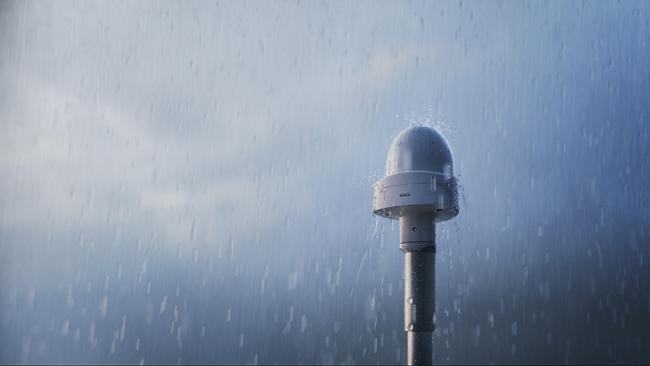
PRECICAP® Radar Precipitation Sensor RM60
The world's first maintenance-free radar precipitation sensor for uninterrupted and detailed measurement of every event
Enter the next era of precipitation sensing
As climate change drives more intense rainfall and flood risk, meteorological and hydrological precipitation networks must deliver better data without an extra operational burden.
RM60 uses patented PRECICAP radar technology to measure every hydrometeor individually. This unlocks a unique combination of capabilities:
The problem with today’s precipitation networks
Constant maintenance
Funnels clog with debris and insects. Mechanisms freeze in winter. Heating elements consume power and anti-icing fluids need refilling. Every station in your network needs regular cleaning and field calibration — and that recurring workload is the binding constraint on how large your network can grow.
Silent
failures
Clogged funnels and frozen mechanisms don't raise alarms. You can't tell if it's dry or if the gauge has failed — and data gaps hit hardest during the severe events that drive operational decisions.
Wind steals your data
Wind-induced undercatch is the dominant systematic error in precipitation measurement. Fixing it requires shields, fences, or purpose-built rain pits at every site — adding cost, foundations, and site-specific engineering that makes standardization and network expansion impractical.
Accumulation is not the whole story
Conventional gauges report accumulation and intensity. Precipitation type, drop size distribution, and reflectivity (Z) require separate instruments with their own maintenance and budget.
Operate your precipitation network without scheduled maintenance
RM60 is designed to run for its full service life without scheduled site visits. Auto-calibration during precipitation events keeps measurement performance stable, and embedded self-diagnostics continuously monitor sensor health and flag anomalies — so the sensor tells you when something is wrong, instead of going quiet.
- Grow your network without growing your maintenance teams
- Catch instrument issues early: no more silent data gaps during the events that matter most
- Reduce your operating costs across the network's lifecycle

✔ No moving parts
✔ No periodic cleaning
✔ No heating or anti-icing fluids
✔ No manual field calibration
✔ No emptying

Accuracy without windshields
Wind-induced undercatch is the dominant source of error in conventional precipitation measurement, and the reason most networks rely on shields, fences, or purpose-built rain pits. RM60's narrow-beam radar geometry looks straight up, measuring individual particles as they fall through a focused volume directly above the sensor — so wind cannot deflect the data in the first place.
- Standard deployment at every station without the additional complexity of infrastructure
- Network-wide data consistency regardless of wind exposure
2020
first field deployments
700 000+
hours of field data around the globe
0
maintenance visits

One sensor for all precipitation conditions
RM60 accuracy holds across the full intensity range, from the first drops of drizzle to convective downpours. This makes it suitable for network wide deployment. PRECICAP radar technology allows winter operations without heating and present weather reporting across 19 SYNOP codes covering drizzle, rain, snow and hail from a single instrument.
- Capture light drizzle and heavy convective bursts alike with high resolution
- Native type identification feeds inflow forecasting, snowmelt timing, and climate services without an additional sensor for type identification.
- Low power consumption makes RM60 well suited for remote and off-grid sites

Capture detailed event profiles
Ground truth beyond accumulation. Individual hydrometeor measurement produces a full event profile at sub-minute resolution — accurate onset, peak intensity and duration. RM60 also outputs measured drop size distribution and reflectivity factor (Z) at every station. The level of detail that has lived at a handful of reference sites becomes routine across the entire network.
- Real-time intensity with no minimum-accumulation threshold or tipping lag
- Measured DSD and Z output at every station for weather radar QPE tuning
RM60 product launch live stream
See how we are changing the way the world measures precipitation. This live stream recording reveals the breakthrough technology behind the RM60 and the impact it will have on precipitation measurement after a century of using the same methods.

Learn more in our webinar
Operational constraints have limited precipitation network expansion for decades. Join us for an in-depth look at the revolutionary radar precipitation sensor that is enabling meteorological services to deploy the denser networks needed for improved flood forecasts.
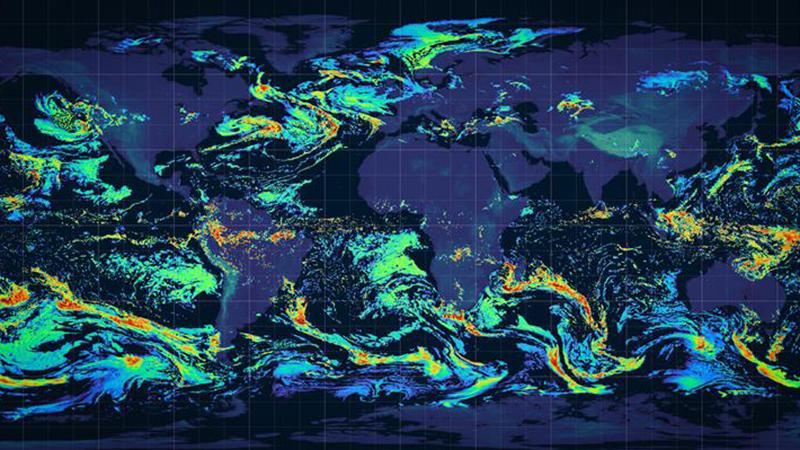
Unlock the next generation of forecasts and models
Modern forecasting, from flood warnings to nowcasting to AI-driven weather and hydrological models, runs on dense, reliable ground-truth data. RM60 delivers it from every station, including in the remote catchments where today's networks aren’t adequate.
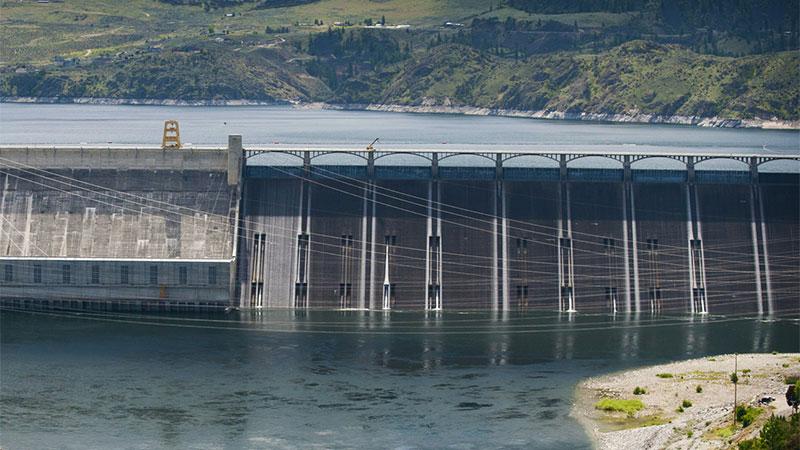
Smarter water management, from dam to drought
Inflow forecasting, reservoir operations, drought monitoring, and water-rights compliance all depend on knowing what fell, where, and in what form. RM60 gives hydrological models better inputs from every station, and the catchments most distorted by wind, snow, and remoteness become reliably measurable.

Reach the places your network can’t reach today
Most networks have known gaps, mountain catchments, remote islands, climate-sensitive zones, where conventional gauges are too costly, maintenance-heavy, or unreliable to deploy at scale. RM60 makes those sites practical, turning previously-skipped locations into routine deployments and giving forecasters and hydrologists ground-truth data where they need it most.
PRECICAP: Patented Doppler Radar Technology
Narrow beam
radar geometry
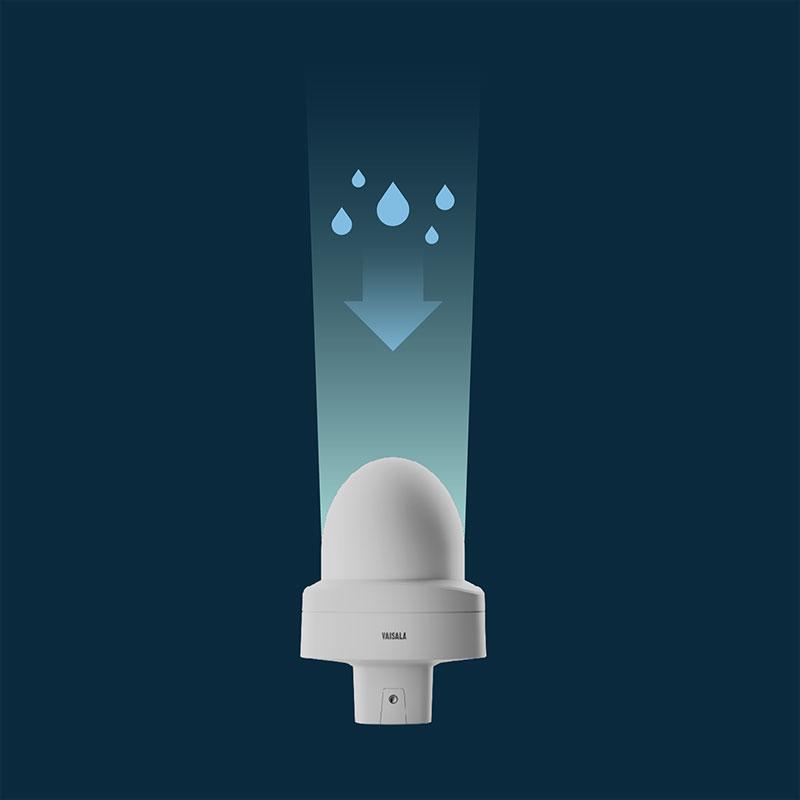
Excellent accuracy even in high winds without wind shields or fences.
Near-field measurement with 61 GHz radar frequency
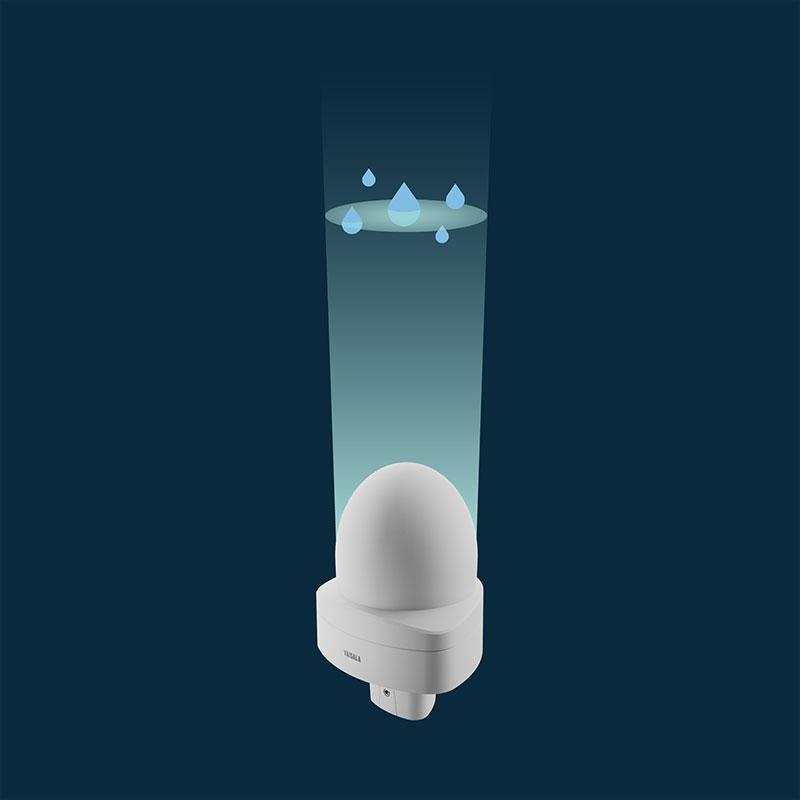
Allows measurement of individual hydrometeors and eliminates false detections from insects and moving surroundings.
Expand or upgrade your networks with ease
- Find a spot for the sensor with a clear view to the sky above
- Mount RM60 on top of the mast or use a crossbar mount
- Connect the device cable
- Ensure vertical alignment of the sensor
- Get data using Modbus or ASCII protocols

From observation networks to control systems
Professional precipitation networks:
Meteorological and hydrological agencies, alongside operational networks for hydropower inflow forecasting and flood monitoring. Maintenance-free operation and low power consumption make RM60 well suited to remote and off-grid sites.
Monitoring, control and automation systems:
Solar plants, greenhouses, and road and rail safety systems where real-time precipitation drives operational decisions — automated solar tracker stow during hail and heavy rain, vent and irrigation control, weather-responsive speed limits. RM60 integrates with existing SCADA over Modbus RTU.

Vaisala Care for RM60: Planned expert support if something goes wrong.

Enhanced support
Get the priority access to support via email, phone, teams or MyVaisala.

Extended warranty
Control lifecycle costs and ensure fast repairs in case of unexpected failures.

Tuotedokumentaatio
Lisää liitteitä
Complete your setup

Data Management Unit DMU801

Automatic Weather Station AWS810
Resources


Precipitation has been undermeasured for over a century. Vaisala has built a sensor that changes that.
Precipitation networks have faced two problems no conventional gauge could solve: data that runs consistently low, and critical locations that remain unmonitored. RM60, the world’s first truly maintenance-free precipitation sensor, is built to change that.

Trust Vaisala to help you master meteorology
Ask us how improved meteorological capabilities provide accurate and reliable local insights for your region.


