Expert article
Sustainability in food production: How inline measurement can cut energy use in evaporation processes
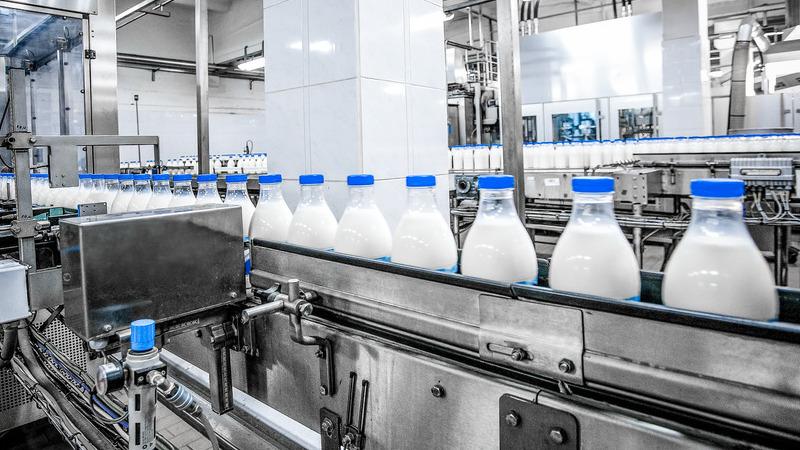



Evaporation is one of the most energy-intensive processes in the food and dairy industry. As pressure increases to reduce energy consumption and emissions, producers are looking for new ways to improve process efficiency – and evaporation processes are a key target. Reliable inline measurement has an important role to play in optimizing these processes, helping to remove in real-time the many small inefficiencies that, once eliminated, can add up to large energy savings.
Why evaporation efficiency is important for sustainability
The core principle of industrial evaporation hasn’t changed in over a century, but what has changed is how precisely we can measure and control the process. Traditionally, concentration monitoring and control has been carried out using manual sampling and operator adjustments, but a switch to continuous inline measurement can result in a significant reduction in steam use.
To put a reduction like this in context, in a typical milk powder plant, evaporation and spray drying together can consume 70% of the plant’s total process energy – with evaporation alone responsible for a large proportion of the figure. Yet optimization efforts often focus on equipment upgrades, not on how precisely concentration is controlled. Balancing product quality and process efficiency is a key challenge, which inline measurement can help with – even small improvements in measurement and control can lead to significant energy savings and a lower carbon footprint, without affecting product quality.
How inline measurement can be used for process optimization
Inline sensors can continuously measure process concentrations without the need for traditional lab sampling. The continuous, real-time data that inline sensors provide enables automated control of dry solids content or concentration, with no need for manual adjustments or over-steaming to mitigate quality risks.
In this way, continuous inline monitoring results in:
- Fewer product losses
- Improved product consistency
- Faster response to feed variations
- Less risk of human error
- Optimized steam consumption
Compared to manual sampling, inline measurement gives real-time feedback that enables dynamic adjustment to changing feed conditions, helping to optimize heat and steam use and reduce energy consumption. Integrating inline measurement with process control systems also supports predictive maintenance and efficiency tracking. Overall, inline measurement means food producers can shift from reactive to proactive control, which is essential for a sustainable, efficient evaporation system.
Accurate, hygienic, and robust inline measurement with Vaisala solutions
Vaisala technology, such as inline refractometers and humidity and dew point measurement solutions, ensures reliability even in demanding food production environments. Vaisala Polaris™ Sanitary Refractometers are both 3-A Sanitary and EHEDG certified, ensuring that they meet hygiene requirements and are safe to use in food and beverage processing applications.
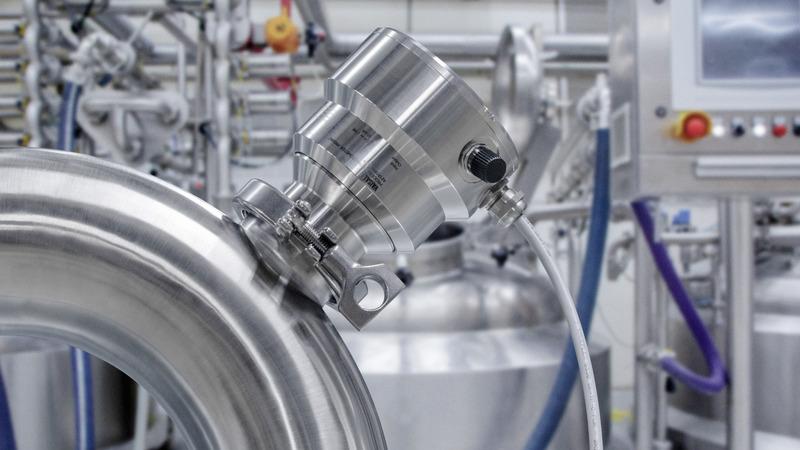
Integrating Vaisala Polaris process refractometers into your evaporation process enables continuous, real-time in-line concentration measurement of Brix, dry solids, or total dissolved solids content. Vaisala refractometers can be installed directly in evaporator inlets, outlets, or intermediate stages to deliver accurate readings that are unaffected by bubbles, crystals, or undissolved solids.
Vaisala Polaris process refractometers are easy to use out of the box and are delivered pre-calibrated. Thanks to their long-term drift-free stability and minimal maintenance needs, they don’t need recalibrating and their lifecycle costs are low. All these features help food, dairy, and beverage producers to maintain accurate control of process concentrations, optimizing the evaporation process and minimizing energy use.
Real-world energy and cost savings
To take a real-world example, let’s look at evaporation in dairy processing. In this process, water is removed from milk or other dairy streams to produce a concentrated product. Typical applications include production of unsweetened or sweetened condensed milk, milk powder, infant formula, and whey and lactose powder. The product needs to be evaporated to a specific dry solids content according to the final product specifications.
Evaporators are often designed as single or multi-effect systems to improve energy efficiency. A typical installation point for the refractometer is at the evaporator outlet, where it can provide operators with real-time information about solids content. Additional refractometers installed before and between evaporation steps allow for continuous monitoring and control of the evaporator’s performance.
The total solids concentration achieved during evaporation is critical as it directly affects the performance of the subsequent drying process and the final product quality. Continuous, real-time measurement of dry solids allows operators to adjust evaporation conditions. If the dry solids content exceeds the targeted level, the viscosity of the milk increases, which creates problems with atomization during drying. Conversely, a solids content that is too low increases the energy consumption of the drying stage.
Key benefits of using an inline refractometer in evaporation:
- Consistent end-product quality and less waste
- Lower operating costs through improved energy efficiency
- Optimized evaporator performance
Read more about using a refractometer for milk evaporation
Read more about using a refractometer for juice evaporation
Read more about using a refractometer for pectin extraction and evaporation
How smart measurement technology supports net-zero food production
As the food and beverage industry moves towards net-zero, the role of digitalization, continuous monitoring, and smart process control will transform the evaporation processes of the future. Today, inefficient concentration control often leads to unnecessary steam consumption and higher operating costs in evaporation processes. Utilizing Vaisala’s smart measurement technology can help food producers reduce their energy consumption and emissions – and ultimately meet their sustainability targets.