Expert Article
Understanding humidity, part 2: Practical measurements every engineer should master
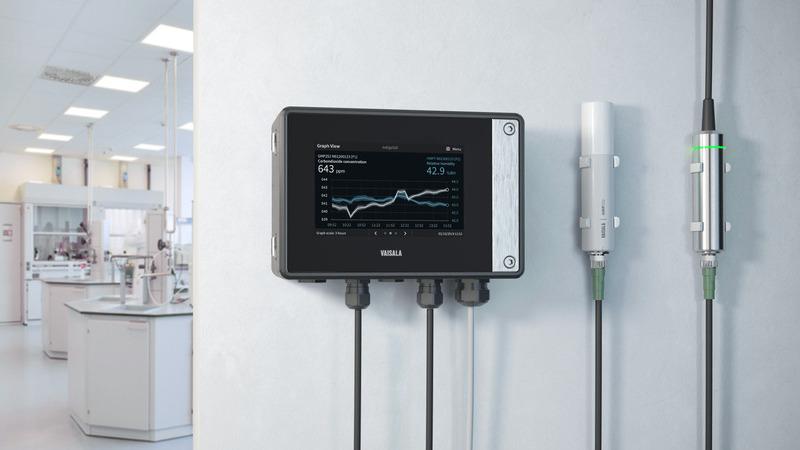



When you know how changes in temperature and pressure will affect humidity readings, you can measure and control more accurately – but only if you choose the right measurement instrument. This article aims to help you dive deeper into how humidity behaves in real-world conditions and explains how to choose the right humidity measurement instrument for your application.
As changes in temperature and pressure also change humidity relationships, to understand humidity you need to understand how water vapor behaves in changing conditions. Saturation pressure, partial pressure, and humidity values are all determined by the temperature and pressure.
Temperature: When the temperature rises, the saturation pressure will increase rapidly, as warm air can hold much more water vapor than cold air. This is why RH will fall as temperatures rise, and why falling temperatures bring the risk of saturation and condensation even if there is no additional water added to the air.
Pressure: The total pressure affects the partial pressure of all component gases because of Dalton’s law. When air is compressed, the partial pressure of the water vapor increases in proportion to the total pressure. This increases the risk of saturation and condensation.
Saturation occurs when the partial pressure of water vapor equals the saturation pressure at a given temperature. This is known as dew point. Any further cooling or increase in water vapor will cause condensation. When the temperature is below freezing, excess water vapor will cause ice to form – this is the frost point.
These facts can explain unusual real-world observations, including:
- Sudden RH spikes – these are often caused by small temperature shifts rather than moisture changes. For example, opening a door into a cooler corridor can cause RH to jump instantly even if no additional moisture enters the room.
- Condensation in compressed air – this is often caused by the partial pressure of water vapor rising during compression, then being cooled in downstream equipment.
- Dew points at different pressures not being directly comparable – dew point is pressure dependent, so a dew point measured at system pressure will differ from a dew point measured at atmospheric pressure. This means that any comparisons must take pressure conditions into account.
By understanding the physics behind how humidity behaves, you’ll find that changes in temperature and pressure create predictable changes in humidity readings – helping you to measure and control accurately.
Practical examples of common humidity measurement scenarios
Here are two simple scenarios to show how humidity parameters change and how to still measure accurately.
Scenario 1: Heating air from 20 °C to 30 °C
Imagine you have air at 20 °C with 50% RH. If you heat the air to 30 °C without adding or removing water:
- The absolute amount of water will stay the same.
- Because the water vapor saturation pressure increases with the temperature increase, the RH falls.
- This matters because if you are using RH to control your process, you might assume the drop in RH means that the air is now dryer, when in reality no moisture was removed.
- Solution: Control using dew point instead of RH to prevent unnecessary humidification, save energy, and avoid over-conditioning. This is especially relevant in HVAC systems that attempt to control both humidity and temperature. These systems typically have separate mechanisms for humidifying/drying and heating/cooling. Using RH as the control parameter can lead to unwanted oscillations where the system overcompensates for perceived changes in humidity caused by temperature shifts rather than actual moisture changes.
Scenario 2: Compressed air dew point calculation
Suppose you compress air from 1 bar to 7 bar. If you do this without drying the air:
- The water vapor partial pressure will rise proportionally with the total pressure; the actual moisture content will not change.
- The dew point rises as the pressure increases, so condensation can form if the air cools. In a compressed-air system, this can cause safety risks and energy inefficiency.
- Solution: Measuring dew point at system pressure allows you to predict where and when condensation will occur. This makes it easier to prevent corrosion, reduce the risk of equipment failures, and mitigate safety risks.
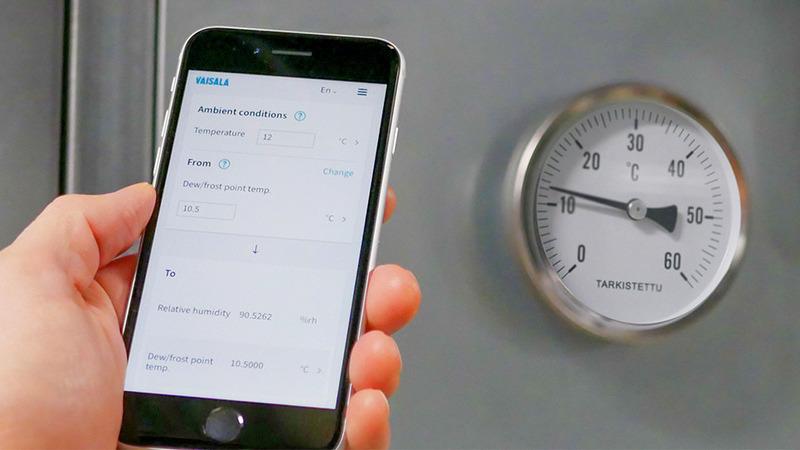
Instead of performing manual calculations, you can quickly understand and analyze these kinds of scenarios using the Vaisala Humidity Calculator – especially when there are multiple changing parameters.
How to choose the right humidity measurement instrument
Choosing the right equipment to measure humidity starts with some key considerations. Here’s a handy checklist:
- Match the instrument to the measurement environment. Are you measuring in a cleanroom, warehouse, outdoors, or in compressed air?
- Understand the temperature range and pressure conditions. Will there be large temperature variations? Are you measuring in a pressurized system? Do you need a heated probe to avoid inaccurate readings in condensing conditions?
- Pay attention to instrument accuracy and stability. Look for equipment with low drift, high accuracy, and proven long-term stability.
- Consider your maintenance and calibration needs. In harsh industrial environments you’ll need robust, industrial-grade humidity probes and transmitters with long calibration intervals.
- Make the right choice between dew point and RH. The right measurement parameter will depend on your application. For example:
o Low-humidity dry rooms and lithium battery production: use dew point sensors
o HVAC and building applications: use RH and temperature transmitters
Vaisala’s industrial-grade humidity and dew point transmitters have been designed for stable, long-term high performance in demanding applications such as industrial processes, cleanrooms, and environmental monitoring. Vaisala transmitters are built to perform reliably in environments where drift, downtime, or inaccurate readings can quickly become costly.
To find out more about how to choose the right humidity measurement instrument for your application, read the application note How to Choose the Right Instrument for Measuring Humidity in Your Application.
The benefits of understanding humidity
Humidity may seem simple, but you need to understand what you’re really measuring. Parameters such as relative humidity and dew point measure moisture in different ways – and react differently to changes in pressure and temperature.
When you understand these measurements and how water vapor behaves under changing conditions, you can make smarter control decisions that improve quality, reduce energy consumption, and increase the safety of your operations. Choosing the right instruments and sensors will also protect your processes and improve performance.
The Vaisala Humidity Calculator – the easy way to make humidity calculations
The Vaisala Humidity Calculator is a free, easy-to-use resource that helps you model humidity behaviors under different temperatures and pressures in real time – saving you from performing humidity calculations and conversions manually. It covers all the most commonly used parameters and helps you to calculate several humidity parameters based on only one known value. The calculator is scientifically verified and supports a wide range of parameters including RH, dew point, frost point, and enthalpy.
Try the Vaisala Humidity Calculator and explore how changing temperature or pressure affects different humidity parameters.
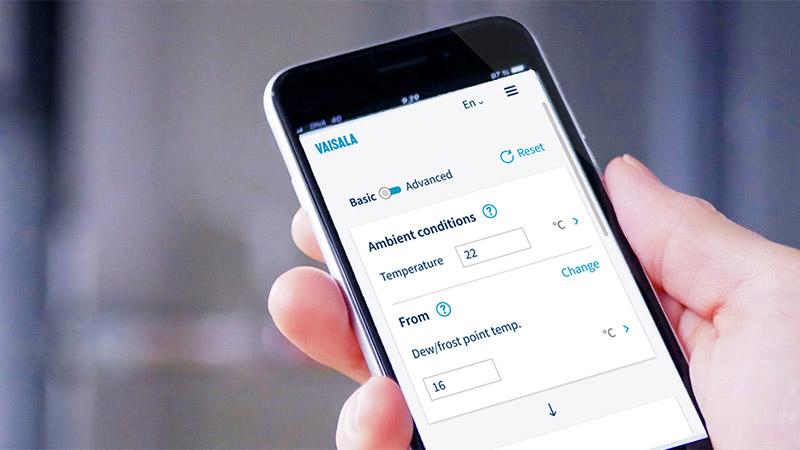
Vaisala humidity calculator
Relative humidity, absolute humidity, wet-bulb temperature, enthalpy, water concentration, and many more. Humidity calculations and conversions made easy.