Expert article
Q&A: Making standalone WindCube® lidar bankable with WindCube Pure TI™ and Availability Booster
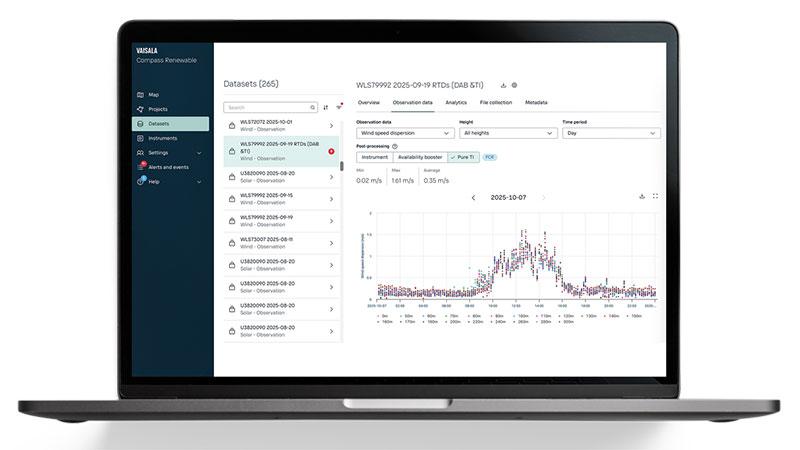



This Q&A consolidates some of the technical questions raised by consultants, independent engineers and OEMs on WindCube Pure TI™ and the Availability Booster in our webinar "Improving WindCube® data quality, availability and TI accuracy with Availability Booster and WindCube Pure TI™". Article provides clarified answers to support the practical adoption of lidar‑based TI and availability enhancement in site suitability, loads, and energy yield assessment workflows in line with emerging IEC guidance and OEM expectations.
1. WindCube Pure TI: Applicability, implementation and complex terrain
Q1. Is Pure TI currently limited to ground‑based WindCubes? What about floating lidar and offshore projects?
Pure TI is commercially available today for ground‑based WindCube campaigns. Work is ongoing to extend the methodology to floating lidar by combining Pure TI with motion‑compensation for platform dynamics. That offshore solution is still in R&D and not yet commercially released.
Q2. Can Pure TI be used for completed campaigns where the lidar is already de‑mobilized?
Yes. If 1 Hz RTD files were stored, they can be uploaded into Vaisala’s Compass Renewable platform and tagged as a historical campaign. Pure TI is then applied in the cloud, and outputs are clearly marked as reprocessed historical data for auditability.
Q3. Why isn’t Pure TI embedded directly on the device yet, and when will that change?
The target architecture is to have Pure TI running natively on WindCube hardware. However, embedded deployment requires very extensive qualification over a wide operational envelope.
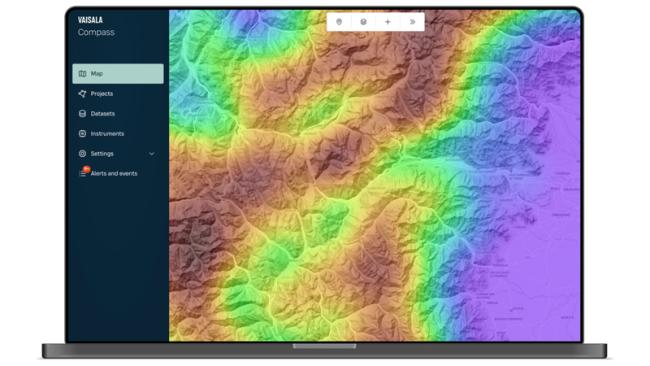
Compass Renewable is therefore the first deployment layer:
- It allows rapid roll‑out of validated algorithms.
- It supports backwards‑compatible reprocessing of legacy datasets.
- It provides full traceability of which algorithm version was applied.
WindCube Pure TI has been validated and shown to significantly improve lidar TI measurements. However, the algorithm is currently computationally intensive, making its deployment directly on the WindCube firmware not yet feasible. Optimizing the computational performance of the algorithm is therefore a key next step toward its integration into the lidar firmware.
Q4. How does Pure TI perform in semi‑complex and complex terrain?
Multiple validations indicate that terrain complexity has only a weak impact on Pure TI performance when used correctly:
- The Nordex–Pavana–RWE–Vaisala validation campaign shows consistent behaviour across simple and complex terrain, with only a small conservative overestimation in complex sites.
- Field feedback (e.g. ENEOS sites in very complex Japanese terrain) indicates robust performance when combined with appropriate flow modelling.
In practice:
- Apply FCR and/or CFD to correct the mean flow in complex terrain.
- Use Pure TI to reconstruct the standard deviation (turbulence) from 1 Hz data.
The residual bias in complex terrain is smaller than initially expected and conservative for loads, which many OEMs and IEs view as an acceptable trade‑off versus building and permitting multiple met masts.
Q5. Can the Pure TI correction be enabled remotely through a software or firmware update on existing units?
Today, Pure TI is offered as a processing workflow in Compass Renewable. You connect your WindCube to Compass, upload or stream RTD files, and Pure TI is applied in the cloud. This can be run daily as new data arrive or as a one‑time bulk reprocessing of past data. Direct activation purely via a remote firmware update on all devices is not yet how the algorithm is deployed.
Q6. Are these algorithms one‑click tools, or do users need to tune parameters?
Pure TI and the Data Availability Booster are delivered as one‑click solutions. The user does not need to define or tune parameters: you simply select the dataset and run the algorithm. All model choices, thresholds and underlying physical formulations are handled by Vaisala as part of the validated implementation.
2. Availability Booster: behaviour, quality and use cases
Q5. Why was an 80% 10‑minute availability threshold used, and could this be relaxed?
The 80% threshold was chosen deliberately conservative to ensure each 10‑minute statistic is based on a representative sample of the turbulence distribution. Recent work suggests that, for WindCube, 50% availability can still be sufficient in many conditions, indicating potential to relax thresholds case‑by‑case where justified.
Q6. How does the Data Availability Booster increase availability, and what is the impact on data quality?
The algorithm combines:
- A 3‑LOS (line-of-sight) reconstruction (valid when one beam is missing)
- A controlled extension below the strict CNR threshold, followed by aggressive quality filtering
Validation results demonstrate a negligible impact on data quality, which enables users to recover more data without compromising confidence in the measurements. In addition, some IEs are already using DAB in the campaigns they manage.
The gain is most significant at low‑aerosol (“clean air”) sites where baseline availability is poor; in inherently high‑availability environments, the incremental benefit is smaller.
Q7. Can the Availability Booster be applied retrospectively?
Yes. As long as the necessary underlying data are available, DAB can be run on historical periods through Compass Renewable. This enables:
- Post‑campaign uplift of availability (e.g. at clean sites)
- Retrospective reduction of long‑term correction and EYA uncertainty driven by data gaps
3. Deployment, standards and acceptance
Q8. Which WindCube versions are supported, and what is the commercial model?
- Pure TI and the Data Availability Booster are validated today for WindCube V2.1 and V2.1XP via Compass Renewable.
- Older versions (e.g. V2.0) are not formally supported yet due to insufficient validation, even though the underlying methods are in principle applicable.
- Both algorithms are provided as one‑click tools under a paid Compass Renewable subscription, which also includes the Terrain Complexity Estimator and other post‑processing utilities.
No hardware replacement is required if you already operate supported WindCube versions and store 1 Hz RTD data.
Q9. How are OEMs and consultants expected to use Pure TI in site suitability workflows?
The intended workflow for consultants/OEMs is:
- Plan a standalone or hybrid mast+lidar campaign, ensuring 1 Hz RTD recording.
- Use Terrain Complexity Estimator to assess whether FCR is sufficient or CFD is needed.
- Apply FCR/CFD to mean wind speeds where required.
- Apply Pure TI to reconstruct turbulence intensity from 1 Hz radial velocities.
- Propagate TI and availability uncertainties explicitly into loads and EYA.
OEMs remain free to treat mast‑based TI as the reference, but the residual gap between Pure‑TI‑corrected lidar TI and cup TI is now small enough that, for many projects, lidar‑based TI can be accepted as a practical alternative where mast deployment is constrained.
Q10. Why is standalone lidar more accepted in some markets (e.g. Germany, Austria) than others (e.g. Italy), and how will IEC 61400‑15‑2 change this?
The divergence has been driven by standards:
- In German‑speaking markets, the TR6 guideline has for years allowed standalone lidar in both simple and complex terrain (with appropriate corrections).
- Elsewhere, the absence—until recently—of a dedicated IEC framework for lidar‑based EYA and TI has led many consultants and lenders to insist on mast‑only approaches.
The IEC 61400‑15‑2 Committee Draft explicitly:
- Permits standalone lidar in flat terrain.
- Permits standalone lidar in complex terrain when combined with validated CFD flow models and appropriate corrections.
As 61400‑15‑2 proceeds through the IEC process, it provides a common global reference for:
- Consultants and IEs to justify lidar‑centric designs.
- OEMs to formalize acceptance of Pure‑TI‑corrected lidar TI in their internal guidelines.
- Lenders and insurers to align their technical due diligence criteria across regions.
Implications for consultants and OEMs
For consultants and OEMs, the key implication is that WindCube Pure TI and the Availability Booster are now sufficiently mature to be integrated into standard energy yield assessment and site‑suitability pipelines, especially where met‑mast deployment is costly, logistically challenging, or constrained by permitting.
In complex terrain, a workflow that combines FCR or CFD for the mean flow with Pure TI for turbulence reconstruction provides a practical and conservative lidar‑based TI solution that aligns well with existing OEM load assessment philosophy. With IEC 61400‑15‑2 now explicitly recognizing standalone lidar under defined conditions, the technical and standards framework for broader acceptance is largely in place; the remaining work lies in embedding these methods into internal consultant and OEM procedures, as well as into lender and insurer guidance, so that lidar‑centric approaches can be adopted consistently and with confidence.
References
- IEC 61400‑15‑2, Assessment of site‑specific wind conditions – Part 2: Lidar‑based methods (Committee Draft / ED1)
- ACP Peak 2026 presentation by Vaisala and RWE: Validation of New Lidar Turbulence Algorithm at North American Sites
- WindEurope 2026 Poster: Repeatability, reproducibility, and uncertainty estimation of a new lidar turbulence algorithm in varying wind conditions around the world
- Vaisala WindCube Pure TI™ Performance Report
- Nordex Requirements on Lidar TI for Site Suitability assessment
- Black et al., Benchmarking LiDAR TI Solutions, WindEurope 2025
Related products
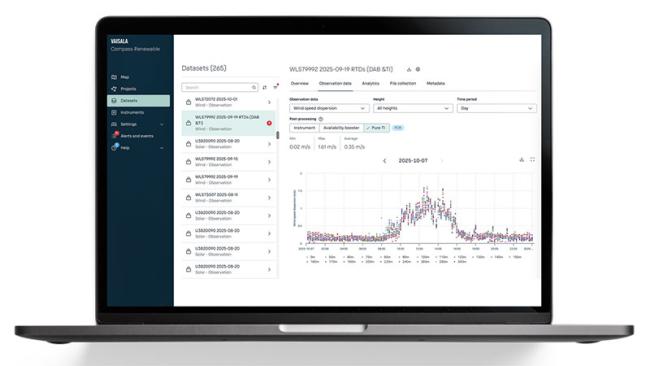
WindCube Pure TIᵀᴹ
Improve your wind measurement campaigns with WindCube turbulence intensity (TI) data for turbine selection, site suitability and load assessment.
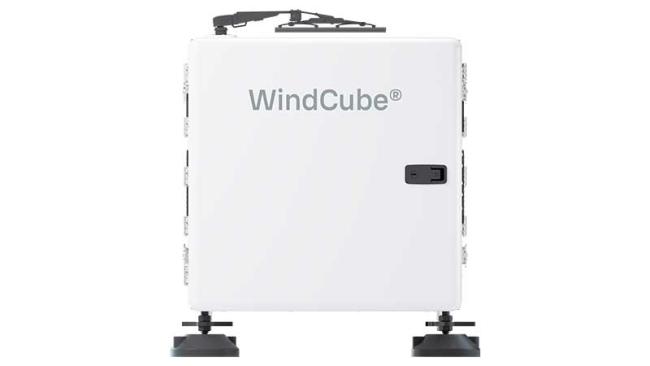
WindCube 2.1 XP
World’s most accurate vertical wind lidar, delivering bankable wind resource data for your utility scale wind projects.

Webinar
Improving WindCube® data quality, availability and TI accuracy with Availability Booster and WindCube Pure TI™
How much more value could you get from your WindCube data?
Wind resource assessment campaigns are increasingly pushed into harsher, more complex environments—exactly where lidar data availability and turbulence intensity (TI) can become limiting factors for bankable assessments.
In this webinar, Vaisala, Kjeller Vindteknikk and Nordex will present how the Availability Booster for WindCube and WindCube Pure TI™ in Compass Renewable can enhance your existing and future WindCube campaigns.