Expert article
Data-driven cleanroom HVAC: How better measurements unlock efficiency and compliance




Cleanrooms are some of the most demanding environments for HVAC systems. Strict environmental conditions must be rigorously maintained to ensure product quality, process reliability, and regulatory compliance. Despite this, many cleanrooms still rely on static HVAC strategies that don’t adjust to real-time conditions. As cleanroom operators seek to improve efficiency while maintaining compliance, one thing is becoming increasingly clear: smarter HVAC starts with better measurements.
Cleanrooms are energy-intensive environments
Achieving the perfect cleanroom environment requires significant amounts of energy, with ventilation the single largest consumer. The volume of air changed in a minute in a cleanroom is the same as the volume changed in an hour in an office, and moving this air requires fan operation that consumes a lot of energy. Consequently, even small reductions in cleanroom energy use can yield big savings in energy bills.
Although all cleanroom operators would love to reduce energy costs, the risk of not maintaining the cleanroom environment is too high – product quality needs to be ensured no matter what, and the financial penalties for non-compliance could far outweigh any energy savings. However, there is a simple way to both minimize energy use and maintain an optimal – and compliant – cleanroom environment: real-time measurements.
The hidden cost of over-controlled environments
So-called static HVAC strategies are designed with safety margins based on worst-case scenarios rather than reflecting actual operating conditions. The result is an over-controlled environment with excessive airflow rates, continuous maximum ventilation, and limited responsiveness to actual conditions. While this approach minimizes risk, it also consumes more energy than necessary and increases costs.
To move beyond static control, cleanroom operators need reliable, real-time data on the following three critical parameters: temperature, relative humidity, and differential pressure. Taking the occupancy status into account, these measurements, combined with operational data on occupancy status and ongoing activity, provide the trusted input that HVAC systems rely on to make effective control decisions. These decisions help ensure environmental conditions are maintained efficiently and reliably. Without accurate measurements, even the most sophisticated control strategy cannot consistently optimize HVAC performance.
Measurement is the key to smarter HVAC
Once you have accurate measurements, you have the basis for stable environmental control, enabling faster response to changes in cleanroom conditions.
For example, consider a cleanroom operating well within its set parameters. Continuous measurement data may show that airflow can be safely reduced while reliably maintaining required cleanliness levels. Even relatively small reductions in air exchange rates can deliver meaningful energy savings because ventilation represents such a large portion of overall cleanroom energy consumption.
Similarly, real-time pressure measurements allow operators to detect and correct pressure imbalances before they cause compliance issues. Rather than simply confirming that conditions stay within limits, trusted measurements enable the HVAC system to respond precisely and even proactively, making them a highly valuable tool for improving HVAC performance.
How to achieve accurate measurements
Intelligent HVAC control is only as good as the data behind it. To achieve the accurate measurements that HVAC systems need to make the right control decisions, high-quality transmitters and monitoring systems are essential. This is particularly true in critical environments such as cleanrooms.
Cleanrooms present other unique challenges for measurement devices. Measurement devices for cleanroom environments must meet strict design and hygiene requirements. Devices not designed for cleanroom use may introduce contamination risks, complicate cleaning procedures, or fail to perform reliably under specific airflow conditions.
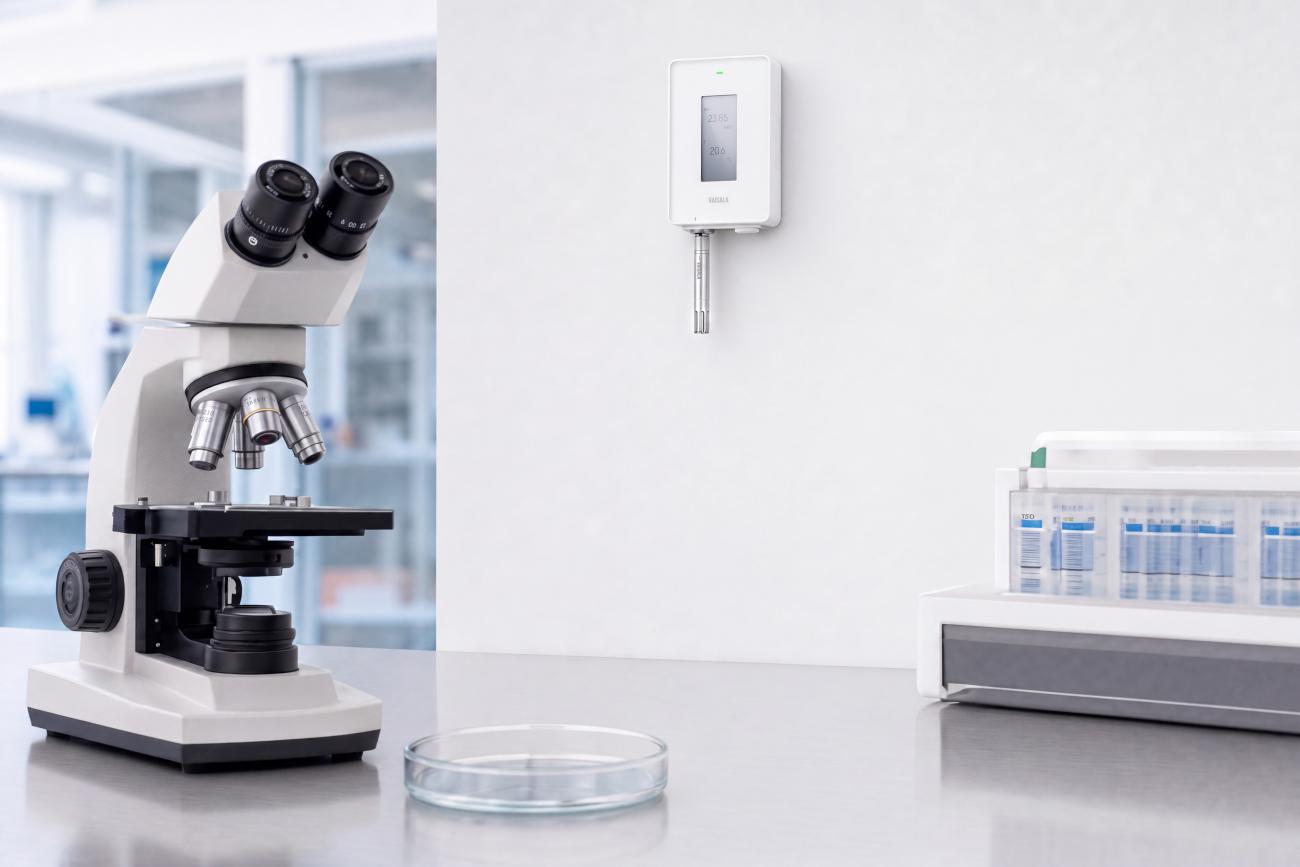
Installation must also be considered carefully. Airflow patterns can affect sensor performance, with poor sensor placement potentially introducing measurement errors. Even small errors can lead to unnecessary energy use or unstable control performance over time.
Selecting measurement solutions specifically designed for cleanroom applications, like Vaisala’s modular Origo range of transmitters, helps to ensure both reliable data and hygienic operation. Origo transmitters are engineered to maintain ideal environmental conditions and protect critical spaces like cleanrooms with unmatched precision and reliability.
The Origo platform uses factory-calibrated interchangeable probes that simplify commissioning and maintenance while helping to maintain measurement accuracy over time. You can even combine two probes in a single transmitter. A wide range of compatible sensors supports temperature, humidity, CO₂, dew point, and other HVAC measurements across cleanroom environments.
The importance of maintainability
In addition to sensor placement and hygienic design, maintainability is becoming increasingly important in modern cleanroom operations. Over their lifetime, sensors must be calibrated, serviced, and occasionally replaced. If this work is difficult or disruptive cleanroom operators may delay it, increasing the risk of measurement drift and inaccurate control.
Measurement devices designed with serviceability in mind help to reduce maintenance effort, simplify calibration procedures, and support long-term measurement reliability. For example, choosing a device with detachable probes means they can be exchanged quickly for calibration without removing the entire transmitter. A pre-calibrated replacement probe can be installed in seconds while the original probe is sent off for service. This minimizes downtime and process disruption, simplifies maintenance planning and workload, and helps ensure measurements remain accurate over the long term.
Turn data into intelligent control
Reliable and accurate measurements enable the modern HVAC systems to be precisely controlled. This brings three key performance benefits:
- Dynamic adjustment of airflow rates
- Optimized pressure cascades
- Reduced energy use without compromising compliance
When a cleanroom space is not in use, i.e. when occupancy is zero, airflow can be safely reduced, resulting in measurable energy savings.
While the connection between better measurements and optimized HVAC is clear, achieving true precision control requires more than just installing sensors and letting the system run. Operators must also consider system design, correct sensor placement, and validation of measurement accuracy. In many cases, cleanroom operators can benefit from expert support in assessing current systems, optimizing their measurement strategies, and ensuring reliable integration with HVAC control systems.
Better measurement enables efficiency and compliance
The future of cleanroom HVAC is not just about maintaining conditions – it’s about understanding every aspect of your cleanroom environment and optimizing it continuously.
As energy costs rise and compliance requirements tighten, operators need accurate, reliable measurements that enable smarter HVAC control in real time. By providing trusted data for every control decision, accurate measurements from fit-for-purpose devices allow cleanroom operators to build and maintain intelligent control strategies that help them:
- improve energy efficiency
- enhance process reliability
- ensure compliance with regulatory requirements, and
- improve maintenance and calibration practices.
Ultimately, better measurement is the foundation that enables better control decisions, leading to more efficient and compliant cleanroom operations.
Find out more about Origo transmitters for precise cleanroom climate control.
What does ‘cleanroom-compliant measurement’ mean in practice?
Cleanroom environments place unique demands on HVAC systems and the measurement devices used within them. To support hygiene, compliance, and reliable operation, measurement solutions should be specifically designed for cleanroom applications.
Key characteristics of cleanroom-compliant measurement devices include:
- Smooth, easy-to-clean surfaces to minimize particle accumulation and support routine cleaning
- Minimal crevices and a rounded design to reduce the risk of contamination and improve hygiene
- Flexible, non-intrusive mounting options so devices can be installed on walls and ceilings, or inside ducts, without disrupting airflow
- Sealed or protected cabling to prevent contamination and simplify cleaning procedures
- Detachable, exchangeable probes to enable faster calibration and maintenance, minimizing cleanroom disruption and helping to ensure long-term measurement reliability
Modern measurement solutions, such as Vaisala’s Origo™ transmitters, are designed with all of these requirements in mind, helping ensure both measurement reliability and cleanroom compatibility.
Anu Kätkä represents Global Product Management at Industrial Measurements of Vaisala. She has extensive experience in building automation and management systems as well as metering and monitoring solutions.
Further reading
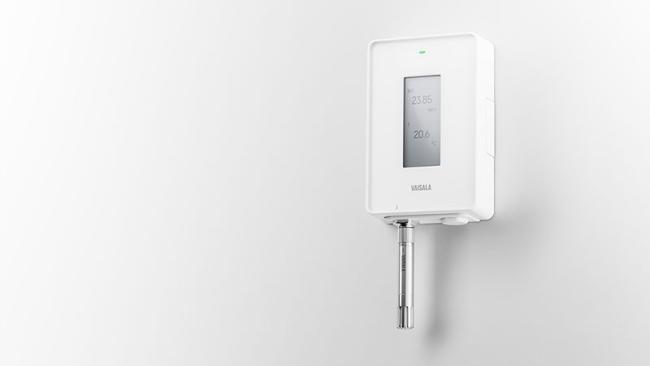
Origo™ transmitters for cleanroom climate control
Discover the Origo™ modular transmitter platform designed for cleanroom HVAC applications. Learn how cleanroom-ready design, interchangeable probes, and accurate measurements help maintain stable environmental conditions.
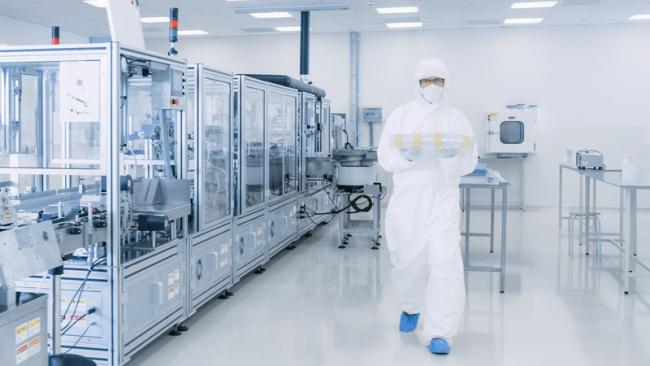
Smart and sustainable cleanroom design
Explore best practices for designing energy-efficient, compliant cleanrooms. Learn how accurate HVAC measurements support sustainable operation and reliable environmental control.
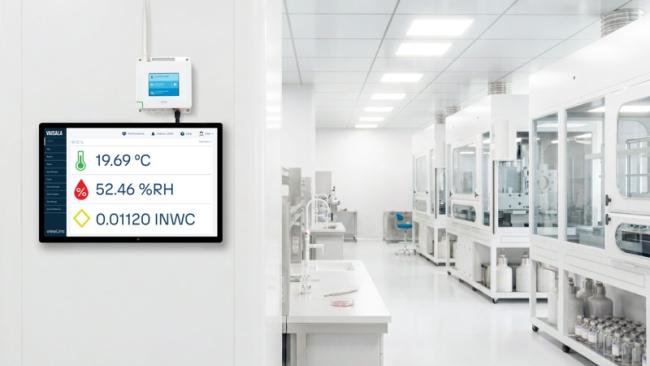
Cleanroom Environmental Monitoring
Learn about Vaisala's measurement solutions for cleanroom HVAC, including temperature, humidity, differential pressure, and CO₂ monitoring for critical environments.