Expert article
Cleanrooms that work: Avoiding common pitfalls in cleanroom design and construction


From Hands-On Beginnings to Industry-Leading Cleanroom Solutions
When I began my career in construction in 1971, I had no experience in cleanroom construction. At 21, in a microelectronics cleanroom project, I had to figure it out. I studied every drawing and detail to learn how airflow interacts with equipment and materials, how return air placement affects the room conditions. I learned that all cleanroom designs are not created equal. That experience sparked a career-long experience of making cleanrooms that do more than look good on paper. I learned how to make them function.
Over the years, Hodess Cleanrooms has continued to apply lessons learned to develop innovative air handling and load segregation designs that improved efficiency and reduced costs. We also expanded through strategic acquisitions, like Protocol Management Services and Cleanrooms West, broadening our capabilities in certification, testing, and proprietary cleanroom components.
Hodess now serves three main markets: life sciences (pharma, biotech, cell therapy, radiological), microelectronics (semiconductors, MEMS, defense), and green energy (EV batteries, solar panels). We design, build, and certify cleanrooms, dry rooms, and environmental rooms. Rather than simply building to specifications, we optimize layouts, advise on operational protocols, and apply a vast matrix of lessons learned from thousands of projects.
Why Cleanrooms Fail
Far too often, cleanrooms are designed like ordinary office spaces. A contractor puts up walls and ceilings, a mechanical engineer specifies “ISO 5” and proceeds to build at 450 air changes per hour without modelling how the air will actually behave. That usually results in a cleanroom that can't be certified. Rooms need to be looked at based on their actual use, their length, width and height, and how they will function before you decide what ISO level and air change rate you use.
At Hodess, we’re frequently called in to fix brand new cleanrooms that cannot function as intended. Millions of dollars’ worth of equipment can end up stranded in rooms that are uncertifiable. When a cleanroom fails, the true cost isn’t just the price of fixing it—it’s lost productivity, wasted materials, and delayed delivery of a product to market.
We’ve seen projects where critical elements—like exhaust for furnaces—were overlooked, threatening the entire operation. Our in-house expertise and use of computational fluid dynamics (CFD) modeling allow us to optimize airflow, particulate level, pressure, temperature, and humidity before construction begins. With a full understanding of the room and how it will be used, our cleanrooms can prevent the issues that plague poorly designed rooms: hot spots, dead zones, and pressure loss.

Lessons learned from 2,000+ cleanrooms
Over four decades and thousands of projects, we’ve developed several “non-negotiables”:
- Design comes first. We use CFD to model airflow, particle migration, pressure cascades, and energy balance. This, combined with knowledge of how cleanrooms are used, can allow us to reduce air change rates by 60–90% compared to cookie cutter designs—saving energy while meeting specifications.
- Construction quality is critical. A cleanroom is only as good as its weakest joint. We select wall and ceiling systems based on application—from welded joint panels in radiological facilities to modular systems for bioprocessing. Materials matter when ISO 14644-1 certification and product performance is required.
- Control the “big four.” Every successful facility manages temperature, humidity, pressure, and particle counts. Miss even one, and the room won’t perform. People often focus on particles, but temperature, humidity and pressure interact – and require balance.
- Monitoring: Essential for cleanroom success
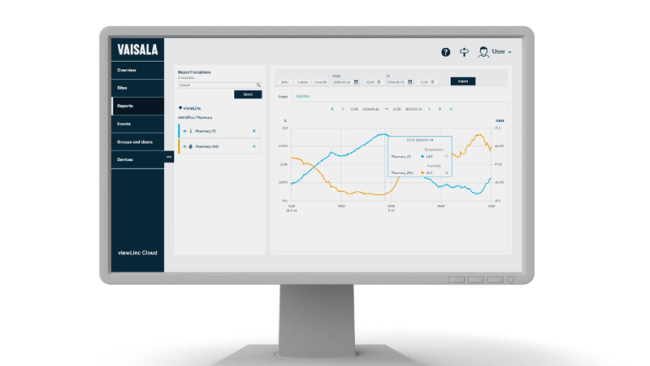
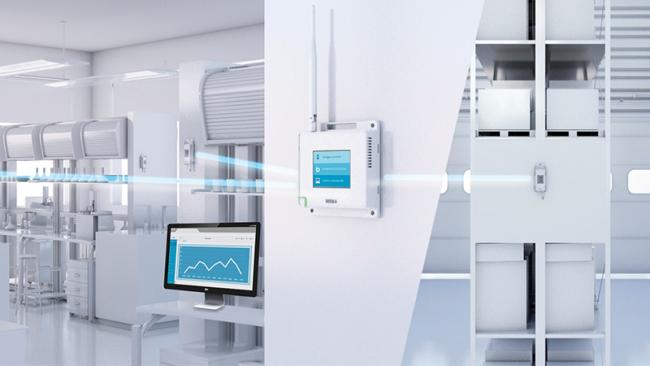
A well-designed cleanroom should operate reliably for decades—and that’s where monitoring comes in. We integrate monitoring early, in the design stage, specifying sensors and logic alongside airflow diagrams. For pharmaceutical and life science facilities, validated systems like Vaisala’s Viewlinc CMS provide the audit trails, alarms, and data integrity required for GMP compliance.
In dry rooms and high-tech environments, precise sensors are essential; without them, even the best-designed space can drift out of tolerance unnoticed. Our service division supports clients long after construction, helping them maintain and troubleshoot their cleanrooms. Calibration and maintenance are often overlooked; we’ve encountered rooms with decades-old, uncalibrated sensors giving false readings.
End-to-End Delivery
Our projects range from ISO 8 buffer prep suites to giga-factory dry rooms. Whether it’s a fast-track bioprocessing facility delivered in eight months or a 500,000 + sq. Ft. battery plant, the principle is the same: design, build, clean, certify, monitor, and support throughout the life cycle of the cleanroom.
Cleanrooms are complex, finely tuned environments that require ongoing support throughout their lifecycle. Understanding this is why, in the history of Hodess, we’ve never delivered a cleanroom that didn’t function as designed. Our philosophy is to build “multi-million-dollar watches” and help our clients to wind them.

Blake Hodess is the CEO of Hodess Cleanrooms, where he leads the company in delivering advanced cleanroom solutions for high-tech and life science industries. With a deep background in construction management and controlled environment design, he drives innovation, quality, and reliability across every project. Under his leadership, Hodess Cleanrooms continues to set industry standards by combining technical expertise with a commitment to precision and client success.
On-demand Webinar
Smart & sustainable cleanroom design: Fundamentals to future success
This webinar explores smart and sustainable cleanroom design, focusing on efficiency, reliability, and long-term success. Attendees will learn about ISO and GMP standards, optimizing airflow, energy efficiency, and regulatory compliance, while gaining insights from industry leaders on HVAC measurements and real-world project examples. Ideal for cleanroom professionals and engineers.