Reducing greenhouse gas emissions from lowland peatlands in England


The client: UK Centre for Ecology and Hydrology (UKCEH), UK Department for Environment, Food & Rural Affairs (DEFRA), Cranfield University, Jacobs, NIAB
The solution: Vaisala Quanterra Ecosystem Monitoring Service
Challenge: Understanding the real-world impacts of rewetting lowland peat to meet net zero targets
How can England reduce greenhouse gas emissions from lowland peatlands while balancing the needs of farming, biodiversity, and water management?
The challenge is substantial. Degraded UK peatlands account for approximately 3.5% to 5% of the UK's total annual greenhouse gas emissions. Meeting the Sixth Carbon Budget effort share and net zero targets requires increased ambition on peat rewetting, whether for restoration or more responsible management. Designing and implementing appropriate policies demands a stronger evidence base for the impact of water management in lowland peat landscapes.
Measuring greenhouse gas fluxes from peatlands in real time presents significant technical obstacles. The work requires specialized equipment and expertise capable of operating across multiple sites and management regimes. Data must be rigorous enough to inform government policy and meet peer-review standards. Some traditional monitoring methods fall short, unable to provide the continuous, high-resolution measurements needed to answer critical questions about how different management approaches affect emissions, water dynamics, and land productivity.
The LowlandPeat3 (LP3) project was designed to fill this gap. The research compares traditional farming approaches with rewetting strategies across lowland peatland sites in England, developing understanding of the feasibility and net impacts of changing lowland peat management practices.
Solution: Flux tower network delivers continuous greenhouse gas measurements across paired comparison sites
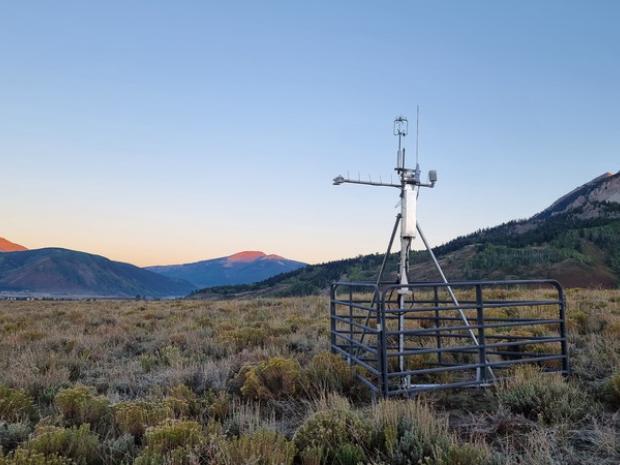
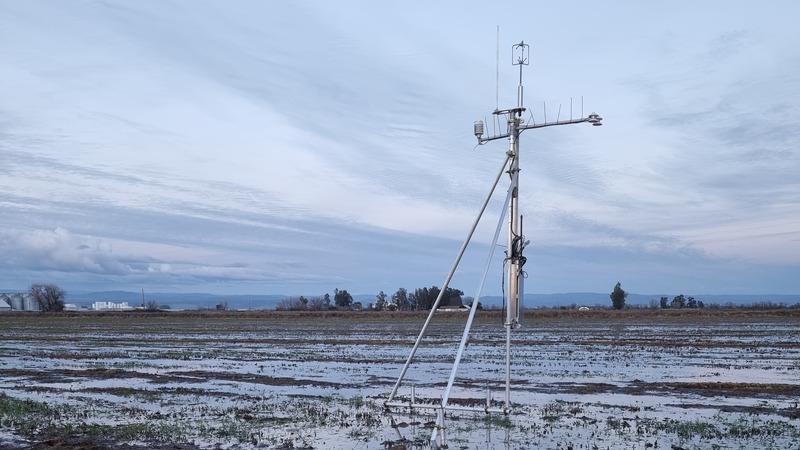
For the LP3 project, Vaisala Quanterra Ecosystem Monitoring Service is deployed to operate six flux towers across three collocated paired sites in England. Each pair compares a business-as-usual farming site with a site being rewetted, providing direct comparisons of how management decisions and water table depth influence carbon balance. These towers form the backbone of a national-scale field study examining greenhouse gas dynamics in arable and grazed lowland peatlands.
Flux towers are the gold standard for determining ecosystem-scale greenhouse gas exchange. The technology works by continuously measuring the movement of carbon dioxide, energy, and water vapor between the peatland ecosystem and the atmosphere, using methodologies based on peer-reviewed procedures. The towers operate continuously, generating high-frequency data that captures the full range of ecosystem responses to changing water tables, management, seasonal variations, and weather patterns.
Vaisala Quanterra handles the complete operational cycle of the tower: installation, data collection, data processing, quality control, and ongoing maintenance. This delivers reliable data showing how peatland ecosystems respond to different management practices and diurnal and seasonal variation. This approach allows research teams from UKCEH, Cranfield University, and their partners to focus on experimental design, analysis, and policy recommendations. While Vaisala Quanterra ensures data integrity and system reliability, scientists can devote their efforts to the development of actionable findings.
Results: Flux monitoring provides evidence to shape England's lowland peat policy
The continuous flux data from the paired sites is revealing how different management practices affect greenhouse gas emissions in real-world agricultural settings. This evidence supports policymakers in designing conservation programs that balance carbon reduction with food production. The LP3 project is producing findings that will directly inform government policy on peatland management.
Project outputs will be used to improve the Government's understanding of viable management options for lowland peat, help design policies for peatland management, and consider the net impacts of restoring lowland peatlands countrywide. Recognizing the need to balance peatlands for carbon and climate, food and farming, biodiversity, floods and water management, Vaisala Quanterra data will help inform the design of future lowland peat policy. This will enable farmers to continue producing food while delivering benefits for flood resilience, water quality, biodiversity, and significant reductions in greenhouse gas emissions. These contributions support national efforts to meet net zero targets.
For Vaisala Quanterra, the project demonstrates the value of reliable environmental monitoring in addressing one of the most pressing challenges in UK land management. Lowland peatlands represent a critical opportunity for emissions reduction, and understanding how they respond to rewetting is essential to achieving climate goals while supporting productive agriculture.