Precision carbon data supports sustainable grazing management research


The client: Noble Research Institute, Michigan State University, Colorado State University
The solution: Vaisala Quanterra Ecosystem Monitoring Service
Challenge: Measuring grassland carbon dynamics in real time across thousands of acres
How can grassland management be improved to support long-term sustainability, deliver positive outcomes for ranchers, and address other ecosystem challenges?
This complex question has long been hampered by the inability to measure grassland ecosystem responses to environmental and management conditions in real time across thousands of acres of diverse grazing systems.
The Metrics, Management, and Monitoring (3M) project set out to fill this gap. Funded by the Foundation for Food and Agriculture Research and Noble Research Institute in partnership with Greenacres, Butcherbox and the Jones Family Foundation, the research brought together scientists from the Noble Research Institute, Michigan State University, Colorado State University, University of Wyoming, Texas A&M, Oregon State University, Savory Institute, University of Leeds, The Nature Conservancy, and Vaisala Quanterra. Their goal was to understand how grazing management decisions shape soil health, carbon dynamics, and economic outcomes for producers.
The study was conducted in three climatological regions of the USA: the upper Midwest, the southern great plains, and the western high plains. The research included components of grazing management, economics, ecosystem health metrics, soil characterization, hydrology, remote sensing, and flux monitoring. The continuous, field-scale flux measurements have information that overlaps with the other research components, providing important contextual, validation, and discovery aspects.
Measuring carbon, energy, and water fluxes requires continuous, precise monitoring across varied terrain and weather conditions. The data needs to be reliable and rigorous enough to satisfy peer review. Traditional methods fall short because they cannot provide the spatial and temporal resolution this kind of project demands.
Solution: Continuous flux monitoring delivers real-time carbon data across 61 research sites
Atmospheric flux measurements offer a solution. This technology is the gold standard for determining ecosystem-scale carbon, water, and energy exchange. It works by continuously measuring the exchanges of gases between the atmosphere and the ecosystem in real time, using methodologies based on peer-reviewed procedures. The result is reliable data that shows how much carbon grasslands absorb or release throughout the day and across seasons. This level of detail makes the findings valuable for shaping conservation policy.
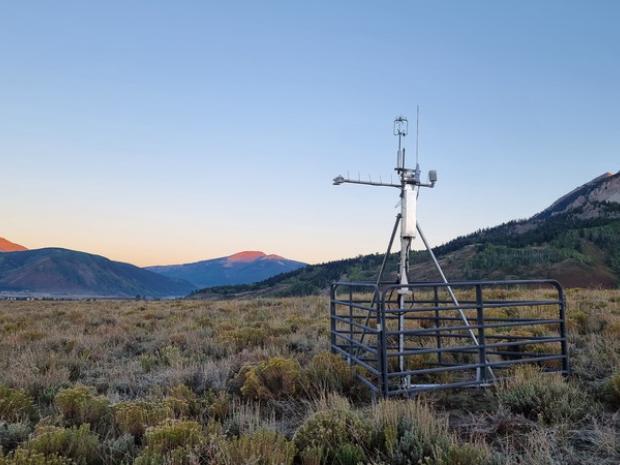
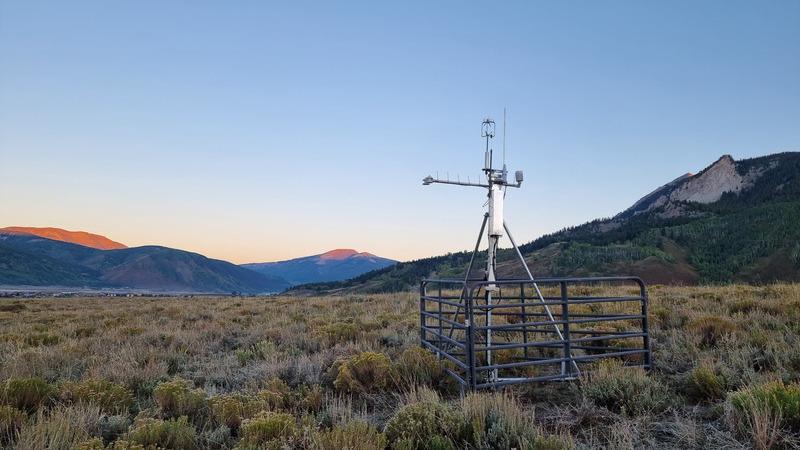
On the 3M project, Vaisala Quanterra Ecosystem Monitoring Service was deployed and operated flux-measurement systems across 61 research plots. These towers served as the backbone of the carbon monitoring network, capturing the exchange of carbon dioxide, water vapor, and energy between grassland ecosystems and the atmosphere. These towers delivered precision data in some of the country's most demanding agricultural environments.
The towers operated continuously at sites representing different grazing systems and management intensities. Each location generated a stream of high-frequency data, building a comprehensive picture of ecosystem dynamics across the grazing landscape. Vaisala Quanterra handled the full operational cycle: installation, calibration, data collection, quality control, and maintenance.
This allowed the research teams to focus on what they do best. While Vaisala Quanterra ensured data integrity, scientists could devote their efforts to experimental design, analysis, and interpretation.
“Using the Vaisala Quanterra tower system to measure eddy fluxes allowed us to instrument many sites, including replicate plots. This produced robust datasets to evaluate our new MEMS 3.0 ecosystem model. We also deeply appreciated collaborating with the exceptional team of flux experts at Vaisala Quanterra, whose guidance on data interpretation was both valuable and enjoyable.”
M. Francesca Cotrufo, University Distinguished Professor, Colorado State University
Results: Flux monitoring reveals how grazing management decisions influence carbon balance
The 3M project is producing findings that are reshaping how we think about grasslands and climate. These results have real-world implications, supporting the research team in providing farmers and ranchers with evidence-based strategies to improve soil health and land productivity. Policymakers have data needed to help design conservation programs that reward sustainable grazing practices. The findings are contributing to national and global efforts to understand the role agricultural lands play in long-term ecosystem resilience.
The project is also advancing the science of carbon monitoring. By demonstrating the effectiveness of atmospheric flux measurement systems in working grasslands, the research established a model for future studies. The data will continue to inform ecosystem models and support long-term tracking of grassland carbon stocks.
For Vaisala Quanterra, the project highlights the value of reliable environmental monitoring in advancing sustainable grazing management. Grasslands cover approximately one-fourth of the Earth's land surface, and understanding how they respond to management isn't just an academic question - it's essential to keeping these landscapes healthy and productive for the people and livestock that depend on them.