JTEC Energy Builds Confidence in Waste-Heat-to-Power Conversion with Vaisala Moisture Measurement
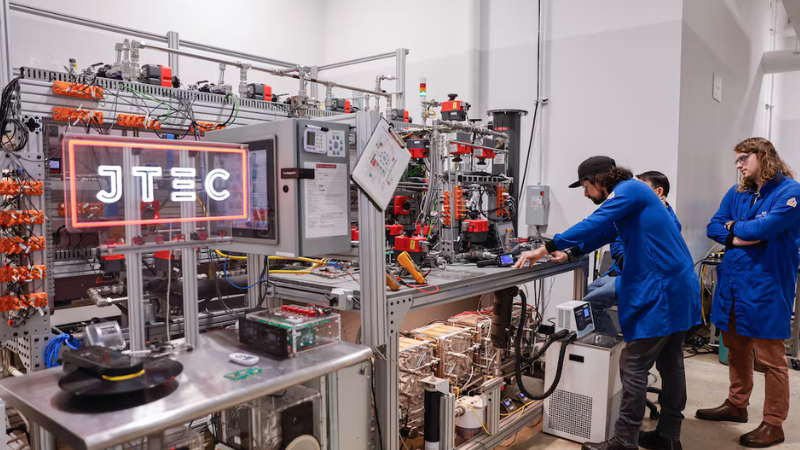


As JTEC prepares its hydrogen-based waste-heat-to-power conversion technology for field deployment, Vaisala sensors provide the humidity and dew point measurements needed to protect critical components, simplify control and build customer trust.
JTEC Energy has developed a novel technology that converts waste heat into electrical power at higher efficiency and at lower temperatures than many competing waste-heat recovery approaches. Its system uses hydrogen as the working fluid, pairing a heat-driven compression technology with electrochemical stacks that convert hydrogen pressure into electrical potential.
Tight moisture control is essential to this process. The electrochemical stack needs humidified hydrogen to keep its membranes functioning optimally, while the metal hydride reactors used in the waste-heat conversion subsystem must be protected from excessive moisture exposure. To manage that balance, JTEC developed a closed-loop gas management system that removes and recirculates more than 99.99 percent of the moisture introduced into the system.
For this system to operate reliably, JTEC requires highly accurate moisture measurement across conditions ranging from high humidity at the electrochemical stack to the very low dew point levels required before hydrogen can be safely returned to the reactors. These critical measurements also need to be performed with industrial-ready sensors that can operate in hydrogen, support dynamic pressure and flow conditions, integrate with control systems and meet hazardous area requirements.
Protecting a Critical System in a Demanding Hydrogen Environment
JTEC’s waste-heat-to-power conversion system brings together two subsystems with different moisture requirements: an electrochemical stack that requires moisture to operate efficiently and metal hydride reactors that must be protected from excess moisture.
In JTEC’s system, waste heat is delivered to one of the metal hydride reactors in the waste-heat conversion subsystem. Metal hydrides act much like a sponge for hydrogen. When cooled, they absorb hydrogen. When heated, they release hydrogen at a pressure linked to temperature. JTEC’s system uses that ability to generate hydrogen pressure as part of the process for converting waste heat into electrical power.
From the metal hydride reactors, the high-pressure hydrogen is then sent to the stack module, where expansion across JTEC’s novel electrochemical stacks produces electrical power. After this expansion, the low-pressure hydrogen leaves the stack and can be absorbed back into a separate metal hydride reactor in the waste-heat conversion module, where it can later be heated, pressurized and used to generate power again. Through this process, JTEC has developed a waste-heat-to-power conversion technology that circulates a single charge of hydrogen in a fully closed loop: No hydrogen is consumed by the system, and waste heat is the only “fuel” JTEC needs to operate.
During passage through the stacks, the hydrogen gas is humidified to keep the membranes in the stacks operating at peak performance. However, excess water exposure can damage metal hydrides by contributing to the development of oxide layers that limit hydrogen absorption and reduce reactor performance. As a result, JTEC must maintain enough moisture to support stack performance, then dry the hydrogen stream before it reaches the reactors.

“At its core, humidity measurement is so important to JTEC because we have two parts of our system that work really well, but for them to work well together, we have to ensure that we can control humidity passing back and forth between them really tightly,” said Julian Bell, Vice President of Engineering at JTEC Energy.
Before standardizing on Vaisala, JTEC used conventional relative humidity and dew point sensors in lab and R&D work. These sensors were not always robust enough for the application, especially when exposed to condensation or saturation events.
In R&D applications, a saturated humidity probe could force engineers to stop an experiment, dry down equipment, clean the system and begin again. In one case, an engineer spent three days trying to complete a six-hour experiment because the sensor saturated partway through the test and the system had to be reset.
The risks posed by inaccurate or unreliable moisture measurements are even greater in a production system, where the waste-heat conversion subsystem can represent more than a third of total system cost and is continuously in operation while the system is running. Moisture overexposures can degrade reactor system performance and require offline maintenance for recovery, adding unacceptable downtime to power production infrastructure.
“The honest truth is that we had not found a good sensor option before we came to Vaisala,” Bell said.
Standardizing on Vaisala for Humidity and Dew Point Measurement
JTEC first piloted a Vaisala dew point sensor in an internal R&D project in 2023. As the company worked toward its first production system and field pilot, Vaisala became the preferred option based on low dew point performance, calibration stability, availability, integration flexibility and technical support.
In JTEC's production system architecture, Vaisala sensors support three critical moisture measurement points.
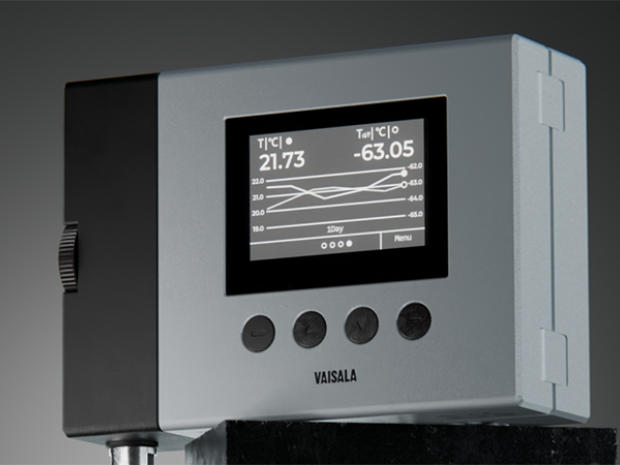
The first is a high-humidity measurement after the initial stage of the dehumidification system. At that point, hydrogen has left the electrochemical stack and much of its moisture has already been removed. JTEC uses a Vaisala HMP7 relative humidity and temperature probe to confirm system performance and help avoid condensation in the line.
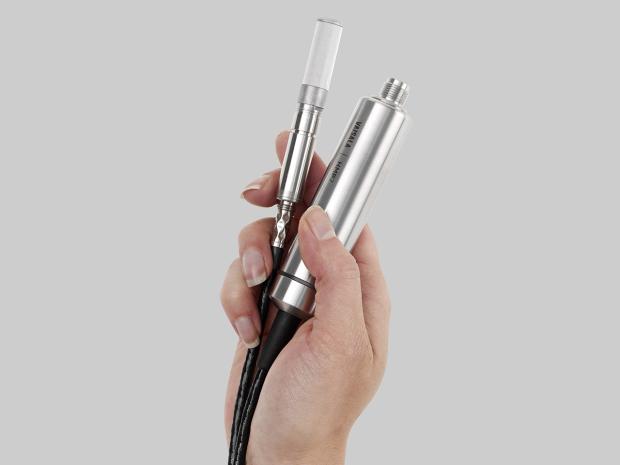
The second is a low dew point measurement after the later stages of moisture management. At this stage, hydrogen must be dried back to specification before returning to the metal hydride reactors. JTEC is using a Vaisala DMP370 Ex-rated sensor in this location. Beyond the stability and accuracy of the DMP370, working with Vaisala to explore a transition to sensors rated for hazardous environment operation has helped JTEC prepare for future customer requirements in demanding end-use environments.
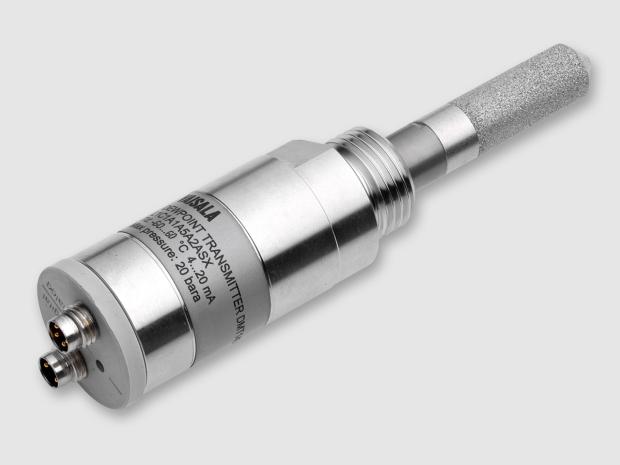
The third measurement point is in JTEC's maintenance manifold, which adjusts gas pressures in different parts of the system during startup, shutdown and maintenance operations. A Vaisala DMT143 dew point transmitter is used to confirm that moisture is not moved from the wet side of the system into dry sections that supply hydrogen to critical components.
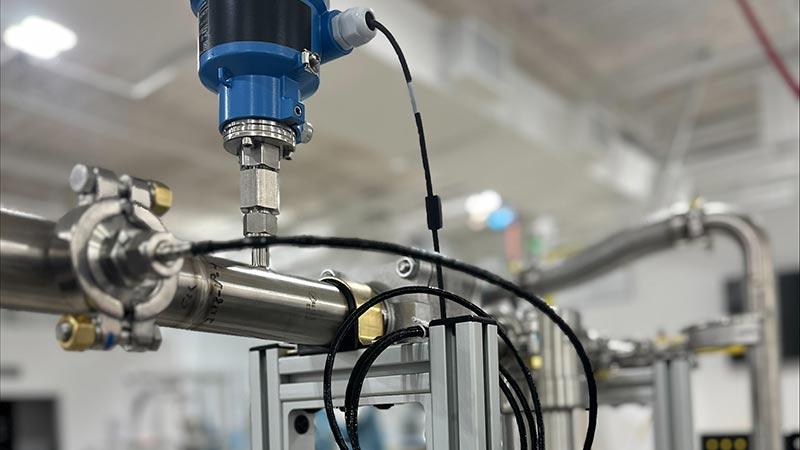
Implementation was straightforward. The sensors were installed as part of the larger system assembly and integrated with JTEC's control system. For a dynamic batch process where pressure, temperature and flow can vary significantly through a cycle, measurement performance, data accessibility and technical support were especially important.
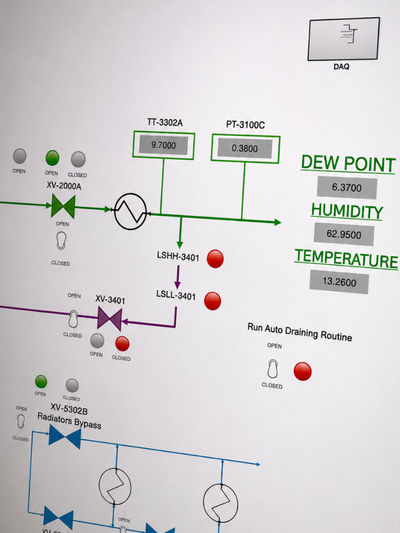
“Vaisala’s auto-calibration is a key feature that improves confidence in the number coming back to us, which has been a huge benefit,” Bell said. “At the same time, we have been able to integrate pressure compensation routines into our dew point measurements with support from Vaisala engineers, and that expertise really shines through.”
Vaisala support extends beyond product selection. The company provides access to Vaisala’s doctoral-level scientists who are global experts in humidity metrology. Their continued guidance helps the team evaluate moisture measurement in hydrogen at varying pressures and low dew point levels.
This was especially important because moisture measurement in hydrogen at pressures substantially different from atmospheric conditions is not fully understood across the scientific community or industry. Vaisala's technical expertise helped JTEC make informed decisions about how to approach pressure compensation and measurement confidence in those conditions.
“Vaisala helped educate us about what is known, what we can confidently say and where confidence drops off," Bell said. “It is because Vaisala has experts like that and is willing to make them accessible to customers that we were able to make intelligent decisions about how to perform these measurements."
Measurement Confidence for Field Deployment
As JTEC prepares its first production system for deployment in a field pilot, Vaisala measurement technology gives the company confidence that it can monitor moisture closely enough to protect critical reactor components. For example, JTEC must tightly control moisture content in the hydrogen gas as it returns to the reactors, making measurement accuracy, repeatability and robustness central to field readiness.
“I would have to have the highest level of certainty in my moisture measurements in order to feel comfortable running a reactor system of this scale in a field pilot, and Vaisala provides this certainty,” Bell said. “The investment in the reactor system is too great to justify running it if you are not 100 percent confident that you know what kind of moisture content you are putting back into the reactors.”
The Vaisala sensors help JTEC:
- Confirm moisture removal performance across the gas management system.
- Protect metal hydride reactors from damaging moisture exposure.
- Confidently measure very low dew points accurately.
- Simplify control through stable, reliable measurement.
- Support future hazardous-area installations through Ex-rated measurement.
- Use consistent sensor technology across R&D and production environments.
Vaisala DMT143 transmitters are now standard dew point sensors in JTEC's R&D operations, and the DMT143, HMP7 and DMP370 are standard components in the company's production system architecture.
For low-dew-point measurements, the Vaisala DMP370 offers a control advantage by delivering stable readings without the calibration interruptions that must be managed in some other measurement architectures.
“When we are deciding when to switch from one dehumidification column to another, knowing there is never a time period where we do not have direct eyes on the moisture content of the exiting gas makes it even easier for us,” Bell said.
Vaisala's technical partnership has also influenced how JTEC evaluates sensor vendors. Bell said moisture measurement is one of only a few areas where JTEC specifically names the sensor provider when discussing the system with customers, distributors and technical partners.
“Vaisala provides one of the three most important sensors in our entire system, with the moisture sensor being the most important sensor for the longevity of our system,” Bell said. “This is the one place where we could not be happier and are not looking for new sensors.”
Enabling the Next Stage of Waste-Heat-to-Power Conversion
As JTEC moves from the lab to the field, moisture measurement will be central to demonstrating the performance of its closed-loop gas management approach. Vaisala sensors provide the real-time visibility needed to validate performance by quantifying both the high humidity levels entering the moisture management process and the low dew point levels at the outlet.
That visibility helps JTEC protect reactor health, simplify control and build confidence that the system can support field operation. Looking ahead, JTEC expects to continue using Vaisala sensors as its production systems scale and as additional monitoring requirements emerge.
By standardizing on Vaisala, JTEC has established a moisture measurement foundation that supports field deployment, system reliability and future growth. In an application where moisture can determine reactor health, control reliability and customer confidence, accurate measurement is a core enabler of bringing a new waste-heat-to-power conversion technology into the field.