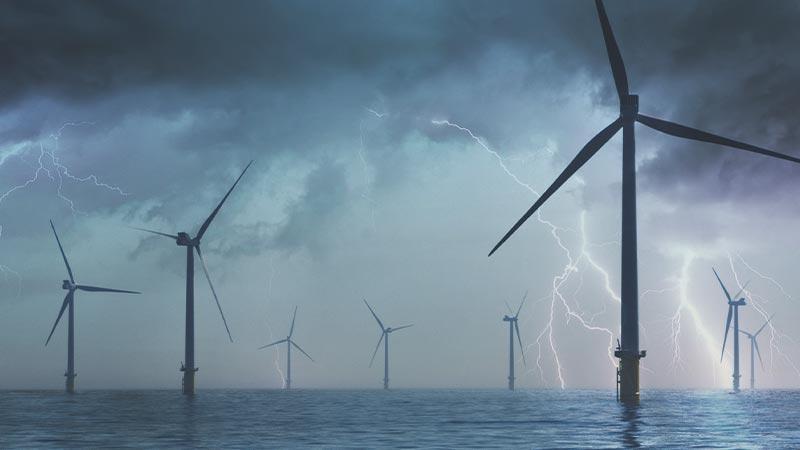
Better wind data supports safer, more efficient turbine installation at Baltic Power offshore wind farm
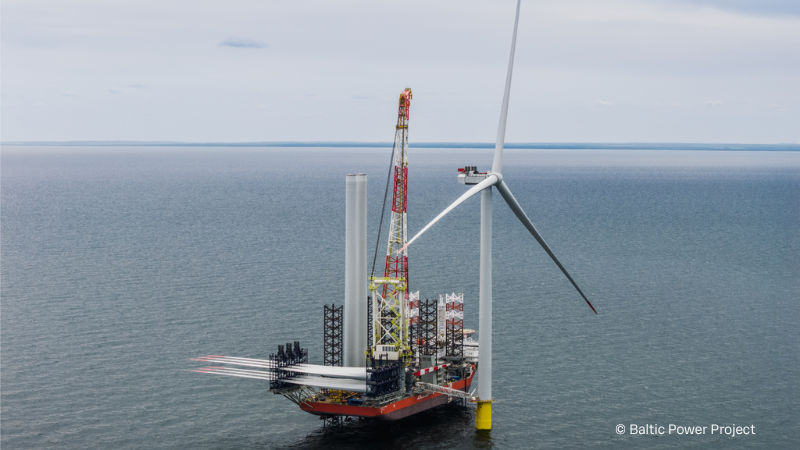


The client: Baltic Power Project,
a joint venture between ORLEN Group and Northland Power
Vaisala provided: WindCube® Offshore
How real-time vertical wind profiles from Vaisala WindCube® Offshore help Baltic Power improve metocean forecasts and make better use of weather windows during offshore wind turbine installation.
"Better data, better forecasts and better-informed decisions. As turbines and lifting heights continue to increase, having a clear understanding of the wind conditions throughout the lifting envelope becomes increasingly valuable. WindCube has been a useful addition to our Transportation and Installation (T&I) campaign, supporting both safe and efficient offshore operations."
Michael Gandil Nielsen, Port Manager, Baltic Power Offshore Wind Farm
Baltic Power is a landmark project in Poland’s transition toward cleaner and more energy-independent power generation. Developed jointly by ORLEN Group and Northland Power, the offshore wind farm is located approximately 23 km off the Polish coast near Choczewo and Łeba. With 76 offshore wind turbines and a total installed capacity of up to 1.2 GW, the project is expected to generate enough electricity to meet around 3% of Poland’s current electricity demand and supply more than 1.5 million households.
As Poland’s first offshore wind farm, Baltic Power is also helping establish the expertise, supply chains and processes needed for the country’s emerging offshore wind industry. Offshore installations began in 2025, with the wind turbine installation campaign progressing through 2026. In July 2026, the project reached another milestone when its first turbines supplied electricity to Poland’s national grid.
The installation campaign was the first project of its kind in Poland and the first logistical operation of this scale, involving 110 specialized vessels. For the turbine installation and lifting campaign, Baltic Power used Vaisala WindCube® Offshore to provide real-time vertical wind profile data from the installation location and support more confident metocean forecasting.
THE CHALLENGE:
Managing wind uncertainty during offshore lifting operations
Offshore wind turbine installation depends on narrow weather windows. During turbine installation, Baltic Power’s primary weather-related challenges were wind conditions and sea state. Sea state can induce vessel motion and oscillations of major turbine components, such as towers and nacelles, which can affect the safe execution of installation activities and lead to operational delays. The unusually severe Polish winter of 2025–2026 added another challenge, bringing strong winds and prolonged freezing conditions that had to be considered when planning and executing offshore activities.
The lifting environment was especially demanding. Each lifting operation had clearly defined weather limits described in approved lifting procedures and lift plans, and these limits had to be followed at all times. Baltic Power assessed these limits using weather forecasts for the planned weather window together with real-time measurements from crane instrumentation during the operation.
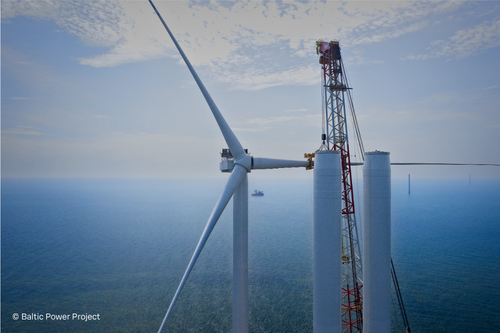
Existing measurements did not provide the full vertical picture. Before using WindCube, Baltic Power relied primarily on two independent weather forecast providers and anemometers installed on the vessel cranes. While this provided good operational guidance, the measurements were limited to the sensor locations and did not give a complete view of wind conditions throughout the lifting height.
Increasing turbine heights made better wind insight more valuable. Modern offshore wind turbines are installed at significant elevations, so more detailed information about the vertical wind profile gave Baltic Power additional confidence when assessing lifting conditions and optimizing forecasts.
THE SOLUTION:
Bringing real-time vertical wind profiles into metocean forecasting
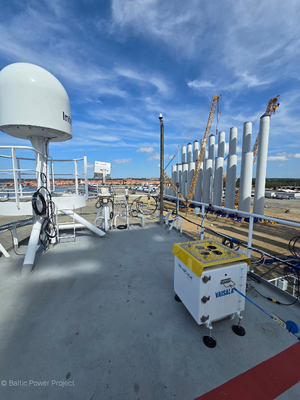
Vaisala provided Baltic Power with a 12-month rental of WindCube Offshore to support wind turbine installation vessel (WTIV) operations during construction of the offshore wind farm.
WindCube was installed on the WTIV in a location selected for good exposure while minimizing interference from surrounding vessel structures. The system was securely mounted for the offshore environment and connected to the vessel’s power supply and communications network, enabling measurements to be transmitted in real time. The installation was designed to integrate with normal vessel operations without disrupting daily activities.
The key value of WindCube was not to replace Baltic Power’s existing metocean forecasts. Instead, its live, site-specific measurements and vertical wind profiles provided forecasters with a more complete picture of the actual conditions at the installation site.
The metocean forecast remained the governing factor for obtaining the Certificate of Approval (CoA) required for lifting operations. WindCube data was fed back to Baltic Power’s forecasters, allowing them to continuously compare and refine forecasts against actual offshore conditions.
THE BENEFITS:
Better forecasts and better use of weather windows
With real-time vertical wind profiles available directly from the installation location, Baltic Power’s metocean forecasters gained a stronger basis for optimizing their forecasts.
This reduced uncertainty and increased confidence in the forecasts used to identify suitable lifting windows. For Baltic Power, the operational benefit was the ability to make better use of available weather windows while continuing to operate within established safety limits and procedures.
The additional information is particularly valuable as offshore wind turbines – and the heights at which components must be lifted – continue to grow. Instead of relying on measurements at a single point, WindCube provides visibility into wind conditions at different heights throughout the lifting envelope.
“Combined with the forecasts, this provides a stronger basis for understanding the conditions offshore and optimizing the available weather windows,” Gandil says. “I would see it as a valuable tool for improving forecast accuracy and supporting safer and more efficient operations.”
Although turbine installation was the primary application during the Baltic Power campaign, similar vertical wind information could potentially support other weather-sensitive offshore activities, including jack-up and relocation operations, crew transfers, vessel approaches and positioning, and heavy-lifting or equipment-transfer operations.