Expert article
Why data center uptime depends on measurement reliability
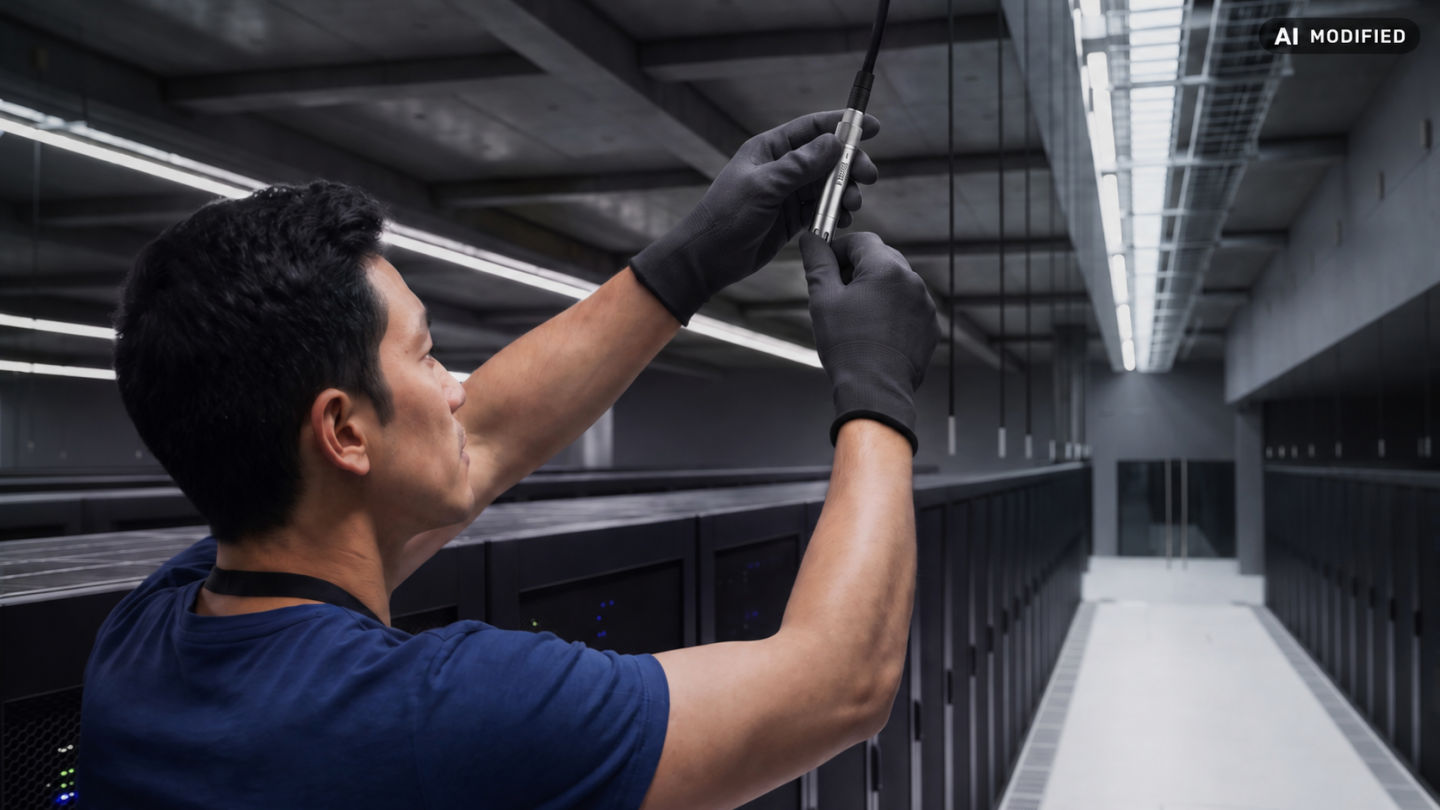



Today’s data centers power the cloud services, AI applications, and digital infrastructure that businesses and societies depend on. As more and more hyperscale and colocation facilities come online, operators face increasing pressure to minimize outages and fulfill contractual uptime obligations.
Data center growth increases the pressure on measurement reliability
The rapid growth of AI applications, cloud infrastructure, and digital services is driving global demand for data center capacity.
With hyperscale and colocation data center facilities processing increasing volumes of data, the financial risks associated with downtime grow. To maintain reliable conditions for tenants and support uptime commitments, operators need accurate data about key parameters such as temperature and humidity to monitor the environmental conditions inside the facility. As facilities expand, operators face growing pressure to maintain measurement accuracy across complex environments.
The importance of accurate measurement to data center operations
Accurate measurements are critical to maintaining optimal conditions for IT equipment. Temperature measurements, for example, confirm that cooling systems operate correctly and maintain the right environment.
Measurement accuracy also underpins the chain of evidence connecting physical data-center conditions to contractual service-level performance. Without trustworthy data, operators run the risk of being unable to prove that service-level agreement (SLA) conditions have been satisfied.
For data center clients, even a few minutes of downtime can lead to significant lost revenue and reputational damage. SLAs between data center operators and their clients typically specify requirements for uptime, environmental conditions, and service performance. Reliable and regularly calibrated sensors provide the traceable data needed to monitor agreed environmental limits and support SLA follow-up, tenant reporting, audits, or other inspections.
From an efficiency perspective, accurate temperature and humidity data helps HVAC control systems adjust cooling and air conditioning more precisely. Precise adjustment helps reduce both energy costs and CO₂ emissions. Inaccurately high temperature readings can lead to overcooling, resulting in excessive energy consumption and emissions, while inaccurately low temperature readings can lead to undercooling, increasing the risk of IT equipment stress, downtime, and challenges in meeting SLA commitments.
Read more about how to cut energy costs in this Vaisala eGuide: Reducing data center cooling energy consumption with accurate measurements.
Proactive lifecycle care maintains measurement stability and accuracy
Maintaining the long-term accuracy and stability of the sensors used to measure temperature, humidity, and other parameters vital to data center condition monitoring requires careful planning. With potentially hundreds or even thousands of sensors to monitor and maintain, the administrative and operational burden can become overwhelming for facility managers, and a poorly managed process can have expensive consequences.
A structured lifecycle care approach can help data center operators address this challenge through:
- accredited calibration
- replacement probe pools
- priority expert support
- extended warranty coverage
- service documentation
- digital service portal for documentation and calibration tracking
- optional on-site verification and calibration.
These types of services allow operators to move away from unpredictable, reactive maintenance towards a structured, systematic, and proactive approach to sensor lifecycle care.
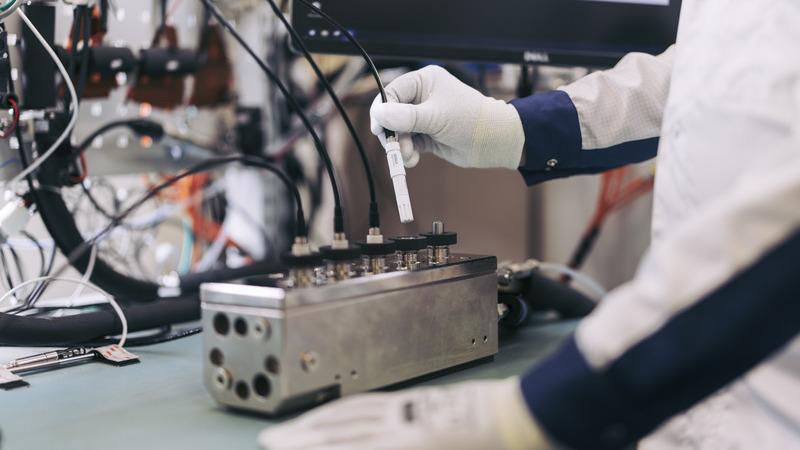
This helps operators reduce service surprises, support uptime objectives and SLA follow-up, and make measurement-related service planning more predictable.
With services structured around the agreed scope, measurement-related costs become easier to plan.
How Vaisala Care for Data Centers supports measurement lifecycle planning
Vaisala Care for Data Centers is a lifecycle service offering. Depending on the scope agreed in the service contract, it can include on-site verification of Vaisala instruments and selected third-party devices approved by Vaisala. For Vaisala instruments, the service can also include replacement of sensor probes with pre-calibrated probes and on-site calibration options.
For operators considering upgrades to existing measurement installations, site audits and sensor assessments can help identify calibration, servicing, and hardware replacement needs. The findings can inform recommendations and help operators plan measurement lifecycle activities across multiple sites.
Another potential application is planned probe replacement in installations using a daisy chaining solution. In this setup, multiple sensors are connected along a single cable running down a server aisle. The plug-and-play design allows sensors to be repositioned as rack layouts change.
For installations using Vaisala HMP113 temperature and humidity probes, a proposed service model could include for example a dedicated on-site stock of calibrated Vaisala XMP10 replacement probes. The operator’s own technicians could install the replacement probes and return used probes to Vaisala for maintenance and calibration, helping maintain measurement accuracy with minimal disruption to live operations. Under this model, a Vaisala Care service contract would define the scope of probe servicing, stock replenishment, and the responsibilities of each party.
A more predictable way to manage measurement reliability
For data center operators, the challenge is not only keeping individual instruments calibrated. It is managing measurement performance across large and often distributed instrument fleets, without adding unnecessary workload or disruption to live operations.
A structured lifecycle care model helps make that work more predictable. By combining accredited calibration, proactive servicing, and expert support, operators can reduce measurement-related workload while maintaining confidence in the data that underpins cooling performance, energy efficiency, SLA follow-up, and operational reliability.
Learn more about Vaisala Care for Data Centers