Expert article
How to meet GHG Protocol’s new requirements for carbon removals with continuous carbon monitoring



Carbon removals face a new standard
The Greenhouse Gas Protocol's Land Sector and Removals Standard brings welcomed clarity and rigor to including carbon removals in corporate emissions inventories. Published on January 30, 2026, the standard takes effect January 1, 2027.
Companies in land-use intensive value chains or those working with CO₂ removal technologies now face a clear challenge: prove that the carbon you claim to remove stays removed.
The standard incorporates a permanence principle with one simple expectation – you can only claim a removal if you can show the carbon remains stored. Continuous measurement with Eddy Covariance-based carbon flux monitoring helps meet this requirement.
What the permanence principle actually requires
Requirement 23 sets two concrete obligations for companies reporting CO₂ removals.
First, monitor carbon storage continuously. Companies need ongoing monitoring of carbon pools, documented in periodic monitoring plans, to show carbon stays stored or to detect losses.
Second, account for any losses of stored carbon. Net losses from previously reported removals must return to the inventory in the year the loss occurs – either as net CO₂ emissions if the pools remain within the boundary, or as reversals if they do not.
For land management removals, Requirement 23.LMR further requires this monitoring to be included within a land management plan that can detect losses in land-based carbon pools.
Permanence now means having repeatable evidence that carbon stays stored over time – and recognizing when it does not.
Preparing for reporting
With the standard effective from January 1, 2027, the first compliant inventories can already be built on 2026 data. That creates a short runway.
Land use changes and management practices unfold over months and years. To show removals are real and persistent, companies need time to:
- Establish monitoring plans
- Deploy field infrastructure
- Capture at least one full seasonal cycle of quality data.
Continuous carbon flux monitoring provides strong evidence for inventories under the new standard.
Why flux monitoring delivers
Many monitoring approaches rely on periodic measurements like soil cores, combined with models or remote sensing. These provide value but often deliver snapshots in time or focus on single carbon pools.
Eddy Covariance and related atmospheric flux methods measure the net exchange of carbon, water, and energy between the ecosystem and atmosphere for a defined footprint, in near real time.
This brings three key advantages:
Continuous evidence for ongoing monitoring
A flux station produces high-frequency time series of net ecosystem exchange rather than periodic field surveys. This directly provides ongoing monitoring to show carbon remains stored or to detect losses.
Early detection of reversals
Disturbances like drought, wildfire, land management changes, or drainage of organic soils can turn a site from sink to source. Continuous flux records reveal these shifts quickly, helping companies recognize and account for losses of stored carbon within the year they occur.
A systems view across carbon pools
Atmospheric flux monitoring captures the net outcome of CO2 flows between the ecosystem and the atmosphere, capturing changes across e.g aboveground biomass, soil organic carbon, and root respiration. This aligns with a permanence framework focused on the atmosphere's net CO₂ burden, not only individual stock measurements.
Flux monitoring can also work alongside models, soil sampling, and remote sensing – acting as an anchor that improves calibration and provides ground truth for removal claims.
Vaisala Ecosystem Monitoring Service: built for permanence
Following the 2025 acquisition of Quanterra Systems Ltd, Vaisala integrated this flux-based approach into a new offering: the Vaisala Quanterra Ecosystem Monitoring Service.
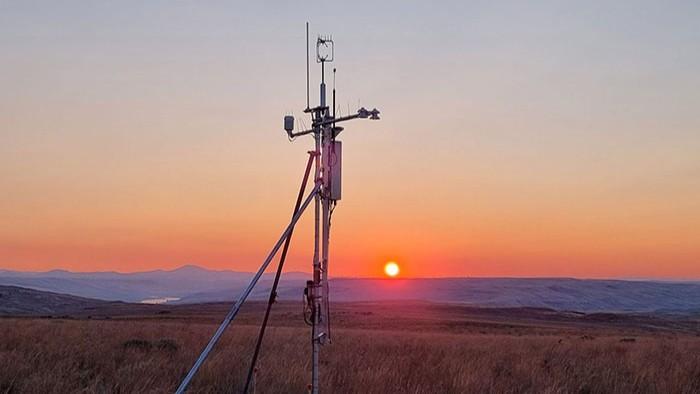
The subscription service deploys and operates flux stations at customer sites to continuously monitor atmospheric flows of carbon, water, and energy. Real-time data collected over long periods helps customers verify the effectiveness of their low-carbon products and programs. The same site-specific data can support high-quality carbon credit generation and new revenue opportunities for agricultural operators and managed nature assets.
Vaisala Quanterra Ecosystem Monitoring Service gives companies a practical way to operationalize permanence in the field.
Connecting to EU CRCF
The European Union adopted the Carbon Removals and Carbon Farming regulation to define how removals and carbon farming can be certified within the EU. The European Commission published draft certification methodologies for carbon removals and soil emissions reductions from carbon farming, nearly in sync with the Land Sector and Removals Standard.
In Vaisala's public comment on the methodology draft, we emphasized that atmospheric flux methods like eddy covariance are recognized in the ecosystem science community as high-integrity measurement technologies with a growing role in carbon farming projects. Continuous, high temporal resolution monitoring of carbon flows between ecosystem and atmosphere can improve outcome monitoring rigor and provide insight into difficult questions around additionality and permanence.
For organizations navigating both the GHG Protocol standard and the emerging CRCF, one message emerges: continuous, observational data on carbon fluxes will become an increasingly important asset for compliance, better land management and certification.
Higher standards, better evidence
The Land Sector and Removals Standard sets a higher bar for companies claiming to remove carbon from the atmosphere and store it on land. This strengthens climate integrity, though it raises implementation questions that the market will work through in the coming years.
Continuous carbon flux monitoring provides one important part of the answer. It does not replace all other methods and will not remove all uncertainty. However, it provides a robust, science-based way to demonstrate ongoing storage, detect reversals, and support honest accounting of removals.
Companies that build this evidence base will be better positioned to comply with the new removals reporting requirements, demonstrate the achievement of climate targets, and understand how effective their land use and carbon farming strategies truly are.

Meet the greatest climate challenges of our time with accurate measurements
Ready to see how Vaisala’s world-class instruments can help you reach your GHGs measurement goals? We’re here to help! Contact us and our team of experts will help you get started.
FAQs
What are GHG Protocol permanence requirements?
They require companies to monitor stored carbon over time and account for any losses in the year they occur, rather than assuming removals stay permanent.
How does Eddy Covariance-based flux monitoring support permanence?
Measuring continuous CO₂ fluxes between ecosystems and the atmosphere provides ongoing evidence of storage and early detection of reversals.
Is flux monitoring a replacement for soil sampling and models?
Sort of. Each measurement approach can be used independently, but each technology has different strengths and weaknesses. Used together, flux monitoring complements stock sampling and models by providing high resolution in-situ measurements on an ecosystem-scale that improves calibration, validation, and the credibility of carbon removals claims.
When do companies need to start preparing?
The standard applies from January 1, 2027, but companies may need data from the 2026 reporting year to avoid gaps in their evidence.
How does the Vaisala Quanterra Ecosystem Monitoring Service help?
It deploys and operates flux stations that deliver continuous carbon flux data, helping organizations meet GHG Protocol permanence requirements and align with EU CRCF.