Expert article
Cleanroom differential pressure: why a small value deserves serious attention
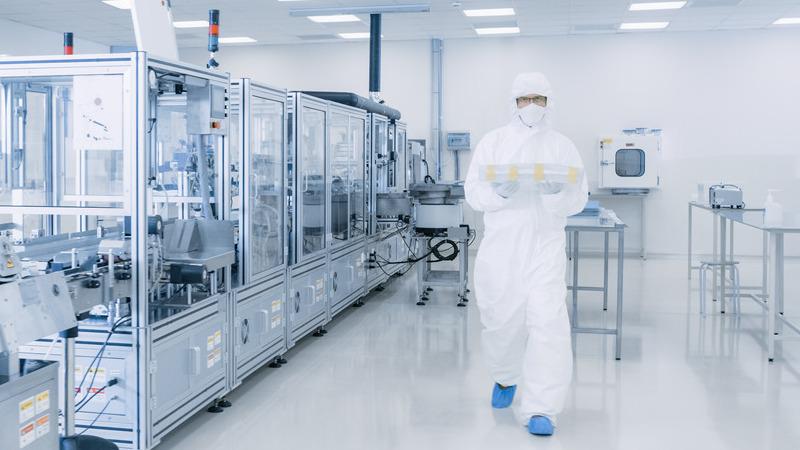



Differential pressure in a cleanroom is usually not a large number. In many cases, it may be only 5, 10, or 15 Pa. Differential pressure is part of the cleanroom contamination control strategy. These small pressure differences help air move in the right direction; help separate cleaner areas from areas with higher contamination risk and help organizations demonstrate that the environment has remained under control. In short, it is an important measurement for quality, compliance, and production continuity.
The key question is not whether you monitor, but how you monitor
Many cleanrooms already monitor pressure. There may be a local display at the doorway, real-time data in a building automation system or building management system, and alarm records in an environmental monitoring system. But when the data needs to be reviewed, for example during a deviation investigation, audit preparation, or batch release, the question becomes more specific: can these records clearly show the differential pressure relationship between critical areas? Can they demonstrate that airflow direction was maintained? Can quality and validation teams rely on the data to make a confident decision?
This is why the method of monitoring matters.
In cleanrooms, differential pressure is often very low. If the measurement method is not suitable, or if sensor range, measurement uncertainty, and alarm logic have not been carefully considered, the value shown in the system may appear normal. However, it may not be strong enough to support a defensible compliance conclusion.
BMS and EMS each have their own role
A common misunderstanding is to treat the building management system (BMS), and the environmental monitoring system (EMS) as if they were the same type of system. They may all display pressure data, but they are designed for different purposes.
The purpose of a BMS is to control and stabilize the cleanroom environment. It keeps the air handling unit, airflow, dampers, and room pressure at their intended setpoints, focusing on making real-time adjustments needed to maintain consistent operating conditions.
The purpose of an EMS is to monitor conditions and maintain accurate records. It focuses on confirming that critical parameters stay within defined limits, alarms function reliably, and data records are complete. It also ensures that audit trails are available and that the documentation can support audits, deviation investigations, and quality review.
A simple way to describe the difference is this: the BMS helps the cleanroom stay stable, while the EMS helps the organization prove that the cleanroom stayed stable.
The two systems should have clearly defined roles. In regulated cleanrooms, control is important, but being able to demonstrate control is equally important.
Why direct DP measurement is easier to trust
In some systems, differential pressure is calculated. This means the system measures the pressure of two rooms against a common reference point and then subtracts one value from the other to calculate the room-to-room differential pressure. This approach is common in control applications.
However, in low-pressure cleanroom applications, calculated DP can introduce uncertainty. It depends on two independent measurements, and each measurement has its own measurement uncertainty. Cleanroom pressure can also change quickly when doors open, airlocks operate, or people move between spaces. If the two values are not captured at the same moment, the calculated result may not accurately represent the true differential pressure relationship between the two spaces.
Direct DP measurement is more straightforward. One differential pressure transmitter is connected directly between two spaces, with the high and low ports connected to the two sides of the boundary. The measured value is the actual differential pressure between those spaces.
For critical cleanroom boundaries, this method is easier to explain and easier to trust. It measures exactly what matters: whether the correct pressure relationship is being maintained between two areas.
Good alarms should not create alarm fatigue
A cleanroom is not a static environment. Doors open, airlocks operate, passthroughs are used, and people move in and out. These normal activities can create short pressure transients. Differential pressure may briefly drop when doors are opened, it can even spike DP in the opposite direction when the door moves. These transient readings are expected to be captured by the EMS; they do not indicate the cleanroom is out of control.
If a system generates an alarm for every short transient, the result is not necessarily better control. More often, it creates alarm fatigue. Important alarms may become harder to see because they are buried under too many non-actionable notifications.
A better alarm strategy reflects how the cleanroom operates. The system should focus on extended duration events, such as a door left open, an airlock that does not recover, sustained loss of pressure cascade, or a change in HVAC balance. Duration-based alarming is often more meaningful than alarming on every momentary pressure change, because it helps teams respond to real excursions rather than normal behavior.
From a value on screen to a defensible record
The maturity of cleanroom differential pressure monitoring is not defined by whether the system can display data. It is defined by whether that data can become a defensible monitoring record. For critical boundaries, direct room-to-room differential pressure measurement, an appropriate sensor range, known measurement uncertainty, suitable alarm delays, and an EMS with data integrity features all influence the quality of the final record.
This is where Vaisala solutions fit naturally into the monitoring architecture. With the CAB100 industrial control panel and PDT101 or PDT102 differential pressure transmitters, low differential pressures in cleanrooms can be measured and collected in a centralized way. When the data is brought into the viewLinc Continuous Monitoring System, it can be used for trending, alarming, reporting, audit trails, and data integrity management.
This type of architecture helps teams clearly separate environmental control from compliance monitoring records, while giving quality, validation, and facilities teams a shared source of reliable data.
Small differential pressure, significant responsibility
Cleanroom differential pressure may change by only a few pascals, but behind those small values are airflow direction, contamination control, alarm decisions, and compliance evidence. The smaller the value, the more important it is to measure, understand, and record it correctly.
For organizations, the real goal is not to collect more data. The goal is to build more reliable data records. These records help teams identify risks earlier, explain deviations more clearly, face audits with greater confidence, and support production continuity.
That is why cleanroom differential pressure monitoring deserves serious attention.