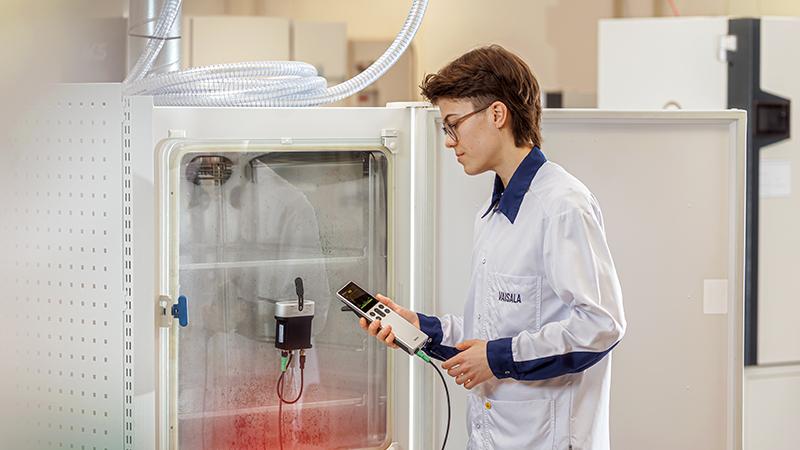
In this webinar you’ll learn about common CO₂ sensing technologies— including thermal conductivity and infrared (IR)— and discover how to achieve CO₂ measurement accuracy and stability in demanding conditions. We’ll cover practical considerations for optimal performance, from environmental compensation and mounting options to calibration best practices.
Finally, we’ll clarify the difference between CO₂ control and monitoring, and explain why both are essential for compliance, quality assurance, and reliable outcomes. Whether you’re in research, quality control, or process management, this session will give you the insight and tools to ensure confidence in critical incubator applications.
Agenda:
- The role of CO₂ incubators in life science applications
- Key measurement parameters: temperature, humidity, CO₂
- Sterility strategies
- Why CO₂ control is critical for cell viability and reproducibility
- Overview of common CO₂ measurement technologies
- Thermal conductivity sensors
- Infrared (IR) sensors
- Considerations for optimal CO₂ measurement performance
- Environmental compensation
- Probe mounting best practices
- Calibration
- CO₂ control & monitoring
- Control: actively adjusting CO₂ levels
- Monitoring: passively observing and logging data
If you have already attended or registered for this webinar, please click here. Otherwise, please watch the recorded webinar by filling the form.