Xcel Energy improves transformer fault assessments using online DGA monitoring


The client: Xcel Energy is a prominent electric and natural gas delivery company that serves approximately 3.7 million electricity and 2.1 million natural gas customers across parts of eight Midwestern and Western states of the U.S.
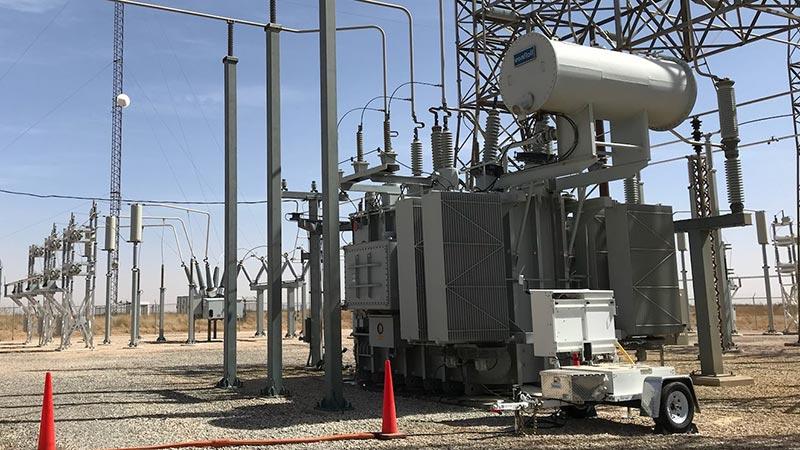
Pictured: Reinhausen 84 MVA 3 phase transformer (2008) with the OPT100 Mobile online DGA unit installed.
Like most utility companies, Xcel Energy uses dissolved gas analysis (DGA) as a part of their maintenance strategy, for monitoring the health of transformers on the grid. This is a combination of using offline and online testing. It is this online component that has better enabled the Xcel Energy maintenance teams to more efficiently assess asset health for maintenance planning and improve efficiency in the maintenance operations.
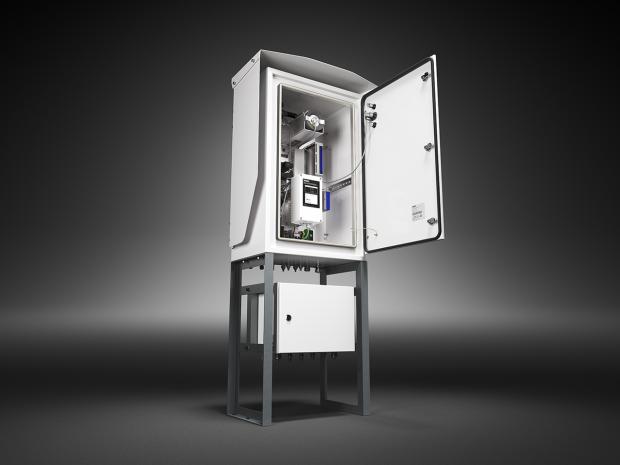
As part of this mix of monitoring and analytical tools, Xcel Energy has been utilizing the mobile OPT100 DGA monitor from Vaisala since 2021. Their substation field engineering team uses the online DGA monitors to help find answers and better understand gassing patterns in critical transformers or those showing abnormal gassing patterns identified through offline DGA testing. While offline DGA sampling is key in spotting potentially faulty transformers, Xcel Energy has found that using an online DGA monitor allows them to better analyze questionable transformers and diagnose issues before they become serious faults or go into failure. While manual sampling can be effective at identifying problem transformers, trying to analyze the problems with manual sampling is very costly, complex and difficult to achieve.
This case is a good example of how these two methods can be used together. It shows how Xcel Energy used the mobile OPT100 online DGA monitor on a questionable transformer identified with offline DGA sampling. Additionally, it demonstrates how, through the use of online monitoring, they were able to obtain the data needed and log it safely. This allowed the Xcel Energy maintenance team to make an informed decision on the most effective way to formulate a preventative maintenance strategy for the future operation of the transformer.
THE CHALLENGE: Identifying a potentially faulty transformer
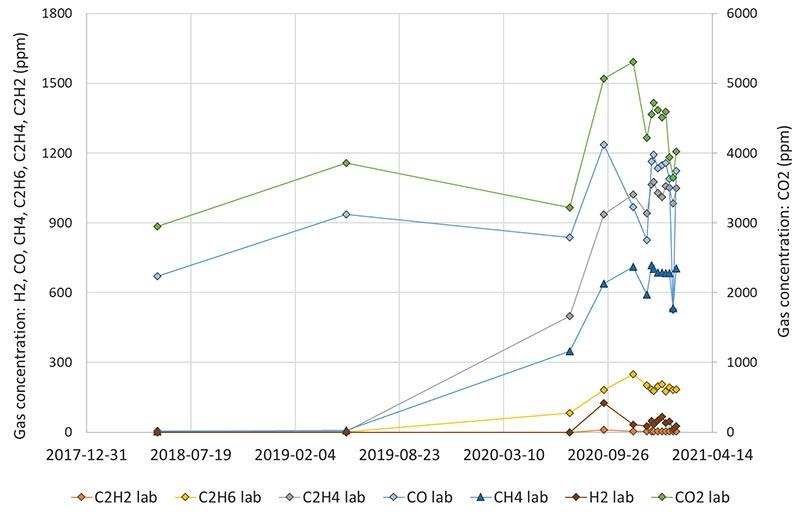
Xcel Energy has an 84 MVA mineral oil filled (7,800 gal) transmission transformer, commissioned in 2008, at a transmission substation in West Texas. The first signs of abnormal gassing were detected from a DGA sample taken in July 2020, in which elevated levels of ethylene and methane indicated a high temperature issue in the transformer (Figure 1).
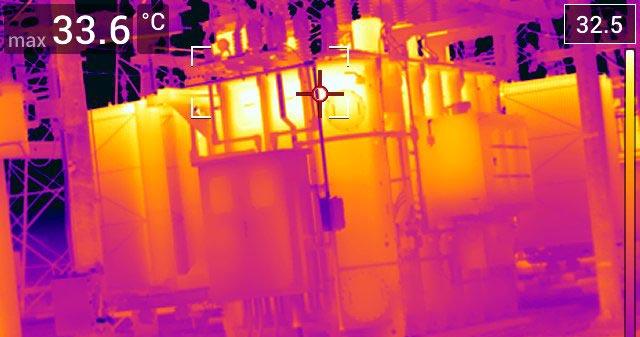
Regardless of the source of the increasing gas levels, there was an identified fault potentially forming. In order to further analyze and determine where this may be occurring, the maintenance team at Xcel Energy did some applied infrared imaging (IR) of the unit using a FLIR T865. This analysis showed one winding location having a clearly higher temperature than the others, indicating a possible hotspot (Image 1) in one area of the transformer. Based on this information, the maintenance team began to take oil samples more frequently, as an initial way to monitor the situation more closely. But as the problem seemed to get worse, reflected in ever increasing gas formation, the transformer was taken out of service for further inspections employing the use of offline electrical measurements.
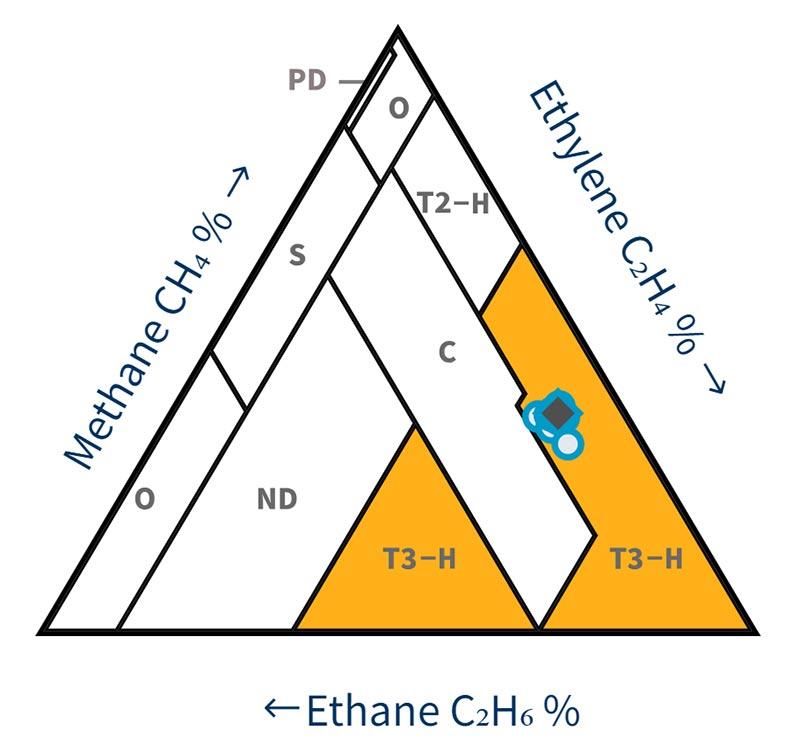
Duval Triangle 5 (Figure 2) indicated there was a potential high temperature fault in the oil only suggesting that there was no significant involvement of the paper insulation. However, the presence of elevated concentrations of carbon monoxide (CO) and a low CO2/CO ratio, ranging between 3 and 4, along with the formation of substantial amounts of hydrocarbon gases, still suggested some involvement of paper insulation in the fault. So even though Triangle 5 pointed towards a fault in the oil only, the potential involvement of paper was supported by the fact that the results were close to the borderline between possible carbonization in the paper (C) and T3-H. This case shows the potential impact of measurement uncertainty which is more common in offline dissolved gas analysis results and how this can affect diagnostics. This is another reason why online DGA monitoring can be much more effective.
With the unit offline, the maintenance team began a series of comprehensive offline testing, including Doble Overall, Bushing, Arrestor, TTR, Winding Resistance, Leakage Reactance and Excitation. Of these only the TTR (transformer turns ration) indicated a fault, on the tertiary winding or bushing. This matched up with the IR imaging which also indicated the fault region was around the Y3 tertiary. However, tests using a Doble M4100 of the bushing itself did not reveal any serious faults, even though the transformer did seem to have a hot spot just under the tertiary bushings. Considering both the DGA results and the electrical tests, the team was inclined to believe the issue could be a hot spot just under the tertiary bushings in the windings or a hot spot on the lead outside the windings.
Due to the potential risk of a transformer failure, the decision was made to drain the oil from the tank and perform a thorough internal inspection to identify the fault and its location. Some possible causes the Xcel Energy engineers were looking for were loose connections or metal debris in the tank.
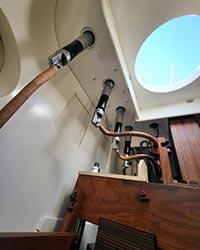
After conducting a thorough visual inspection, no anomalies or issues could be found (see Image 2). This was not surprising, as inspecting the tertiary windings and their exit leads poses significant challenges due to their position as the innermost winding. Furthermore, a fault location within the winding or its leads is likely covered by a thick layer of insulation paper, effectively concealing the fault until it progresses to the point that some part of the outer layer of insulation starts developing a darker color, which would only appear, after significant paper degradation.
THE SOLUTION: Applying online DGA monitoring
After this comprehensive evaluation and discussion, the Xcel Energy maintenance team decided to disconnect the tertiary winding and go back online with the transformer in February 2022. An alternative power supply was provided by reconnecting to a nearby distribution line, in lieu of the disconnected tertiary winding.
(Image 2. Visual inspection of the tertiary winding site, suspected fault location. >)
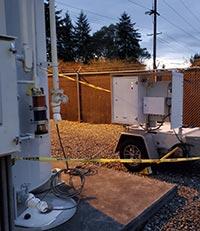
A key part of the re-energization plan was that the Xcel Energy engineers added an online DGA monitor to the transformer so they could monitor in real-time the formation of the gases. In this case they used the mobile OPT100 DGA monitor (Image 3). This is a multi-gas DGA monitor from Vaisala, that is mounted on a trailer, enabling easy deployment in the field for collecting online data for enhanced monitoring and analysis. This allowed the Xcel Energy team to monitor the transformer condition and its gassing pattern in real-time while it was energized and operating under a normal load. The OPT100 monitor was set up at the site in a few hours and, using a wireless network, sent the data and gas alarms back to the control team. With the online DGA monitor in place for safety and peace of mind, the maintenance and management teams felt comfortable with returning the transformer back to service.
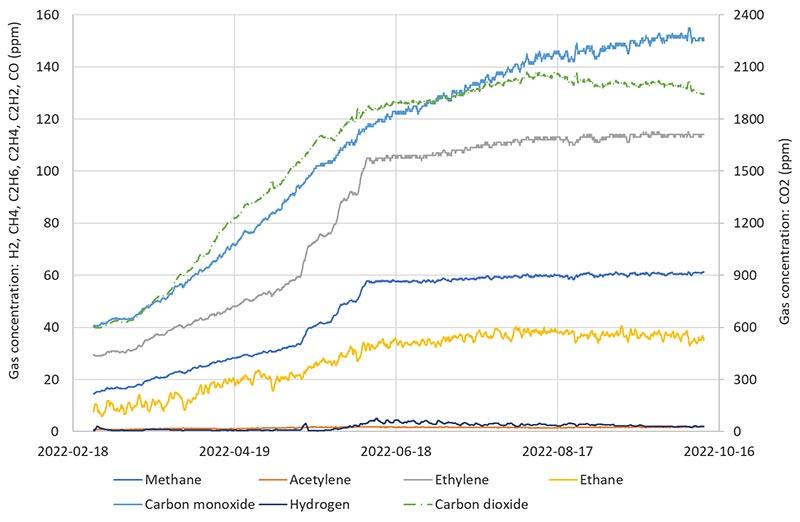
As expected, when the transformer was energized and loaded again, the DGA monitor showed some increasing trends of gases in the first weeks. This observation was expected and is quite common due to the "old" gases impregnated in the oil contained within the insulating paper making their way out into the freshly processed oil that was used to refill the transformer. At start up, these gases will slowly migrate from the paper into the bulk oil until the gases reach a new equilibrium and the gas levels stabilize. This increase is typically 5% - 10% of the level it was before the oil change or oil treatment, depending on the transformer design. This appeared to be the case here as well. For example, methane and ethylene increased roughly to a level of 7% of the initial value.
(Image 3: Vaisala mobile OPT100 unit installed on a transformer. >)
However, the online monitor showed other gasses continued to increase as well. During the following four months the increase in ethylene, methane and carbon monoxide was roughly 10 ppm, 4 ppm and 35 ppm, respectively. Even though the increase in ethylene was relatively low, it was continuous, and it appeared that a high-temperature issue in the transformer was potentially still active (Figure 3).
A leak is also detected with online monitoring
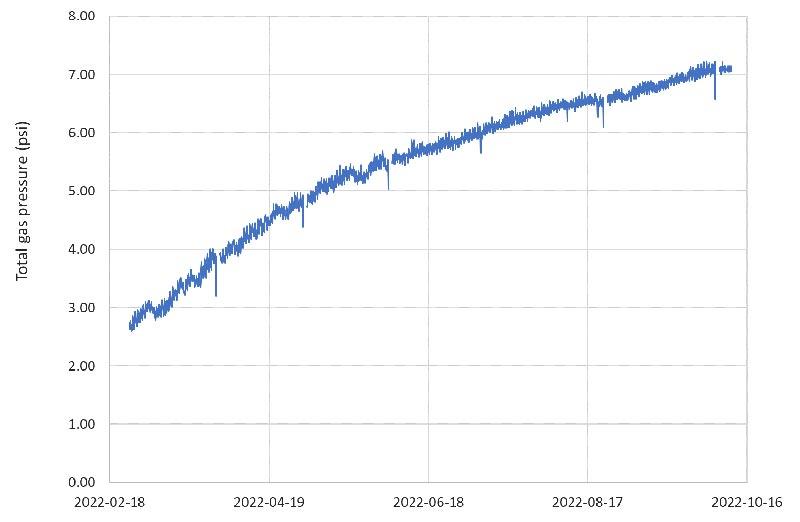
Additionally, the OPT100 online monitor identified another issue. Despite being a sealed transformer with a bladder in the conservator to prevent the entry of atmospheric oxygen, it appeared that the transformer was not completely airtight and had ambient air ingress. This was identified by the continuous rise in the total gas pressure (TGP) in the system. TGP* is a methodology for detecting leaks in sealed transformers using the sum of partial pressures to determine if O2 and N2 are entering the system. This detection system is integrated into the OPT100 DGA monitor.
If the TGP readings show a dramatic shift up to ambient pressure, it indicates a leak in a sealed transformer, as shown by the data from this transformer (Figure 4). Alternatively, if this had been nitrogen blanketed, it would show a failure in the nitrogen blanketing system if the pressure drops down to ambient.
While it's normal to see some increase in gas pressure after oil treatment due to the gases trapped in the oil impregnated paper, this increase should have been minimal, less than 1 psi (equivalent to approximately 7% of the pressure in saturated oil), and it should have stabilized by early June 2022, coinciding with the behavior of the hydrocarbon gases. The notable and continuous increase in the total gas pressure was therefore an indication of the ingress of oxygen and nitrogen from outside the transformer. And we know that the ambient air ingress is responsible for nearly all of the oxygen and nitrogen present, as the contribution of fault gases to the TGP reading is negligible.
Conclusions
Due to the continued increase in gases, the Xcel Energy maintenance team decided to take this transformer out of service, as it was clearly damaged and in a fault condition. While not in an “exponential” fault status, it was nearing its technical end of life and in its place, its parallel “sister” transformer could be set up to carry the load until a new transformer could be installed. Overall, the offline testing had identified this unit as questionable, but with the online monitor the maintenance team was able to get the evidence needed and the final confirmation of the fact. Just as importantly, with the online monitor in place, the management team knew they had a local alarm to protect the safety of the local personnel.
A detailed post-mortem was not performed on this transformer, as it is being held in stock as an emergency spare transformer. But given the significant lead times for new transformers, and with the Xcel Energy engineers now having a more detailed knowledge of the transformer's condition, the Asset Health team felt confident in their decision to treat this unit as a backup. But if the transformer is put into service again, it will be installed with the online DGA monitor and access will be limited in the yard while operating, since it is proven to be approaching its end of life. This plan improves the use of assets and capital budgets, while ensuring safety and the continued supply of reliable energy to the grid.
Again through online DGA monitoring the Xcel Energy team has been able to extend the useful life of these assets in a safe and reliable manner, proving its value.
Overall, this case shows how the Xcel team (1) used offline DGA testing to identify the fault initially, (2) conducted further offline tests to validate the fault condition/location, if not the exact problem, and then (3) employ the use of the OPT100 online DGA monitor to confirm the fault type and provide better trending data while the unit was in service, as well as protect the safety of onsite personnel.
Moreover this case shows how, through the use of the online DGA monitoring, the Xcel Energy maintenance team able to make informed decisions in a timely manner resulting in avoidance of an unplanned and potentially costly outage.
*Total Gas Pressure: A New Method for Detecting Transformer Leaks. S. Leivo/Vaisala. 2020