ONO Pharmaceutical Co., Ltd. Optimized usage of the Vaisala viewLinc System - from Room Monitoring to Explosion-proof zones
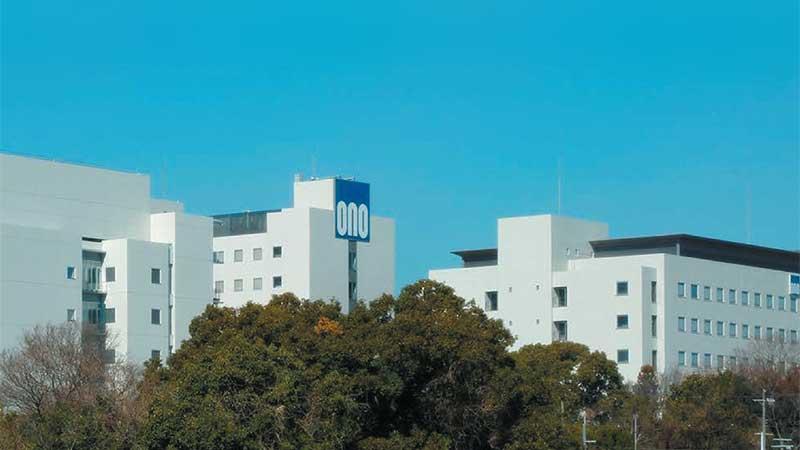


ONO Pharmaceutical Co., Ltd. (ONO), a pharmaceutical company founded in 1717, has a wealth of experience from its over 300-year history. Since its foundation, ONO has dedicated itself to the development of drugs. Its mission in research and development is to “contribute to society by developing drugs that truly benefit patients”. ONO discovers and develops novel drugs based on the “Compound-Orient” approach by collecting a library of compounds that may act on various therapeutic targets. It screens the library to identify new drug candidates that could lead to treatment of diseases. Based on this unique approach in discovery research, ONO focuses its resources on the R&D efforts for cancer, autoimmune disease, and neurological disease with high medical needs. In addition to traditional drug discovery research with small molecular compounds and antibodies, ONO actively pursues the discovery and development of drugs for unmet medical needs at the frontline of healthcare, through novel technologies including cell therapies and macrocyclic compounds.
At the Minase Research Institute, one of ONO’s key laboratories, approximately 500 researchers conduct exploratory research into new compounds, drug discovery research for major diseases; including cancer, neurological diseases, and research into the efficacy and safety of compounds, as well as mass production and cost reduction research for the supply of new investigational drugs and active pharmaceutical ingredients (API: Active Pharmaceutical Ingredient) and quality assurance for investigational new drugs. A new research building opened in March 2016 at the Minase Research Institute as a center for drug invention and medicinal chemistry through integrated compound synthesis and analysis functions. In the small scale cGMP (Current Good Manufacturing Practices)-compliance manufacturing facility next to the new research building, ingredient production for clinical trials is conducted.
During the initiation of ONO’s new Chemical Process R&D of CMC Production Division, they implemented Vaisala’s viewLinc Continuous Monitoring System for monitoring controlled environments and cGMP-regulated applications.
Adoption of Vaisala viewLinc system
ONO’s Chemical Process R&D researches, develops methods for manufacturing APIs and supplies APIs for clinical trials. Before adopting the Vaisala viewLinc system to monitor conditions like temperature and humidity, ONO used wall-mounted hydro-thermograph paper chart recorders and humidity and temperature sensors that were included in the HVAC system in cGMP-compliant areas.
The humidity and temperature sensors that were included in the HVAC system were able to send alerts to personnel when threshold deviations occurred. However, the sensors could not be used for worst points that had been identified by mapping validation, nor easily relocated to the needed location for continuous monitoring. Thus, temperature measurement could not be fully conducted at some critical locations, including worst-case locations where temperature and humidity might be at risk of fluctuation beyond acceptable limits.
In locations lacking an HVAC system, facility staff installed stand-alone sensors and recorded temperature and humidity data on paper charts. A benefit of standalone sensors is portability, which enables temperature measurements at the worst points. However, they could not immediately notify of abnormalities as they were not equipped with a deviation alerts function. ONO required an environmental monitoring solution that would solve the issues of these two monitoring methods and standardize temperature and humidity monitoring throughout facilities.
ONO required that their new temperature and humidity monitoring system be cGMP compliant, especially in terms of electronic recording, such as the Food and Drug Administration (FDA) guidelines and the “Computerized System Validation Guidelines (CSV)” by the Ministry of Health, Labour and Welfare of Japan. Personnel in Chemical Process R&D, who were not fully experienced in validating computer systems, also felt strongly that they needed support from a monitoring system vendor with system documentation for Design Qualification (DQ), Installation Qualification (IQ), and Operational Qualification (OQ). ONO evaluated three different monitoring systems during their procurement process.
In the end, they selected Vaisala’s continuous monitoring system; in part because Vaisala was trusted as a vendor who also provides regular informative webinars and seminars, as well as ample published materials on cGMP compliance, such as temperature mapping. Another decisive factor was the familiarity of the viewLinc system for overseas cGMP audits, because the Vaisala viewLinc system has been widely adopted in many global operations.
“The Vaisala viewLinc system enables us to measure temperature and humidity at the hot and cold spots that are identified by temperature mapping in addition to measurement points originally set on the existing HVAC control system. The system, which allows the translation of the measurement points depending on the season and purpose, is very advantageous. Another advantage is that the Vaisala viewLinc system can independently continue to record temperature and humidity even when the HVAC system is shut down due to a failure, etc. In the meantime, temperature and humidity records on the HVAC system can be used as backup.”
Dr. Tomoyuki Hasegawa, Group Head, Process Engineering Group, Chemical Process R&D
After the adoption of viewLinc system, ONO leveraged Vaisala’s know-how for complying with cGMP. ONO personnel continue to participate regularly in Vaisala training seminars to proactively receive the latest information on cGMP in Europe and the U.S.
In the wake of adopting viewLinc to use in combination with ONO’s HVAC control system, feedback on the new monitoring system has been positive.
Increase in efficiency and data integrity
Under their new overall quality system, ONO has operated the Vaisala viewLinc system for over three years in eight rooms, including: the sample storage room, the subdividing operation room, the explosion-proof refrigerators, and the manufacturing room.
Before ONO adopted Vaisala's viewLinc system, the storage control manager visited the warehouses weekly to inspect paper charts to ensure that the records of the hydro-thermograph were checked periodically and to confirm that there were no deviations. In addition, replacing the paper and ink for the hydro-thermographs was labor intensive. Paper jams and ink leakage due to mechanical failures also occurred while recording. It could take days before staff became aware of any failed data recording. In such circumstances, when a deviation occurred and researchers needed to review recorded data, they spent a lot of time investigating possible causes and effects, taking preventative measures, and documenting the process.
When providing auditors with temperature and humidity data during cGMP audits, ONO staff had to retrieve the paper charts from storage. However, it took time to locate the correct data and often the original charts had deteriorated. Since the introduction of the viewLinc system, reports of temperature and humidity data are automatically created, allowing for instant submission of correct data under audit.
Increased internal efficiency
The introduction of the viewLinc monitoring system has increased efficiency for researchers. They can check realtime fluctuations in temperature or humidity remotely from their desktop PCs. This lowers stress in the work environment, lets researchers stay engaged with their work, and improves productivity. Compared with manual data collection on paper charts, the Vaisala viewLinc system is a reliable, efficient solution for monitoring controlled environments.
The viewLinc system provides automatic and remote reporting for eight rooms. It took ONO personnel only fifteen minutes to set up viewLinc to send regular monthly reports for each monitored location.
Improvement in Data Integrity
Data management and maintenance has also greatly improved. With paper chart recorders, data records only exist on the original paper chart. Any backups are copies of all the data throughout the period. Alternately, the Vaisala viewLinc system automatically records data logs; taking less than thirty minutes to backup data, including backups to a hard drive. ONO personnel feel secure that historical data backups to the viewLinc data base provides a valuable advantage and an important countermeasure to disaster.
In viewLinc, all activities within the system are recorded in a way that prevents falsification, which is necessary for cGMP, in terms of data integrity.
“It has been three years since the new research building was completed. In that time, requirements in various guidelines have become more severe, so I think swift adaptation of the Vaisala viewLinc system was the right decision.”
Mr. Yoshiyuki Aratani, Storage Control Manager, Process Engineering Group, Chemical Process R&D
Operation by application
HMT140 data loggers for Room Monitoring
The Vaisala HMT140 Wi-Fi data logger has been used in various indoor environments at ONO, including the manufacturing room, subdividing operation room, sample storage room, and warehouses. ONO controls temperature to between 15°C and 25°C in warehouses to satisfy both domestic and international guidelines. Now that personnel in the laboratory workspace can continuously and remotely monitor temperature and humidity at hot and cold spots in storage areas, it is no longer necessary to visit the actual measurement devices in several warehouses to check data. The temperature and humidity monitoring of the manufacturing room and the sample storage room can also be remotely accessed by personnel, and trends in humidity and temperature are automatically recorded in a monthly log.
The Vaisala HMT140 Wi-Fi data loggers can include a display panel on the device showing temperature and humidity data. This allows data to be viewed both remotely from the viewLinc interface, and locally at the device. The battery-powered HMT140 data logger does not require wiring and is easy to install in almost any location, making it ideal for use in large open spaces like warehouses. For temperature fluctuations due to seasonal changes, the portability of the Vaisala HMT140 logger is very advantageous. If personnel notice any abnormality, they can take appropriate action by changing the temperature settings on the ventilation control system.
The Vaisala viewLinc system provides alarm notifications with a wide variety of notification options, including: setting thresholds and sending alarms to a computer or mobile phone by e-mail or text message. In one case at ONO, viewLinc sent an alert that an abnormality had occurred in a storage area. Staff were quickly able to minimize the impact of this deviation. This kind of experience imparts a sense of reassurance to personnel that their work is safeguarded.
The historical data is stored in the viewLinc server and in the memories of each data logger. This ensures redundant record retention and secures backup data when an unexpected event happens, such as a power outage. In 2018, during the Northern Osaka Prefecture Earthquake, the data that was not successfully transferred to the server during the failure of a communication device caused by the power outage was securely maintained in each data logger. As a result, the power outage did not result in a loss of environmental data.
HMT363 Intrinsically Safe Humidity and Temperature Transmitter for explosion-proof areas
ONO has also used the Vaisala HMT363 Intrinsically Safe Humidity and Temperature Transmitters in the warehouses for hazardous materials. The Vaisala HMT363 transmitter can be used in explosion-proof zones, which are classified at the highest hazard level. In explosion-proof refrigerating and freezing rooms, the Vaisala HMT363 is connected through a safety barrier to the DL4000 universal input data logger by which it integrates with the viewLinc server software. The Vaisala HMT363 probe length is adjustable, allowing measurement at a distance from the transmitter body. This makes the HMT363 transmitter suitable for very narrow spaces, such as in the refrigerating and freezing rooms. When a condenser in the explosion-proof refrigerating room malfunctioned, ONO staff received immediate alerts via SMS. It was therefore possible to transfer the items without any damage and threshold deviation.
Reliable accuracy
For storing valuable samples, the accuracy and stability of the measurements is very important. ONO is satisfied with the temperature accuracy of Vaisala’s data loggers.
“The accuracy of Vaisala’s logger has demonstrated a level of excellence if compared with the loggers we used in the past where the accuracy of temperature was ± 2°C. The temperature in the storage area can now be measured and recorded with an accuracy of ± 0.1°C and this is very useful in controlling the room temperatures. Our monitoring has been considerably improved by the higher accuracy compared to the time when we used paper charts. We can also now manage alerts better with the precise temperature settings because the appropriate alert value can be set at one decimal place units while the actual threshold value is in whole numbers.”
Mr. Yoshiyuki Aratani, Storage Control Manager, Process Engineering Group, Chemical Process R&D
Best partnership for service and calibration
Each year, ONO calibrates its measurement instruments at Vaisala’s calibration laboratory. This regular calibration references the instruments against several calibration points. For calibration purposes, ONO maintains several spare reference units. ONO also carefully prepared the networking environment prior to the introduction of Vaisala’s systems. They used a service provider to check signal strength at every monitoring system network access point. This careful preparation and maintenance ensures a proper operating environment for the viewLinc system.
Because it is impossible to eliminate the possibility of deviations and power or network failures, ONO personnel value Vaisala’s technical support.
The many years of developing the viewLinc system has given Vaisala a wealth of experience in monitoring system efficacy. This in turn has facilitated Vaisala’s level of support capabilities in Japan. Because viewLinc is developed continuously, Vaisala invests in understanding the needs of system users. When Vaisala engineers cannot fully meet a customer demand, this information is given to the software and hardware development teams for their ongoing and iterative improvements to the system. We will continue our efforts to evolve the system to support industries. Our experience in Japan helps our customers make their operations more efficient and effective.
“An important thing when selecting a system vendor is to determine whether the vendor is professional enough to not miss an equipment abnormality and whether the vendor would address such an abnormality promptly. This creates trust in the vendor. Once, we were saved by a Vaisala service expert who discovered an abnormality in a data logger and reported it to us immediately after he provided us appropriate actions to clear way for incidents.”
Dr. Tomoyuki Hasegawa, Group Head, Process Engineering Group, Chemical Process R&D
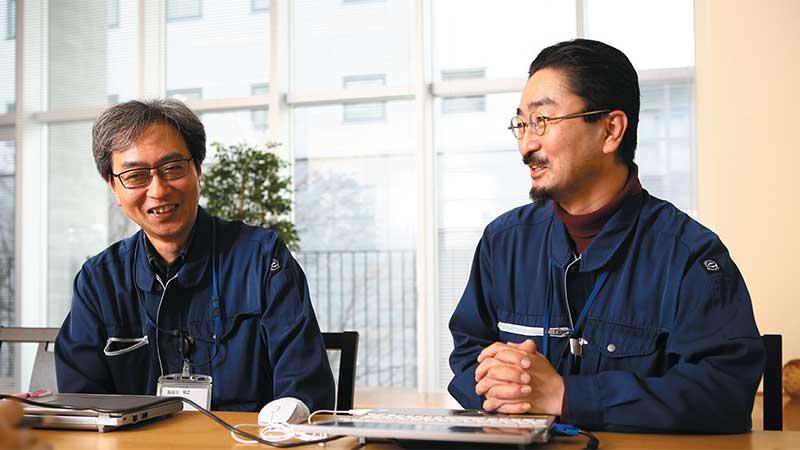
Dr. Tomoyuki Hasegawa & Mr. Yoshiyuki Aratani
“As we need to perform state-of-the-art research, including the adoption of the new continuous monitoring system, we need to pay attention to innovation. While regulatory compliance, for example cGMP, is based on actual experiences and practices of the past. With this regard it is not so easy for us to satisfy both elements at the same time. However, computerized data has now become a part of regulatory practices. We need to find the right balance between working for innovation and meeting cGMP to drive our business forward.”
Mr. Yoshiyuki Aratani, Storage Control Manager, Process Engineering Group, Chemical Process R&D
ONO Pharmaceutical Co., Ltd. Solutions & Benefits that viewLinc system offers to their challenges
Challenges | Vaisala viewLinc system solutions | Benefits |
| Challenges in monitoring: HVAC hydro-thermographs could not directly monitor some worst-case locations. Moreover, many wall-mounted loggers cannot be relocated. There was no deviation alert for areas in which standalone sensors and paper charts were used; users could not be made aware of an abnormality immediately if a deviation occurred. | Alarm notification: Extension solution: | When deviations occur, relevant personnel receive an immediate notification serving to minimize any negative impact on the quality of the items in a storage area. The Vaisala viewLinc system enables users to measure temperature and humidity at hot and cold spots of temperature mapping results and also allows the relocation of measurement points depending on the season and purpose |
| Compliant validation of computer systems: Any new system ONO selected would have to comply with GMP audits for electronic recording, such as the FDA regulations and the “Computerized System Validation Guidelines” by MHLW. However to achieve this, support from system vendors was needed to adequately create plans and documentation of DQ, IQ, and OQ. | Validation protocols: The Vaisala viewLinc system has optional IQ and OQ protocols in accordance with regulatory guidance. | Vaisala was trusted because the company provides ample published materials on cGMP compliance, such as temperature mapping. After the adoption of viewLinc system, ONO leveraged Vaisala’s know-how for complying with cGMP. |
| Improved data investigation and response to audits: Data records used to exist only on the original paper charts or copies. When a deviation occurred, researchers spent a lot of time investigating the incident, implementing preventative measures, and documenting the event and responses. This increased the amount of time necessary to provide auditors with correct data | Automatic Reporting: The viewLinc system reports comply with the FDA 21 CFR Part 11 other major regulatory regimes. | Reports of temperature data can be automated and scheduled for delivery by email. This ensures quick submission of data during an audit. |
| Failure of data collection: Replacing the paper charts and ink was time-consuming. If paper and ink were not replenished at the right times, data could be lost. Paper jams and ink leakage due to mechanical failures were also a risk. | Improvement in internal efficiency: The viewLinc system can be securely used from a personal computer on an existing network and can access data remotely in real time, eliminating the need for manual data collection and improving operational efficiency | The Vaisala viewLinc system provides automated reports, which do not require manual downloading of data loggers. This has considerably improved efficiency. The generation of monthly reports for each monitored location requires only about 15 minutes. Personnel can check conditions from their desktop allowing them to check abnormalities or deviations remotely. This improves business productivity by providing a work environment in which they can focus on research. |
| Backup data: For a chart recorder, the only way to backup data is to make copies of all the data. | Redundant data storage: High-performance loggers: | The Vaisala viewLinc system automatically records data and takes less than 30 minutes to backup, including backups to a hard drive. Data maintenance has also greatly improved. All actions within the system are recorded, which prevents falsification and aids in compliance with regulations. |
| Disaster risk reduction: Preventive measures for power outages due to earthquakes or damage to a logger were required. | During communication error due to a power outage during the 2018 Northern Osaka Prefecture Earthquake, environmental data was stored in each logger. This allowed collection of the data after recovery from the communication error. The viewLinc System’s capability of user friendly automatic data back ups are an effective measure against data loss during disasters. | |
| Establishment of international standard monitoring system: In open spaces, such as warehouses, worst-case locations vary depending on the seasons. | On one occasion, a user found that an abnormality had occurred in a storage area. After receiving a deviation alert from viewLinc, they were able to preclude or minimize impact on product quality. ONO personnel is reassured by the alarm notification features of the viewLinc system. | |
| A centralized building management system integrated with the viewLinc system was required to control the temperature in explosion-proof refrigerators and freezers. | The Vaisala HMT363 Intrinsically Safe Humidity and Temperature Transmitter can safely measure temperature and humidity in explosion-proof zones, which are classified at the highest hazard level. | When a condenser in an explosion-proof refrigerator failed, fluctuations in temperature were immediately detected. viewLinc sent an alert and items were removed from the room before the upper limit value was exceeded. |