Improved volcanic ash detection at La Palma Airport


The client: Spanish State Meteorological Agency (AEMET) in the Canary Islands
Vaisala solution: Ceilometer CL61 with depolarization capability
THE CHALLENGE: Track and differentiate volcanic ash in the atmosphere during an eruption
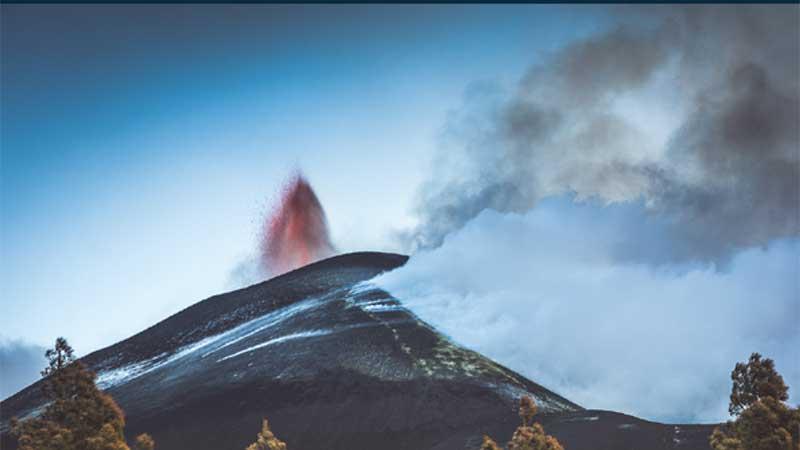
La Palma Airport serves 1.5 million passengers each year and is the sole commercial runway providing access to the island of La Palma in the Canary Islands. It is situated between the coastline and nearby mountains, and it lies 10 miles from the ongoing Cumbre Vieja volcanic eruption. These factors make it a perfect laboratory for complex coastal weather phenomena, ash plumes, and air travel.
Volcanic ash is particularly hazardous for aircraft. It not only limits visual navigation and sandblasts windscreens, but also can cause serious harm to aircraft engines. With several airport shutdowns in 2021 due to the volcano, the Spanish government deployed a new Vaisala Ceilometer CL61 to explore how depolarization technology aids in observing, understanding, and acting on atmospheric ash conditions.
THE APPROACH: A modernized Vaisala Ceilometer CL61 and a new understanding of ash plume behavior
The island of La Palma already used several legacy ceilometers near the airport and the nearby town of El Paso, but the arrival of the CL61 opened the possibility of using depolarization for a greater understanding than was possible before.
Depolarization allows for straightforward identification of several weather phenomena, such as liquid vs. solid precipitation, cloud phases, and melting layers. This level of differentiation is difficult or impossible using legacy equipment.
Vaisala’s CL61 was installed in El Paso, which lies in the caldera of La Palma and is 10 miles from the airport. The ceilometer’s small form factor and ease of setup meant that the AEMET team could locate it where it was most scientifically valuable. It easily integrated with the existing sensor network, and it began providing data to Barreto and her team quickly, while the volcano was still active.
“In the Canary Islands, we have this mixture of mineral dust from the Sahara, harmless sulfates, and volcanic ash. And now, here in La Palma, we can classify these aerosols with the CL61’s depolarization.”
África Barreto PI of the Aerosol Program, Izaña Atmospheric Research Center, AEMET
THE RESULTS: A time-sensitive understanding of volcanic ash behavior — and a roadmap for future innovations
Today, forecast models rely almost exclusively on satellite data for assessing volcanic ash hazards, and airport shutdown decisions at La Palma are driven by human observation and judgment. The CL61 promises a more objective, data-driven future, where consequential operational decisions are made using precise, localized sensor data.
Barreto says she is eager for an operational tool that uses the CL61’s data to provide untrained airport users with simple alerts and instructions. She is a trained expert with the ceilometer, but she points out that most decision-making personnel at airports are not.
For now, the CL61 has made La Palma Airport a proving ground for one of the most exciting technologies in the Vaisala lineup. This one happens to have been deployed and managed in the middle of a volcanic eruption.
