How Vaisala Care keeps NCM’s weather radars operational through the UAE's climate of extremes
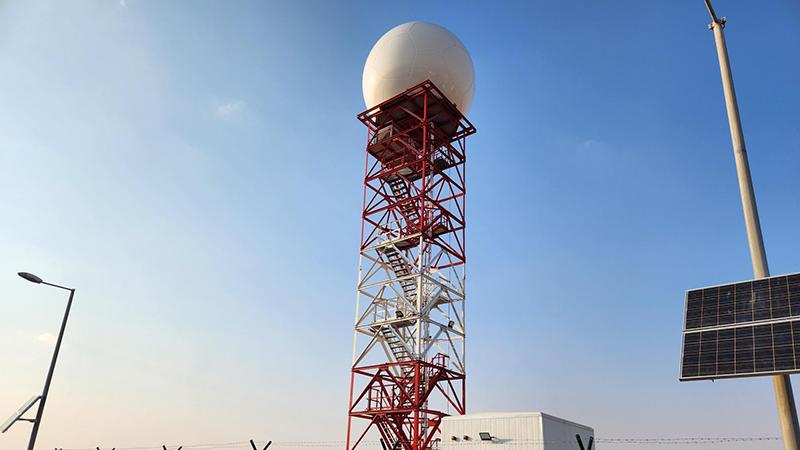


When severe weather strikes the United Arab Emirates (UAE), accurate radar data can save lives.
But even the most advanced weather radar in the world becomes useless if it fails during a storm. For the National Center of Meteorology (NCM) in the UAE, ensuring their weather radars work accurately, every single time severe weather threatened became just as important as choosing the right technology.
The client
National Center of Meteorology (NCM), United Arab Emirates (UAE)
Vaisala solution
5 x Vaisala C-band weather radar WRM200
Multiyear Vaisala Service Contract
Extreme weather in an extreme climate
NCM is the official meteorological center in the UAE, based in Abu Dhabi. The organization carries the responsibility of keeping people and businesses safe by providing weather forecasts across the Emirates.
The UAE faces unique meteorological challenges, with most of the year bringing intense heat and dry conditions. But the climate can shift dramatically. Sudden, severe storms can sometimes appear, bringing unusual rainfall that may result in flooding roads, homes and businesses.
For an organization responsible for public safety, NCM needed a complete weather radar network that would stay operational for decades.
Choosing quality and support
In 2014, NCM selected Vaisala weather radars after a thorough technical evaluation of radar manufacturers. But they also made another strategic decision: investing in comprehensive service contracts from day one.
"Once you buy something expensive and very valuable like a weather radar, we don't want just to have it functional. You need to make sure that it's working properly and giving accurate data. These service contracts play a major role in guaranteeing that."
Mohannad Al Khatib, Senior Designer of Scientific Systems, NCM
Today, NCM operates multiple Vaisala weather radars across the UAE, backed by priority 24/7 technical support, planned annual on-site maintenance, express spare parts when needed, and extended warranty coverage.
Working directly with the manufacturer rather than third-party providers made sense for NCM. Vaisala engineers know the systems inside out because they design and build them. When something goes wrong, they can troubleshoot faster and more accurately.
Peace of mind and immediate support
For NCM, the most important outcome of the lifecycle support is straightforward: peace of mind. Knowing that expert support is available whenever needed allows their team to focus on forecasting and public safety, while technical issues are fixed and troubleshot, even when they are at the manufacturer level.
That peace of mind proved its value during real incidents. NCM has teams with varying levels of experience. When complex technical problems occurred at two of their radar sites during a critical period, they got immediate expert assistance.
"I remember one of these incidents, I was at one of our sites trying to fix a problem. I turned to Vaisala’s helpdesk and got an immediate response through my phone from one of your engineers and he assisted me right away.”
Mohannad Al Khatib, Senior Designer of Scientific Systems, NCM
This speed matters because downtime has real consequences. During severe weather that causes flooding and threatens public safety, NCM cannot afford to have radars offline. People depend on accurate, real-time weather information to make decisions about travel, safety, and emergency response. Without rapid support at major technical issues, troubleshooting processes may extend downtime exactly when communities need radar data most.
"If you don't have a service contract and you want the manufacturer’s support, going through the traditional way will take longer. Your downtime is ultimately longer. When you have a strong weather case that causes flooding and affects people, you want to have your radar operational in that area to give the public information about what's happening with the weather."
Mohannad Al Khatib, Senior Designer of Scientific Systems, NCM
Annual maintenance visits
Among all the support components, one stands out as particularly valuable: the annual maintenance visits. Every year, Vaisala field engineers travel to each radar site for preventive maintenance.
"Having a Vaisala engineer at the site, seeing the real condition, the real location, how the components and everything at the site is really useful—for Vaisala to know what is happening at the customer end, and for us to make sure that this radar is functioning as it should be."
Mohannad Al Khatib, Senior Designer of Scientific Systems, NCM
The scheduling reflects genuine service partnership. Vaisala does not impose rigid maintenance windows. Both teams coordinate to find timing that works with NCM's operational calendar. This flexibility, combined with preventive maintenance that catches problems before they cause failures, means NCM can plan around maintenance rather than react to unexpected breakdowns.
A decade of consistent support
NCM has worked with Vaisala since 2015. Over those eleven years, the relationship has consistently delivered reliable equipment performance and responsive support through all kinds of weather events and operational conditions.
“I've been dealing with Vaisala personally since 2015, so we're talking about around 10 years. The team is professional, responsive, helpful — whether it's the people I deal with via email or the engineers I've met at sites. I've never encountered anything that bothered me. Always up to expectations, and actually in many cases exceeding expectations. I'm a happy customer."
Mohannad Al Khatib, Senior Designer of Scientific Systems, NCM
The commitment has delivered on its core promise: keeping weather radars operational and producing accurate data year after year. That consistency allows NCM to focus on their mission — protecting people and property—confident that their radar infrastructure will perform when severe weather strikes.