Comparing WindCube lidar and met mast data


The client: Kjeller Vindteknikk
Vaisala solution: WindCube
THE CHALLENGE: Reliable wind measurements at high heights
Kjeller Vindteknikk is an early adopter of wind lidars in the Nordics, with a decade of experience using Vaisala's industry-reference WindCube® products. Kjeller, like other wind energy consultancies and businesses, uses lidars to support or replace met masts and have found high correlations between lidar and met mast measurements. However, a perceived lack of real world lidar performance testing still prevents some wind energy companies and developers from adopting lidar technology.
THE APPROACH: Conduct a robust, side-by-side test of met mast and vertical profiling lidar
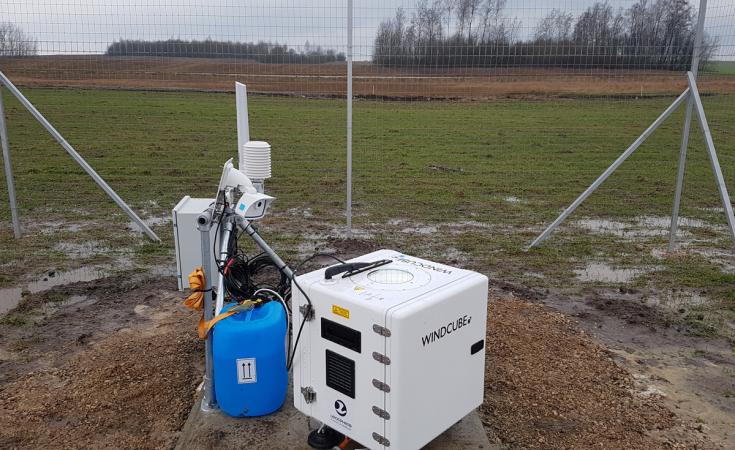
For this customer project, Kjeller partnered with wind energy developer European Energy on a wind measurement campaign in central Lithuania. The primary goal was to obtain reliable wind measurements by virtually extending the met mast with newest WindCube v2.1 lidar data to relevant turbine hub heights. Since the met mast could only measure up to 124 m, there was a need to close the almost 30 m gap present between the met mast and the intended 150 m turbine hub height of today’s large wind turbines.
“We are very pleased with the performance of the WindCube. So far, the lidar has fulfilled its purpose by remotely extending the met mast wind Measurements and decreasing the uncertainties in upcoming bankable energy yield assessments.” Gustaf Ekberg Head of Projects, NE Europe, European Energ
The partnership was also motivated by the lowered wind measurement uncertainty potential for future bankable energy yield assessments as the met mast is unable to directly measure at the intended hub height. WindCube lidars are commonly used as a virtual extension for met masts, so this campaign gave European Energy and Kjeller an ideal opportunity to validate the new WindCube v2.1 performance.
Kjeller used the lidar to collect comparative wind data at the met mast’s maximum height of 124 m, as well as direct measurement at the full turbine height of 150 m.
THE RESULTS: Better business case by lowering the uncertainties in future bankable energy yield assessments
Kjeller is six months into a one-year campaign. A large amount of data has been collected so far with several key results already apparent:
- Lidar availability is high at 95 % at 124 m and 94 % at 150 m above ground level.
- The lidar has shown excellent agreement with the met mast at 124 m (the met mast’s directmeasurement limit).
- No need for vertical extrapolation of met mast data (a common source of uncertainty with met masts below hub height).
- The lidar provides redundant measurements with high data correlation so it can be used in case of a met mast failure.
As a result, European Energy is better positioned to decrease uncertainty and increase bankability in the upcoming projects.