A 3D GHG monitoring network in Shanghai
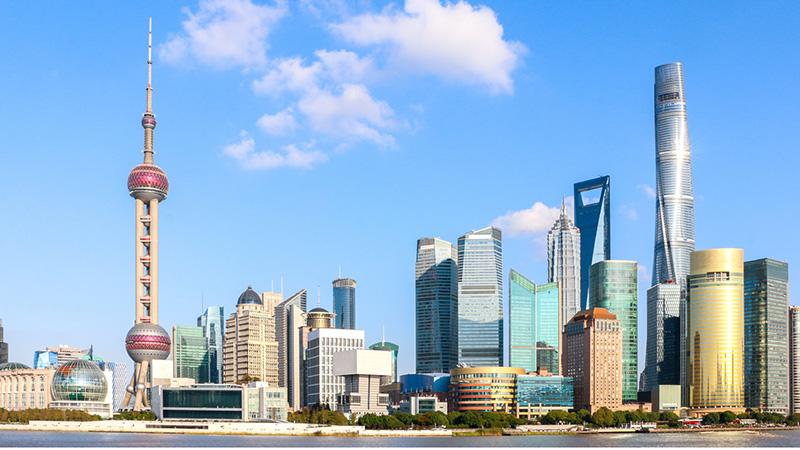


The client: Shanghai Environmental Monitoring Center
Vaisala solution: CARBOCAP® Carbon Dioxide Probe GMP343
THE CHALLENGE: Building a 3D GHG monitoring network for emission modelling in megacities
In 2021, China’s Ministry of Ecology and Environment launched the Carbon Monitoring & Assessment Pilot Program, selecting Shanghai as one of 16 pilot cities.
Greenhouse gas dynamics are not uniform across space or height in cities, especially in megacities. Factors such as atmospheric mixing and boundary layer changes affect CO₂ concentrations between ground level and higher altitudes. Without vertical data, models assume uniform distribution, which leads to bias in emission estimates and poor representation of transport processes.
The urban environment also adds complexity. Cities like Shanghai have diverse emission sources (traffic, industry, residential heating), complex airflow patterns, city topography, and heterogeneous building heights. All these factors need to be considered when designing the network.
Since 2022, the Shanghai Environmental Monitoring Center (SEMC) has been operating a pilot 3D GHG monitoring network which captures both horizontal and vertical gradients. This pilot targets two critical gaps: Vertical CO₂ distribution data to enhance model accuracy and understand boundary-layer dynamics, and denser observation networks to improve spatial resolution.
THE APPROACH: Deploying medium‑precision analyzers for vertical profiling and network density
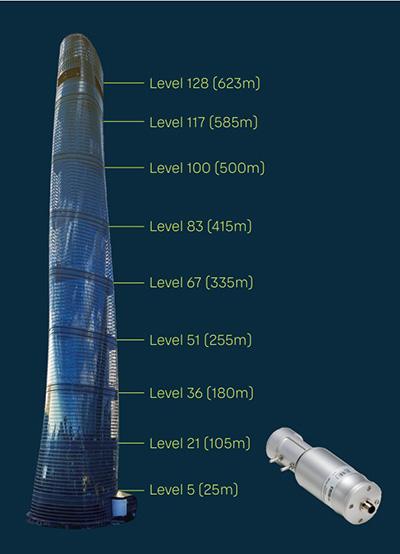
To meet these needs, SEMC selected Vaisala CARBOCAP® Carbon Dioxide Probe GMP343 for its accuracy and reliability in continuous monitoring. They designed a medium-precision GHG gas analyzer based on a flow-through model of GMP343, enabling cost-effective deployment and field calibration.
The pilot network includes 12 medium-precision GHG gas analyzers across two main use cases, reflecting SEMC’s vision for future applications:
- Vertical CO₂ profiling (Shanghai Tower): 9 analyzers installed from ~25 m to ~623 m on Shanghai Tower (632 m) capture vertical CO₂ gradients. In continuous operation since August 2022, they produce several million data records every year, providing high‑value vertical constraints for model evaluation and inversion.
- Enhanced observation density (gap filling): The current network is based on sparse high-precision GHG gas analyzers. Three medium-precision GHG gas analyzers are mounted on telecommunication towers to fill data gaps between high-precision analyzers.
THE RESULTS: A cost-effective, scalable 3D network delivering actionable GHG insights
The collected greenhouse gas data enables SEMC to conduct comprehensive city-scale trend analysis, providing improved temporal and spatial understanding of GHG emissions patterns. The three-dimensional measurement data also enhances atmospheric modeling applications with more accurate inputs.
Through the integration of GMP343 probes, they have established a cost-effective, scalable measurement network that generates high-quality three-dimensional CO₂ distribution data. This deployment significantly increases observation density across the urban area, bridging the critical gap between sparse reference-grade stations and comprehensive data requirements for large-scale atmospheric modeling.