Is your road network prepared for next winter?

Now is the time to harness the power of a hybrid road weather observation network, filling data gaps across your network with cutting-edge wireless IoT sensors. The result: better awareness, improved road weather forecast accuracy, and safer roads in less time.
Key challenges for large road networks
On a road network between road weather stations, there are sections of the roadway that form microclimates: localized areas where weather and road surface conditions consistently differ from surrounding regions. These microclimates create unique winter maintenance challenges — especially across large and complex road networks.
- Bridges/elevated sections: Short distances, heat loss above/below, can become icy early in winter
- Non-urban roads: Low traffic, high speeds, topography/shading create hazardous spots
- Areas lacking infrastructure: No power sources or mounting structures
- Roundabouts/cities: Heavy traffic, sudden speed changes, variable road weather
Filling these road weather data gaps between road weather station sites is the key to maintaining safer winter roads across the network.
How Vaisala’s hybrid approach solves the challenges with a new standard
The hybrid approach leverages wireless IoT sensors — easily and affordably installed — along with mobile road weather sensors to fill data gaps between traditional road weather stations. Integrating fixed and mobile sensors across the network gives you a comprehensive, real-time view of road conditions, enabling more informed and agile decision-making.
With real-time data, you can optimize operations by delaying or canceling plowing when roads are clear or using less aggressive de-icing treatments when conditions allow. This not only saves money but also reduces the environmental impact of salt and chemicals on local ecosystems.
This is a game-changer for an efficient, effective winter road maintenance strategy. Download our free eBook, Easy insights: Unlocking winter road maintenance in challenging areas, to learn more about how you can implement this advanced approach.
Road weather forecasting and modeling
Vaisala’s road weather forecasting and modeling are important components of the hybrid approach to winter maintenance. Our road weather forecasts combine a proven mass and energy balance road model with hyperlocal observations from fixed road weather stations, IoT infill sensors, and mobile sensors to capture the conditions that matter on specific routes, bridges and hotspots.
This hybrid observation network fills the gaps between weather stations, continuously providing real road surface and grip data to improve forecasts. Better short-term forecasts help you make smarter treatment decisions right now. Better long-term forecasts help you plan ahead more effectively.
By fusing all local measurements with our modeling, agencies gain more precise, frequently refreshed forecasts; studies* show embedded IoT data can improve road surface temperature forecasts by up to 70%, enabling targeted callouts, rightsized treatments, and safer roads with less waste.
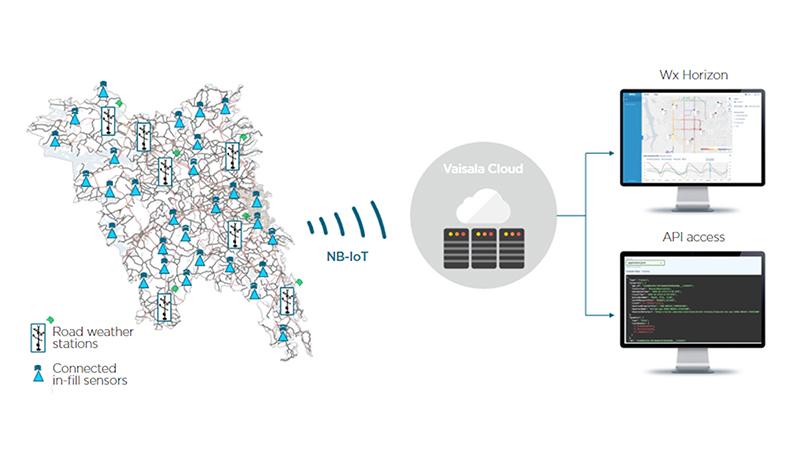
A road observation network can include a variety of road weather stations, IoT and mobile sensors to create a complete observation system that enables the most efficient approach to winter road maintenance. The result is safer roads in less time.
A smarter storm response starts now
Vaisala’s hybrid approach provides the visibility, control, and flexibility needed to meet evolving winter maintenance challenges with confidence — ensuring safer roads and more efficient use of resources throughout the winter season.
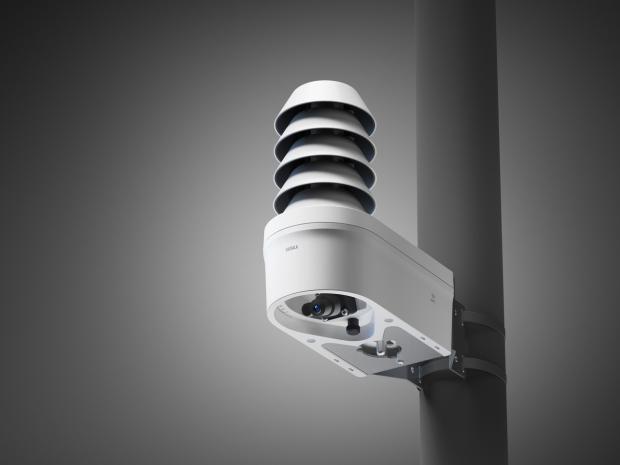
It’s easy and affordable to get started by installing IoT sensors where your network needs them most. Take a look at our GroundCast and TempCast sensors.
Ready to learn more about the hybrid approach to winter maintenance? Download a free copy of our eBook, Easy insights: Unlocking winter road maintenance in challenging areas.
* R. Tardif, R. Honkanen, J. McCaa, The impact of embedded IoT sensor observations on road weather forecasts, PIARC 2023.