Ultrasonic Wind Sensor WM80
The most reliable wind sensor for demanding application areas where errors and data gaps are not an option.

Ideal for wind turbine control, solar trackers and maritime applications
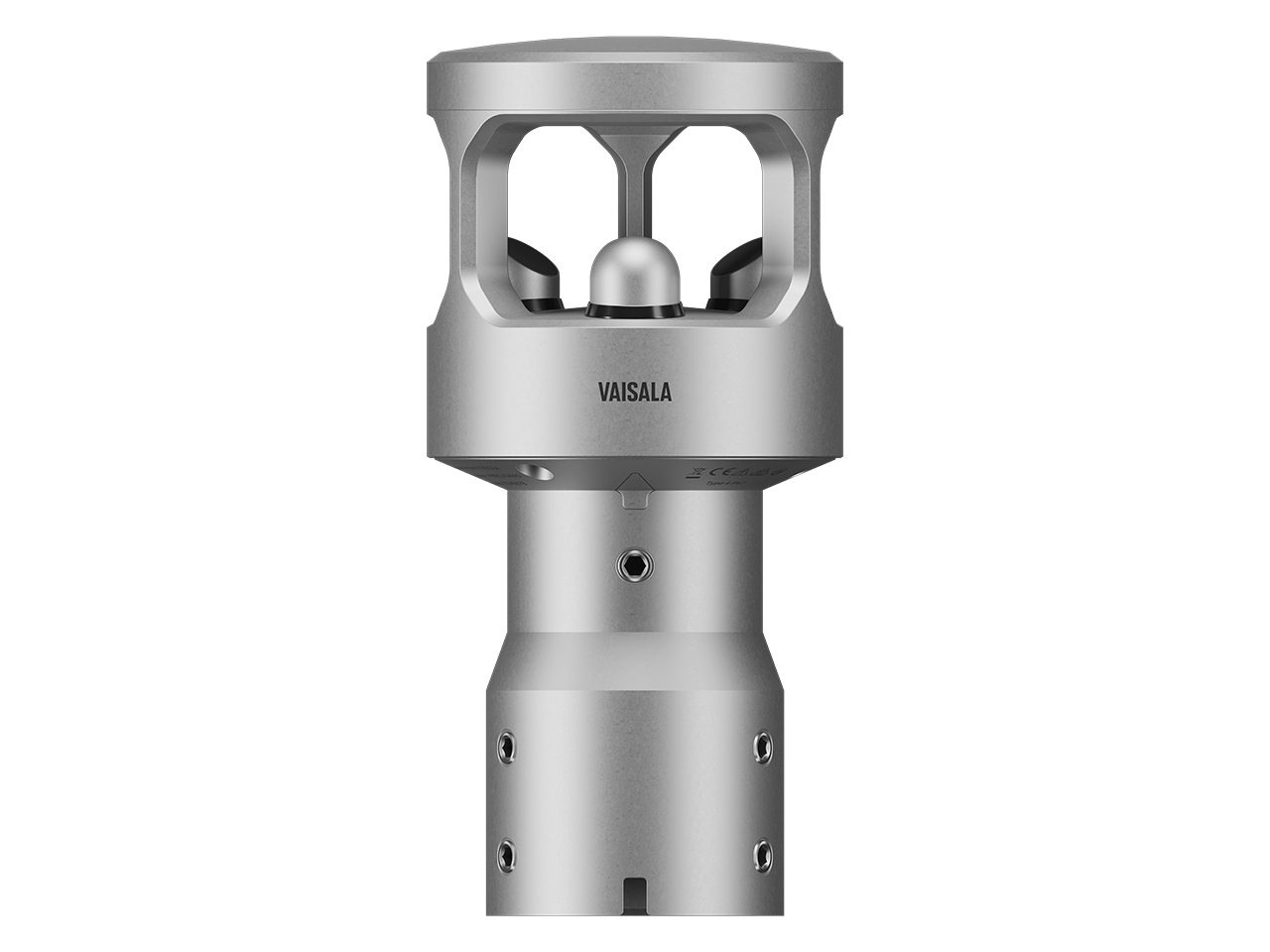
WM80 is ultrasonic wind sensor that measures wind speed and direction with no moving parts. It is purpose-built for the demanding wind energy, solar tracking, marine and offshore vessel environments where reliability, low maintenance, and accurate wind data are critical.
0-90m/s
Wind speed range
10 Hz
Data output
11
Controlled heaters
6
Measurement paths:
WINDCAP®
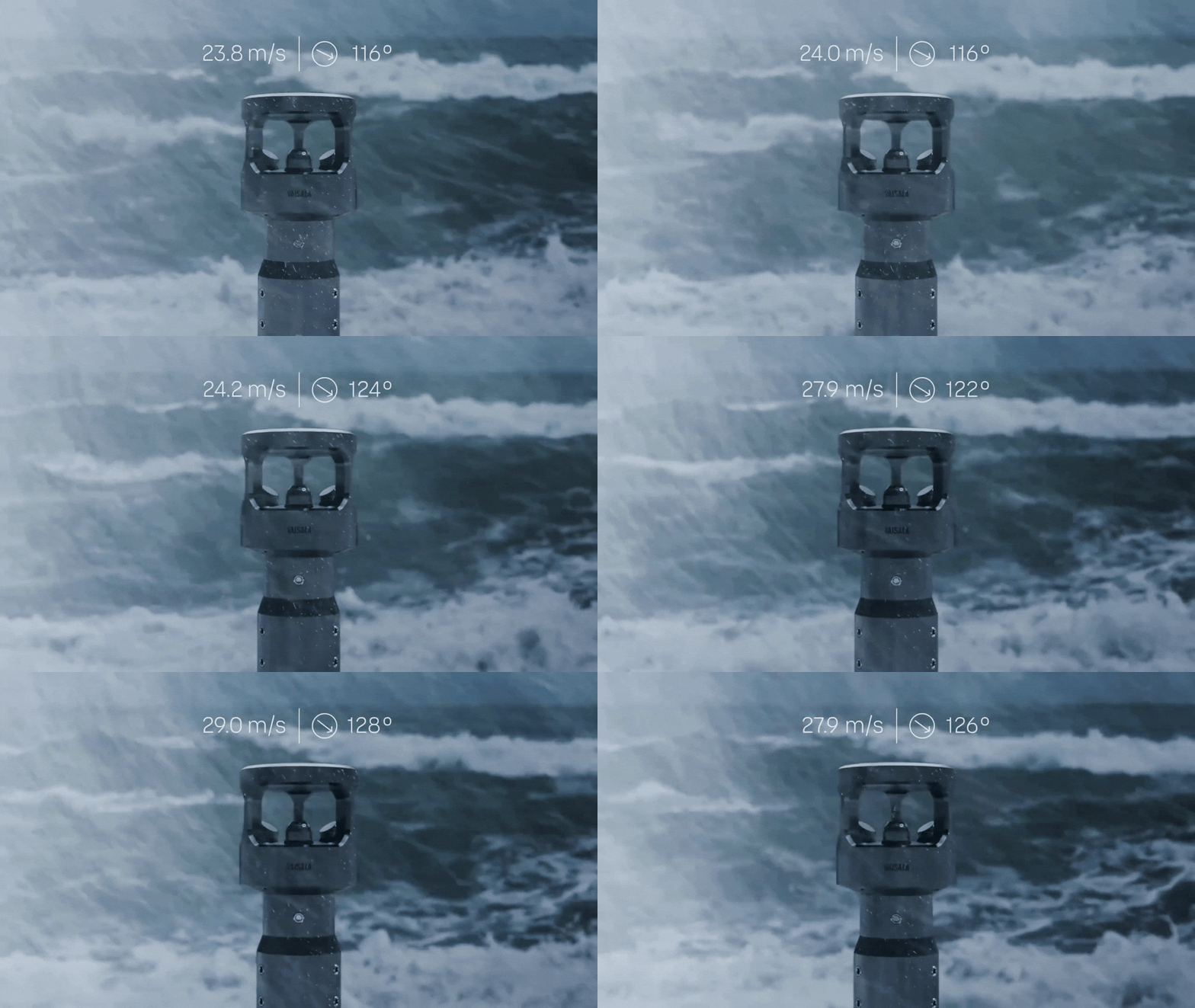
Tested beyond the limits
WM80 was pushed to the point of failure on purpose. Not once, but over and over, so every weakness could be found long before the sensor was exposed to real-world conditions. From Arctic mountaintops to simulated desert conditions with blowing sand and dust, from 5 cm hailstone impacts to severe shocks and vibration, and intense rain. If something can break a wind sensor, we tried it.
Built for the world's most demanding environments
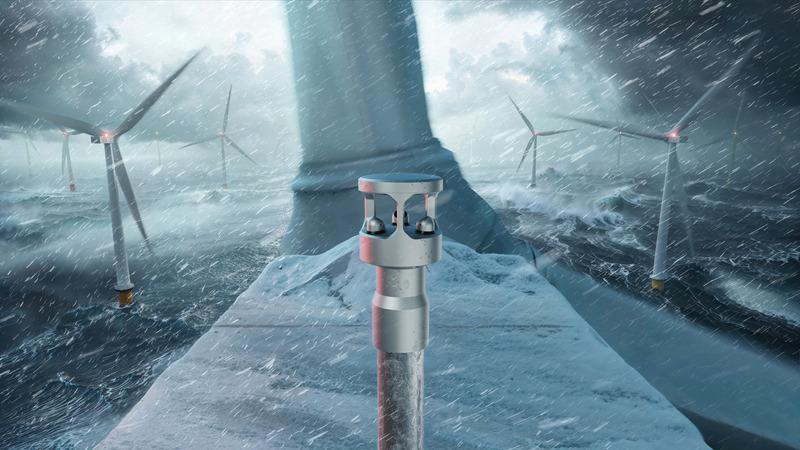
Wind turbine control
Accurate wind speed and direction data drive every critical turbine decision — yaw alignment, blade pitch adjustments, and cut-in and cut-out timing. With no moving parts and proven resilience against vibration, icing, and extreme weather, WM80 ensures maximized energy production while reducing mechanical stress and extending turbine lifetime — with zero sensor maintenance.

Maritime
From vessel dynamic positioning (DP) and navigation to wind-assisted propulsion (WASP) and helideck monitoring (HMS), WM80 delivers the reliable wind data maritime operations depend on. Better decisions during lifting operations, crew transfers, helicopter landings, and ship route adjustments. Independently verified by DNV according to DNV-CG-0339:2021 and IEC 60945.

Solar tracker control
Reliable wind data enables precise stow positioning for solar trackers during high-wind events, protecting assets and optimizing energy yield even under extreme weather conditions. With no moving parts and zero maintenance requirements, WM80 lowers total cost of ownership across the lifetime of the installation and simplifies long-term operations.
Resilience isn't a statement. It's earned.
Extreme cold
Field-proven performance in Arctic conditions. 11 controlled heaters enable ice-free operation, independently verified through MIL-STD 810H anti-icing and de-icing recovery testing under severe icing conditions. The transducers even withstand 50 mm hail balls fired directly at them at 32 m/s.
Vibration endurance
Wind turbines and ships vibrate constantly. WM80 was tested beyond standard IEC 60068 sweeps with long-term endurance runs at typical resonance frequencies per IEC 60945 — zero resonance points found.
Heavy rain
Tested in rainfall up to 200 mm/min. WM80's transducer design clears water naturally while individual heaters prevent condensation. Adaptive signal control maintains accuracy throughout — without relying on hydrophobic coatings that wear off over time.
Corrosion resistance
WM80 has a robust design that fits right in with demanding, naturally corrosive offshore environments. The sensor is built from marine-grade anodized aluminum, designed and tested for C5 (very high) corrosivity environments.
EMC
Tested for electromagnetic immunity and emission compliance in demanding industrial and maritime electrical environments.
HALT
We pushed WM80 to failure on purpose, so we could make it stronger. HALT (highly accelerated lifetime testing) from −70 °C to +85 °C combined with vibrations and shocks from 10G to 50G.
Blowing dust & sand
Independently tested to MIL-STD-810H for blowing dust and sand at temperatures up to 60 °C. WM80 maintained 100% measurement availability throughout, with no data gaps and accurate tracking of reference wind speeds.
DNV type examined
Independently verified by DNV for use on ships and offshore installations. Testing performed according to DNV-CG-0339:2021 and IEC 60945.
Vaisala expertise behind WM80
50+ years
experience in wind measurements
25+ years
pioneering ultrasonic technology
100 000+
ultrasonic wind sensors installed worldwide

Unique signal-focusing reflectors: 10 x stronger signal
Most ultrasonic wind sensors lose their signal when conditions get rough. Rain, dust, extreme wind — the signal weakens, and the data disappears. WM80's patent pending reflector design focuses the ultrasonic signal directly where it needs to go, delivering 10 times the signal strength of conventional sensors. Stronger signal, cleaner data, no gaps.
More paths. More signal. More reliability.
Conventional ultrasonic sensors send signals in one direction between transducer pairs. WINDCAP® sends in both directions simultaneously — capturing wind information that others miss.
Conventional (4 paths)
- Signal travels one way between transducer pairs
- Blind spots behind each transducer
- If one path fails, measurement fails
- Accuracy degrades in high winds
WINDCAP® (6 paths)
- Each transducer talks to all others
- Accurate from all wind directions
- Can measure even with 2 paths blocked
- Consistent accuracy up to 90 m/s
The numbers that matter
| Wind speed range | 0...90 m/s |
| Wind speed accuracy | 0–50 m/s: 0.1 m/s or ±2% 50–90 m/s: ±5% |
| Wind direction range | 0...360° |
| Wind direction accuracy | 1–5 m/s: ±4° 5–50 m/s ±2° 50–90 m/s: ±5° |
| Communication | RS-485, 2 x 4-20 mA analog outputs |
| Protocols | NMEA 0183, ASCII, Modbus RTU, Analog |
| Body | Anodized maritime-grade aluminum |
| Heating | 11 intelligently controlled heaters |
製品ドキュメント
さらにダウンロード
Want to know more?
FAQ
What is the wind speed measurement range of the WM80?
The WM80 measures wind speed from 0 to 90 m/s (0–200 mph) reliably across the entire range.
What makes the WM80 different from other ultrasonic wind sensors?
WM80 uses a patent-pending signal-focusing reflector design that concentrates the ultrasonic signal directly onto the transducers, delivering 10 times stronger signal than conventional ultrasonic wind sensors. This means reliable data where other sensors produce gaps — in heavy rain, dust, and extreme wind speeds.
What is WINDCAP® and why does it matter?
WINDCAP® is Vaisala’s field-proven 6-path ultrasonic measurement technology. Three transducers each communicate with the other two, creating 6 measurement paths instead of the conventional 4. This eliminates accuracy loss when wind blows directly behind a transducer and provides fail-safe redundancy — WM80 continues measuring even if 2 paths are blocked.
How does the WM80 handle icing conditions?
Eleven intelligently controlled heaters distribute heat across the entire aluminum body, preventing icing and condensation. WM80 has passed MIL-STD 810H anti-icing and de-icing testing under severe icing conditions and been field-tested for years in Arctic conditions north of the polar circle.
Does the WM80 work in heavy rain?
Yes. WM80 uses Adaptive Signal Control that adjusts ultrasonic transmission in real time, maintaining accuracy in rain up to 200 mm/min. The 37° transducer angle clears excess water mechanically, and individual transducer heaters prevent condensation — no hydrophobic coatings that wear off over time.
Does the WM80 work in dusty environments?
Yes. The exceptionally strong signal-to-noise ratio enabled by the reflector design keeps the sensor measuring where conventional sensors drop out. The performance has been verified by MIL-STD-810H dust testing.
How does WM80 handle constant vibration from wind turbines and ships?
Conventional ultrasonic wind sensors can develop resonance at certain vibration frequencies, leading to distorted measurements, increased noise, or complete signal loss. WM80 is insensitive to vibrations. Beyond the standard IEC 60068 sweep tests, WM80 has been put through long-duration endurance tests at typical resonance frequencies per the IEC 60945 maritime standard, plus years of field validation on wind turbines. No resonance points have been found.
Does the WM80 require calibration or maintenance?
No. WM80 requires no calibration during its lifetime and no scheduled maintenance. The closed design and anodized maritime-grade aluminum body are built to last without intervention.
What communication protocols does the WM80 support?
WM80 supports NMEA, ASCII, and Modbus RTU serial protocols, plus 4–20 mA analog output. Data output rate can be configured and is up to 10 Hz.
Is the WM80 easy to install?
Yes. The compact design of the WM80 fits in tight spaces, and installation is straightforward. A convenient push-pull connector provides a secure and stable connection, and the optional alignment tool helps achieve precise sensor orientation for accurate wind direction data.
How does the WM80 maintain correct alignment during installation, operation and sensor replacement?
Alignment is built into the design. Alignment features machined into the sensor body engage with the mounting adapter, enforcing the correct sensor orientation every time. The mounting adapter is aligned once to the reference direction during installation — after that, every sensor placed on it is automatically aligned correctly, and sensor replacement requires no re-alignment. Unlike sensors that can gradually lose their alignment, the WM80's mechanical design ensures alignment cannot drift during operational use. A laser-engraved north mark on the sensor body provides quick visual confirmation.


