First, PIC/S:
PIC/S GMP is closely aligned with the EU GMP (Eudralex Volume 4). I have selected below some sentences from the PIC/S GMP that support the use of continuous monitoring systems. They recommend monitoring for:
- Storage and manufacturing areas of products and supplies
- Stability study samples
The risks of not monitoring these cases include:
- Product loss
- Product re-calls
- Reputation loss
- Financial losses
In case of the stability studies, you may lose data that could end up with adulterated product, reputation damage, and financial loss.

Here are the references from PIC/S that will help (the .ZIP file contains 4 PDFs):
- PIC/S PE 009-12 (Part I) Medicinal products for human use:
Chapter 1 "Quality management", Section Quality control, paragraph 1.3 Basic principles for quality control are that "adequate facilities, trained personnel and approved procedures are available for sampling, inspecting and testing starting materials, packaging materials, intermediate, bulk, and finished products, and where appropriate for monitoring environmental conditions for GMP purposes";
- In chapter 2, "Personnel" under Section 2.7 it states: "The heads of Production and Quality Control generally have some shared, or jointly exercised, responsibilities relating to quality. These may include, subject to any national regulations:
"… - the monitoring and control of the manufacturing environment;
- the designation and monitoring of storage conditions for materials and products;"
- In Chapter 6 "Quality Control" under the Documentation section, p 6.7 we find: "Laboratory documentation should follow the principles given in Chapter 4. An important part of this documentation deals with Quality Control and the following details should be readily available to the Quality Control Department;
… - data from environmental monitoring, where required;"
- Also in Chapter 6, under the section "On-going Stability Programme" p 6.26:
"The on-going stability programme should be described in a written protocol following the general rules of Chapter 4 and results formalised as a report. The equipment used for the on-going stability programme (stability chambers among others) should be qualified and maintained following the general rules of Chapter 3 and annex 15." - In Chapter 3 "Premises and Equipment" under Principle
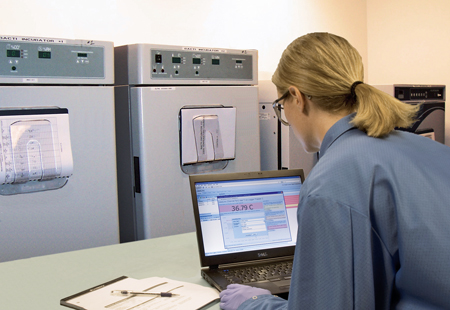
"Premises and equipment must be located, designed, constructed, adapted and maintained to suit the operations to be carried out. Their layout and design must aim to minimise the risk of errors and permit effective cleaning and maintenance in order to avoid cross-contamination, buildup of dust or dirt and, in general, any adverse effect on the quality of products."
Adverse effects are often caused by environmental conditions such as temperature and humidity, so monitoring is needed to avoid such changes.
The other document in the Zip file is: PIC/S PE 009-12 (part II) Active Pharmaceutical ingredients and intermediates: The chapter on Laboratory controls, Section 11.5 Stability monitoring of APIs includes, under Quality Management, section 2.3. states the responsibilities of the quality units should include:
- " Making sure that there is stability data to support retest or expiry dates and storage conditions on APIs and/or intermediates where appropriate; …"
And under "Stability Monitoring of APIs" point 11.56 states:
- "Where appropriate, the stability storage conditions should be consistent with the ICH guidelines on stability."
- 12.43 … "Prior to the completion of concurrent validation, batches can be released and used in final drug product for commercial distribution based on thorough monitoring and testing of the API batches."
Check out the PIC/S Annexes as well for some specific interest areas if there is some more important info for your particular process or product:
- Annex 1: Sterile Medicinal products
- Annex 3: Radiopharmaceuticals
- Annex 6: Medicinal gases…
- Annex 15 Qualification and Validation:
See the revised Annex 15. Note that these documents came into operation October 1, 2015.