Expert article
Weather intelligence: The operational edge that determines mission success




Weather awareness is not just an operational consideration for defense forces - it is a mission-critical capability that can determine the difference between success and failure. For artillery units, naval operations, and test ranges, precise atmospheric data forms the foundation of accurate ballistic calculations, range safety protocols, and tactical decision-making.
As demonstrated by real-world testing, atmospheric conditions can shift artillery projectile impact points by hundreds of meters. Without accurate meteorological data, defense operations essentially operate blind, compromising both mission effectiveness and personnel safety.
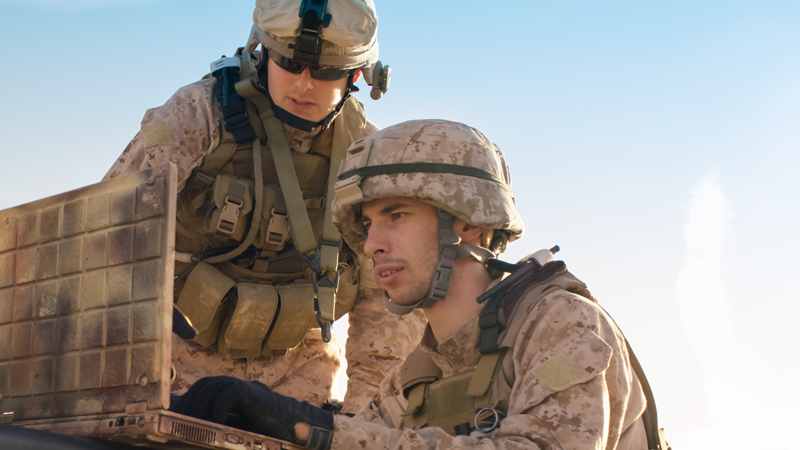
Want to learn more about field artillery testing? Watch the presentation, From test ranges to frontline: The critical role of weather in artillery ops. Leading experts from Vaisala and Bofors Test Centre reveal how atmospheric soundings and real-time weather intelligence are transforming artillery effectiveness — from controlled test environments to high-stakes frontline deployments.
Why atmospheric soundings matter for defense
Atmospheric soundings provide the vertical weather profile that ground-based measurements simply cannot deliver. These upper-air observations capture the complete atmospheric picture from surface to altitude, revealing wind patterns, temperature variations, and air density changes that directly impact ballistic trajectories.
Accurate wind and temperature profiles through the full atmospheric column are critical for modern long range field artillery. At typical ranges, a strong crosswind of 10–20 m/s can shift the impact point of a shell by hundreds of meters, so fire‑control systems need to produce corrections that depend on layered meteorological data rather than surface observations alone.
Test ranges face additional challenges. Range safety protocols depend on real-time atmospheric data to make go or no-go decisions and discern the weather effects from the weapon and ammunition effects.
Naval operations require atmospheric data for radar performance calculations, particularly the refractive index that affects radar propagation. When vessels are equipped with naval guns, ballistic corrections become equally important for accurate fire support.
The MW51 advantage: Next-generation sounding capability
The Vaisala Cirrus® Sounding System MW51 represents the current state-of-the-art in atmospheric measurement technology, designed to meet the demanding requirements of modern defense operations.
This advanced system combines proven measurement accuracy with innovative features that address today's operational challenges. MW51 delivers the meteorological intelligence that defense decision-makers need to maintain tactical superiority.
Multi-GNSS: Resilience in contested environments
One of the most significant advances in MW51 is its multi-GNSS capability, which addresses a growing threat in modern warfare: GPS jamming and interference.
The multi-GNSS feature extends beyond GPS to include Galileo and BeiDou satellite constellations, providing multiple navigation sources for radiosonde positioning. Testing has demonstrated that this multi-constellation approach delivers 60% higher altitude reach in GPS-impaired environments compared to GPS-only systems.
This resilience is crucial for operations in contested areas where electronic warfare tactics target GPS signals. By maintaining atmospheric measurement capability even under jamming conditions, the MW51 ensures continuous weather intelligence when it matters most.
Message authentication: Securing your data
Beyond navigation resilience, MW51 incorporates advanced cybersecurity features to protect the integrity of atmospheric data. The message authentication capability uses cryptographic algorithms to verify that received data originates from genuine radiosondes.
This protection is essential in environments where adversaries might attempt to spoof meteorological data to disrupt operations. Message authentication ensures that decision-makers can trust the atmospheric intelligence they receive, maintaining operational security while preserving mission effectiveness.
Multi-sounding: Comprehensive coverage
MW51's multi-sounding capability allows simultaneous tracking of up to eight radiosondes using one receiver hardware. This feature is particularly valuable for test ranges and space ports that require comprehensive atmospheric coverage prior to launch of the rocket, to assess the dynamic load and expected course corrections.
Real-time data from multiple radiosondes provides enhanced spatial resolution of atmospheric conditions, enabling more precise trajectory modeling and improved range safety calculations. This capability supports complex test scenarios where atmospheric variability across the range could affect different phases of projectile flight.
Enhanced security with RS41-SGM
MW51 works seamlessly with the Vaisala Radiosonde RS41-SGM, which incorporates additional security features designed for sensitive operations. The radio silence feature allows up to 20 minutes of silent operation after launch, hiding the location of the radiosonde launch from electromagnetic scanning and providing operational units time to relocate before data transmission begins.
Full-time data encryption ensures that atmospheric measurements remain secure throughout the sounding process. These features enable covert atmospheric measurement operations while maintaining the measurement accuracy that defense applications demand.

See the presentation, Defense readiness: The strategic edge of sounding systems, to learn how Vaisala’s sounding systems provide precise, real-time detection and tracking of potential weather threats to enhance operational readiness and response capabilities across a wide variety of defense applications.
Proven accuracy when it matters
MW51 delivers the measurement accuracy that defense operations require. Temperature, humidity, and wind measurements maintain precision even in challenging atmospheric conditions, including when radiosondes emerge from dense clouds.
This reliability is essential for ballistic calculations where small measurement errors can translate to significant trajectory deviations. The gold-standard accuracy of Vaisala radiosondes ensures that atmospheric corrections enhance rather than compromise firing accuracy.
Operational readiness through design
Built for demanding defense environments, MW51 balances advanced capability with operational practicality. The IP54-rated receiver provides protection against dust and water, while the streamlined software interface reduces operator workload during critical missions.
The system supports standard defense meteorological messages including STANAG formats, ensuring seamless integration with existing fire control systems.
Making weather your ally
Modern defense operations demand atmospheric intelligence that is accurate, secure, and reliable. MW51 with its multi-GNSS capability, message authentication, and multi-sounding features provides the meteorological edge that can determine mission success.
Weather remains a constant variable in defense operations. MW51 transforms atmospheric conditions from an operational unknown into actionable intelligence. In scenarios where precision is essential and personnel safety is paramount, reliable atmospheric measurement provides the data foundation that informed decision-making requires.
Learn more about our complete defense meteorology solutions at vaisala.com/defense.
Trust Vaisala to improve your readiness to operate in any weather conditions
Ask us how accurate and reliable weather insights improve your readiness for critical operations.