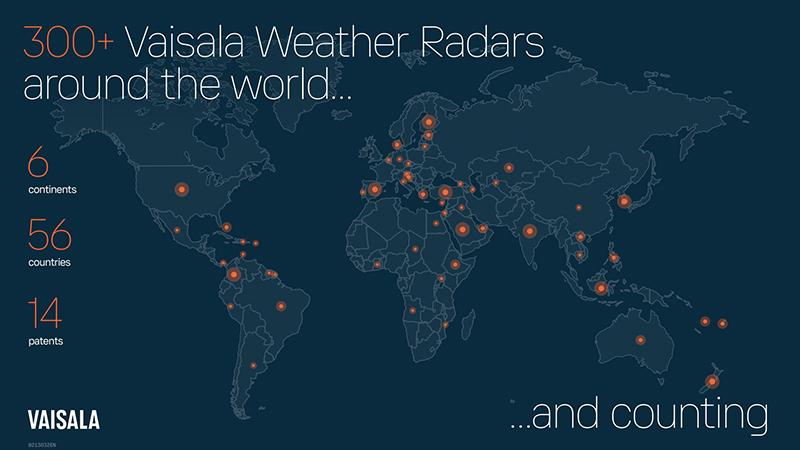
300+ radars and counting: Protecting communities worldwide for two decades

In 2002, Vaisala made a strategic decision that would reshape its meteorology portfolio forever. What started as an R&D project has evolved into a global network of early warning technology, with more than 300 Vaisala weather radars guarding communities around the world.
To mark this milestone, we sat down with Timo Lyly, Product Line Manager for Weather Radars, who has been part of this journey from day one. In this Q&A, Timo reflects on milestones along the way, the innovations developed, and the future ahead as weather radars become increasingly crucial tools for protecting communities worldwide.
Q: How did Vaisala establish the radar business 18 years ago?
Weather radar was the missing piece in Vaisala's meteorology portfolio. In 2002, the CEO recognized that meteorology customers needed a comprehensive solution and made the strategic decision to launch a weather radar R&D project.
Interestingly, the Finnish Meteorological Institute's weather radar in Kaivoksela, Vantaa, stood near Vaisala's headquarters. Legend has it that the CEO, seeing that radar during his daily commute, may have served as a constant reminder that Vaisala needed this technology in its offering.
Q: Timo, you’ve been in the radar business since the very beginning. How would you describe the journey from the beginning to today?
It has been a genuine learning process for me and for the Vaisala organization. We started from scratch, discovering what weather radar truly is and what customers expect from radar deliveries. Everything that seems obvious now was completely new territory back then. Take site work complexity, for example – each radar location brings unique challenges. We learned these technical details and customer expectations through hands-on experience.
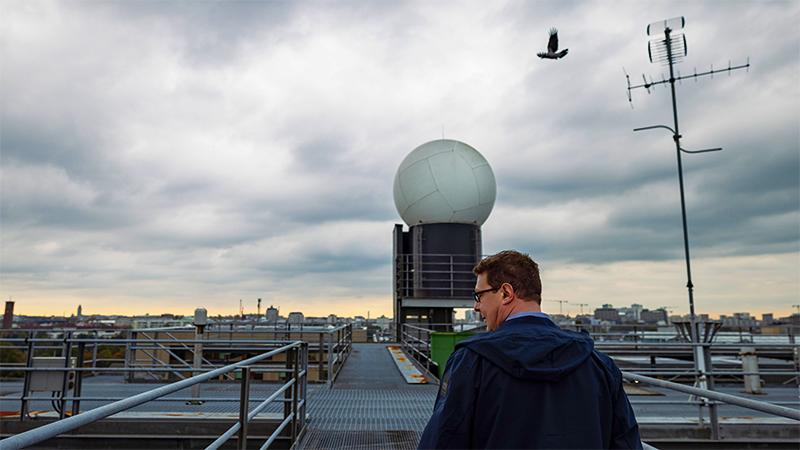
Timo Lyly at Vaisala's first weather radar site in Kumpula, Helsinki University.
Q: What have been the most significant milestones in the radar business over 18 years?
The first major milestone was developing a fully functional radar prototype at Helsinki University. That was the first weather radar ever built by Vaisala engineers and served for years as our test platform for production changes and software development.
The second milestone was our first customer delivery to Surgavere, Estonia in 2008. This marked the first time we integrated our radar system with existing infrastructure, including data systems and network connections. It proved to be an invaluable learning experience that shaped our approach going forward. Notably, the Estonian Environment Agency later became our first customer for C-band solid-state power amplifier (SSPA) weather radars in Europe, making them true pioneers in adopting our radar technology.
Q: How have weather radars evolved over 18 years?
Dual polarization technology has become a standard feature. Twenty years ago, this was cutting-edge technology, and some questioned whether it would ever be necessary. Signal processing and data transmission capabilities have advanced significantly, allowing radars to deliver much more data with better quality and richer information.
The SSPA technology represents the next major evolution currently taking place. Just as dual polarization became the industry standard, SSPA will define the new operational standard for future weather radar systems.
Q: How have the needs for weather radars evolved over the years?
Climate change has really highlighted our need for accurate weather forecasting and reporting. We are seeing more frequent and severe weather events, and this trend is expected to continue. Weather radars have become crucial tools for detecting these dangerous events early and helping communities prepare through timely warnings that protect lives and property.
Q: What makes Vaisala weather radars special?
We have many innovative features in our new radars. Runtime calibration, for instance, improves data quality and availability throughout operations. We have patented algorithms in our signal processing that enhance detection of weak precipitation, remove unwanted targets from weather data, and enable precise precipitation type classification. Our mechanical pedestal structure stands out with its balanced, lightweight, and agile design. Most importantly, our skilled teams worldwide provide exceptional customer service throughout the entire radar lifecycle.
Q: What excites you about the future of weather radars?
Even after being in the weather radar business for so long, there are always fascinating new developments to explore. New antenna technologies, AI in weather radar data processing, innovative applications, and radar data as a service, just to mention a few. With numerous large radar renewal programs worldwide ongoing, I believe the weather radar business at Vaisala will continue growing. It is thrilling to see how many of these opportunities we can capture.